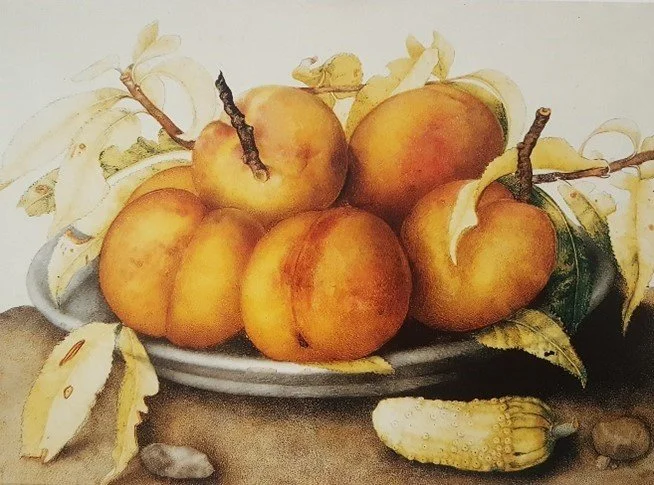
17th-century Milanese artist Fede Galizia: a painter of more than just still lifes
Around 1860, the sculptor Andrea Malfatti (1832–1917) is commissioned to create ten busts of famous artists and intellectuals for the façade of the Palazzo Ranzi in Trento, northern Italy. Among them is the painter Fede Galizia (c.1575 – c.1630), the only woman in the group (fig. 1). Who is she?
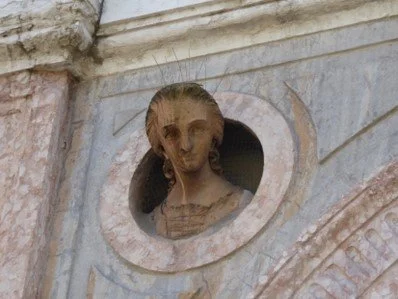
Fig. 1. Andrea Malfatti, Bust of Fede Galizia on the façade of the Palazzo Ranzi in Trento, marble, c. 1861
In 1587, the artist and art critic Giovanni Paolo Lomazzo (1538–1592) mentions in his book Idea del temio della pittura that Fede Galizia—who was probably around twelve years old at the time—is just as skilled as her father Nunzio, each in their own field. Three years later, Lomazzo writes that Fede is immersing herself in the “imitation of the most outstanding painters of our art.” Later still—in 1595—the Jesuit and historian Paolo Morigia (1525–1604) describes Fede in his La Nobilità di Milano—a work on the Milanese nobility—as a “virtuoso creator of exceptional paintings”. And that’s not all. In 1605, the poet Mutio Manfredi (1535–1609), associated with the Gonzaga court in Mantua, writes the lyrics for a madrigal—a popular musical form at the time—dedicated to Fede, while in 1609, the prominent Bolognese poet Cesare Rinaldi (1559–1636), who also moved in the circles of the Gonzaga court, dedicates a poem to her.
All of this raises the question once again: who is this woman, this Fede Galizia? In the twentieth century, she was known primarily for her still lifes—a genre generally believed to have originated in the Northern Netherlands. But she turns out to be a jack-of-all-trades, a fact that only became truly clear during the research conducted in preparation for the 2021 exhibition Fede Galizia: Mirabile Pittoressa held in Trento.
The Galizia family originally hails from Cremona in northern Italy and has family ties in Trento, about 200 kilometers away. Fede’s father, Nunzio Galizia (1539–1621), is a miniaturist, cartographer, and etcher; her uncle Allessandro and grandfather Giacomo Antonio are also artists. Nunzio Galizia is a creative man with a keen business sense. He recognizes opportunities and traveles with his wife via Trento to Milan, at that time the capital of the Spanish kingdom in Italy and a hub for international trade. There, the elite indulges in luxury, which manifested itself in fine furniture, woodcarvings, gold and precious metalwork, and exquisite fabrics such as silk.
Father Nunzio is first mentioned in a document from 1573. He focuses on accessories that the wealthy Milanese elite adored. Always on the lookout for something new, he requests in this document that the governor grant him exclusive rights to his invention: fans embellished with miniature paintings of Eastern motifs and exotic birds, ‘alla Spagnola’, and highly sought after by the ladies of Milan (fig. 2). He also creates etchings, such as one of the city of Milan following the plague epidemic of 1576 (fig. 3). Creative as he is, he sculpts small figurines from a paste made from the fragrant secretion of the musk deer, decorated with gold and gemstones. Musk is a popular scent in an era when unpleasant odors must be countered with pleasant ones. Last but certainly not least, he designs costumes for theatrical productions.
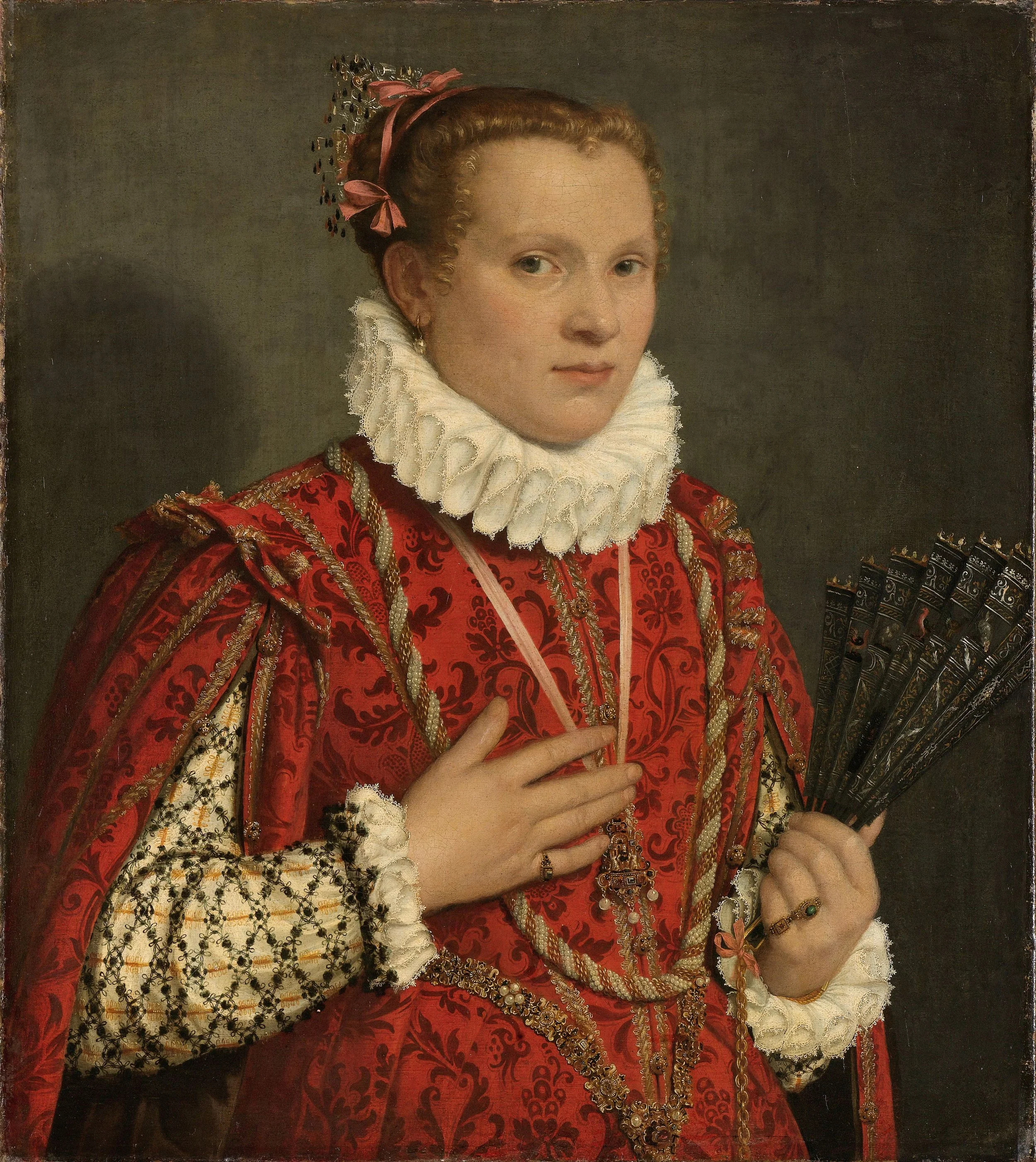
Fig. 2. Giambattista Moroni, Portrait of a Young Woman, 1560–1578, oil on canvas, 73.5 × 65 cm, Amsterdam, Rijksmuseum. The woman is holding a painted fan ‘alla Spagnola’.
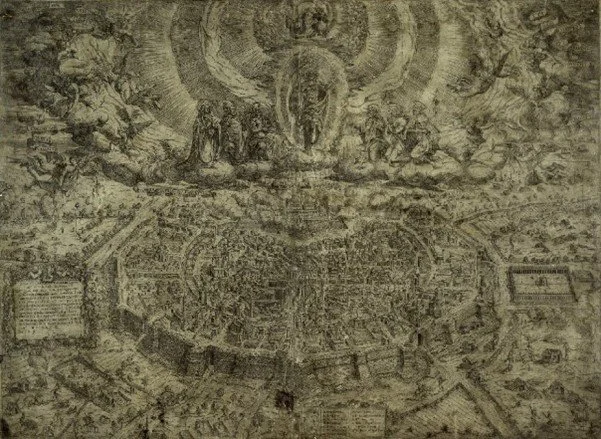
Fig. 3. Nunzio Galizia, Map of Milan, 1578, 46.4 x 64.4 cm, etching, Milan, Castello Sforzesco/Civica Raccolta delle Stampe
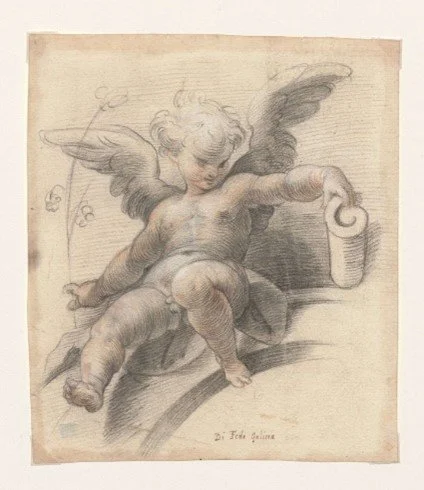
aFig. 4. Fede Galizia, Seated Angel on a Cornice, before 1602, red and black pencil on parchment?, Milan, Veneranda Biblioteca Ambrosiana
It was long thought that Fede has been born in 1578, the year inscribed on the portrait she painted of Paolo Morigia (figs. 6, 7). It is now clear, however, that the inscription bearing this date is added later by someone else. Art historians now date her birth to c. 1575. Fede never get married and still lives with her father in 1610. She draws her will in 1630 (on 21 June) and probably dies shortly afterwards from the prevailing plague epidemic, leaving behind at least 63 works, including 44 still lifes.
She has been trained in her father’s studio, where she becomes skilled in engraving and illuminating. Despite her young age, she develops into a gifted miniaturist and engraver (fig. 4). She also designs costumes, although no drawings of these have survived, just as none of her father’s have. Her name and works comes to the attention of the famous Milanese artist Giuseppe Arcimboldo (1527–1593) whilst he is working at the imperial court of Rudolf II in Prague. As court painter, Arcimboldo is responsible for the design and organisation of festivals and tournaments, which are often used by Renaissance princes and rulers as a means of political propaganda. He also designs costumes for these events (fig. 5) and is said to have forwarded a number of Fede’s works to the emperor, including a drawing, probably of a festive costume.The influence of Arcimboldo’s designs can be seen later in the rich upholstery in Fede’s versions of Judith and Holofernes and in her Noli me tangere (see the illustrations further on in this article).
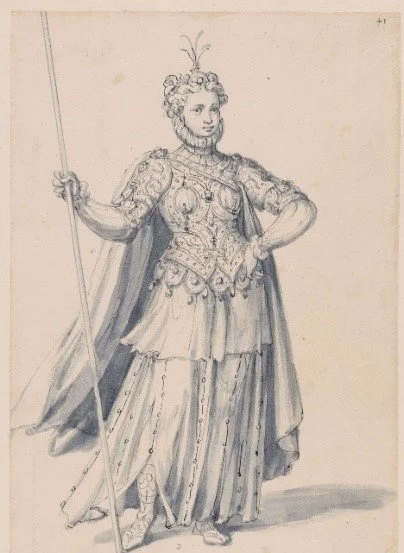
Fig. 5. Giuseppe Arcimboldo, Costume for a masquerade, Florence, Gabinetto Disegi e Stampe Degli Uffizi. Fede and her father also produced similar design drawings
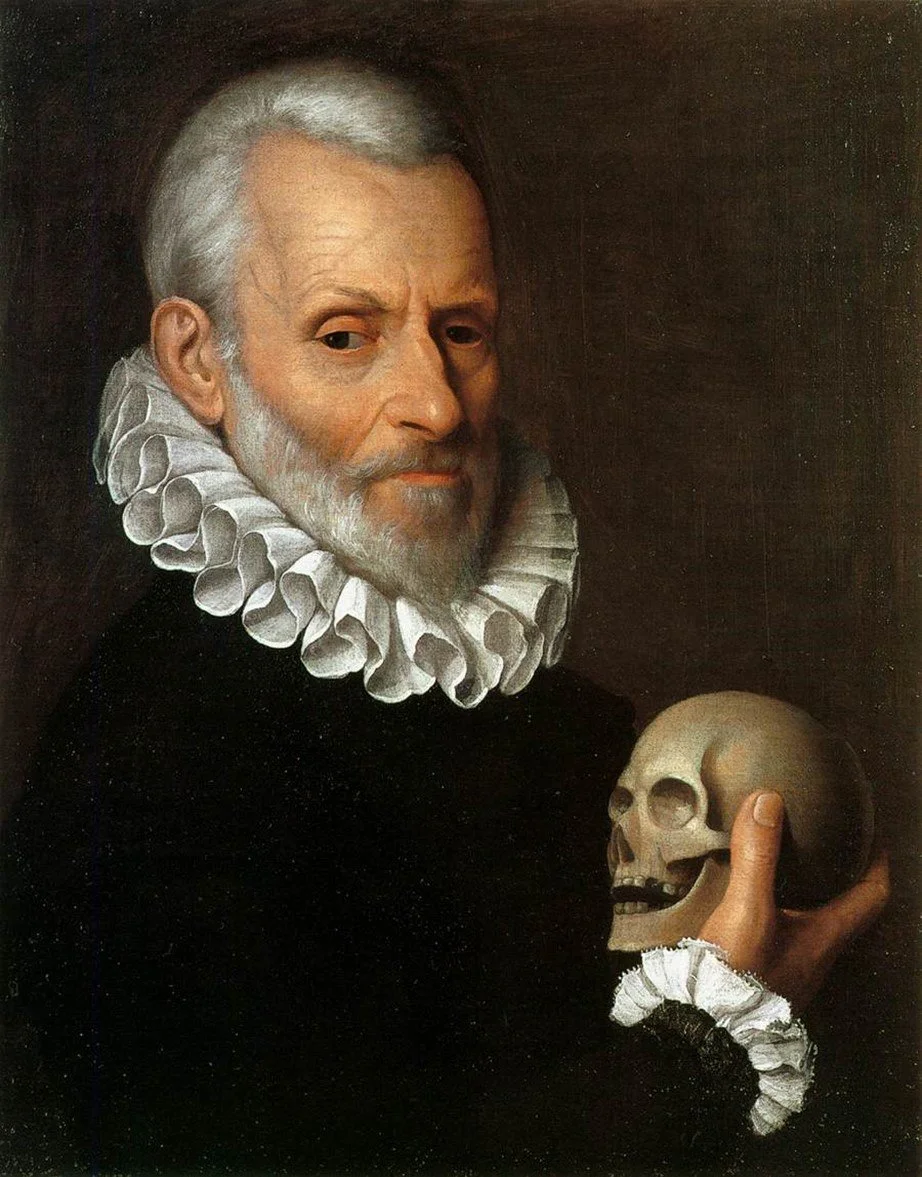
Fede also receives commissions for religious works (fig. 6) and, by the age of twenty, is already a renowned portraitist, though she still occasionally collaborates with her father. It are her portraits in particular that become very popular, praised for their realism and psychological insight into her subjects. They are painted in a very direct style, stripped of embellishment, as can be seen in the portraits of ‘a physicist’, of Paolo Morigia and of the painter and architect Federico Zuccari (figs. 0, 7, 8, 9, 10). In this respect, Fede can be seen as part of the naturalist tradition of painters such as Moretto da Brescia (1498–1554), Lorenzo Lotto (1480–1556) and the previously featured Giovanni Battista Moroni (1520–1578, see fig. 2), all of whom are also from northern Italy.
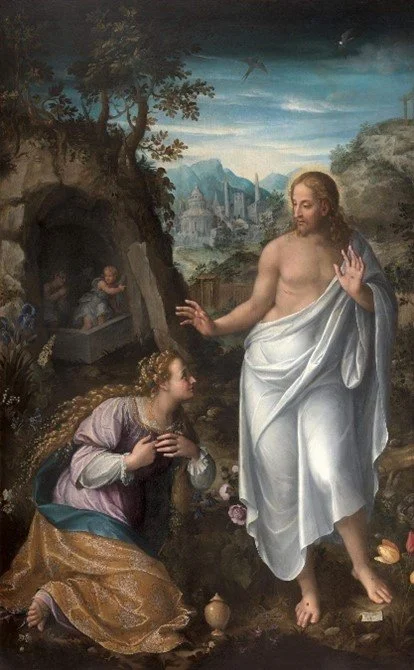
Fig. 6. Fede Galizia, Noli me tangere, 1616, oil on canvas, 313 x 199 cm, Milan, Pinacoteca di Brera
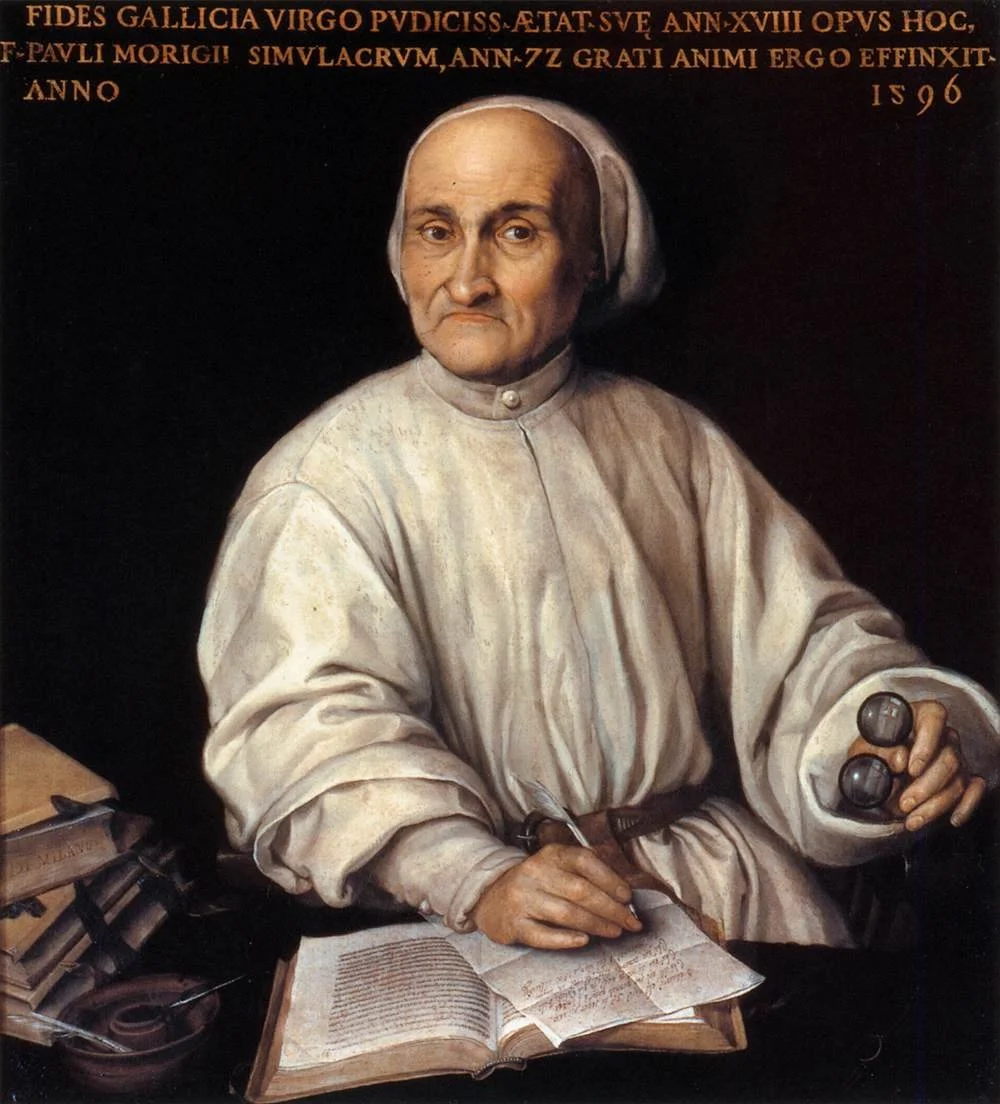
Fig. 7. Fede Galizia, Portrait of Paolo Morigia, 1596, 88 x 79 cm, oil on canvas, Milan, Pinacoteca Ambrosiana. This painting previously hung in the Chiesa San Gerolamo in Milan.
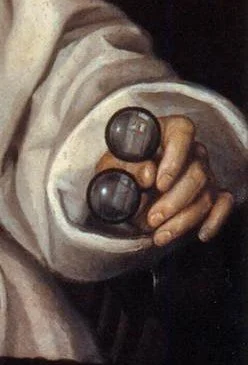
Fig. 8. Fede Galizia, Portrait of Paolo Morigia, detail showing the reflection of the room in the glasses.
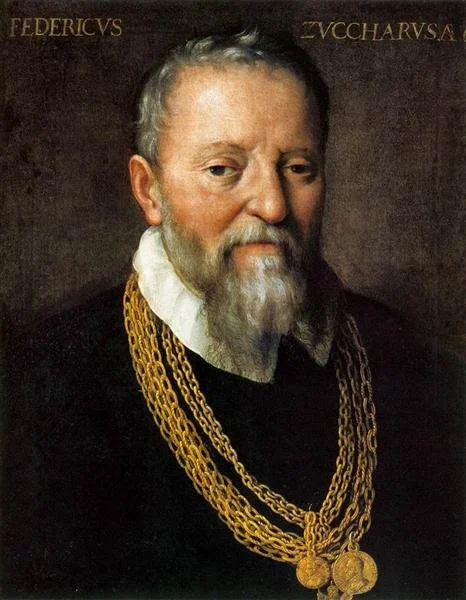
Fig. 9. Fede Galizia, Portrait of Federico Zuccari, 1604, oil on canvas, 55 x 43 cm, Florence, Uffizi Gallery
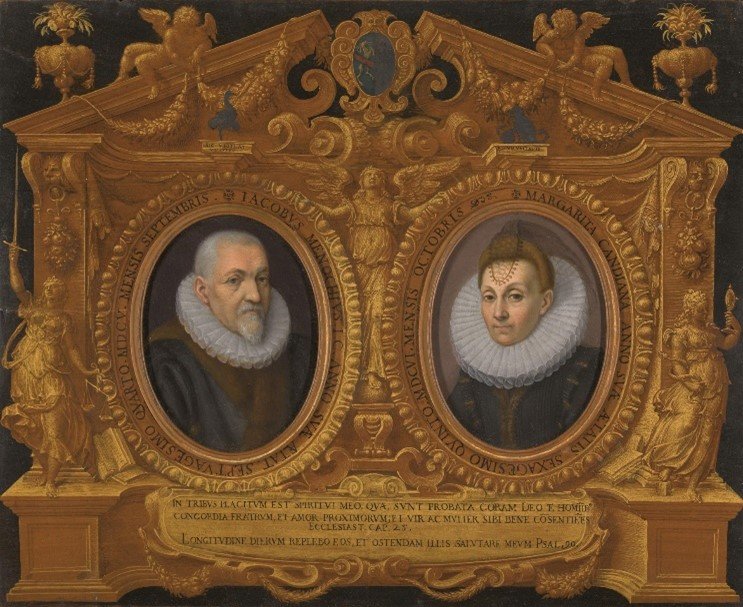
Fig. 10. Nunzio and Fede Galizia, Festive Allegory of Jacopo Menochio and Margherita Candiani, 1606, copper and wood, 25.7 x 31.4 cm, private collection
A number of her works have been attributed to male artists, such as Panfilo Nuvolone (1581–1651), a contemporary and fellow still-life painter who was active in Cremona and Mantua at the time. It is now believed that it is the other way around: Nuvolone have been inspired by Fede Galizia. The Portrait of a Man shown below (fig. 11) was attributed to Fede in 2005 on account of the clarity of the image - which is beautifully lit - its precise rendering and its naturalism. The man depicted is probably her father, Nunzio. Paolo Morigia, cited earlier, writes in 1595 in his La Nobilità di Milano: ‘She has portrayed her father and her mother from life very beautifully, in a manner that can not have been better.’ Given the date of the quotation, these must be early works; Fede will have been around twenty at the time. No portrait of her mother is known to exist.
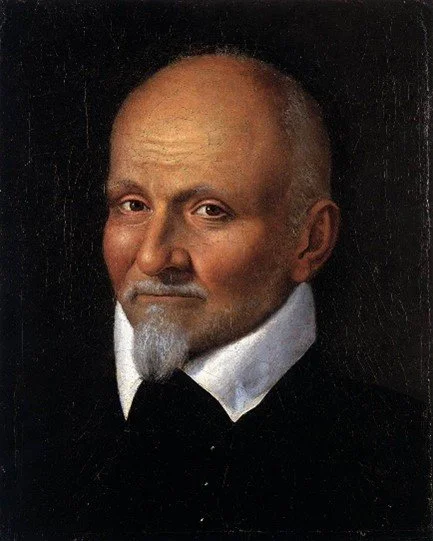
Fig. 11. Fede Galizia, Portrait of a Man (het father Nunzio?), undated, oil on canvas, 42 x 34 cm, Rome, Amata Collection
Fede painted five versions of Judith and Holofernes – a popular subject also depicted by her female contemporaries and colleagues Lavinia Fontana (1552–1614) and, somewhat later, by Artemisia Gentileschi (1593–1656) and Elisabetta Sirani (1638–1665). Fede chose to depict the moment immediately following the beheading. The date of the first version – 1596 – is of great significance: it is thus the first documented work on this subject by a female painter. The works by Fontana (in 1600) and Gentileschi (in 1611) date from slightly later.
Febe’s first version – painted two years before Caravaggio’s famous version – is in the collection of the Ringling Museum in Sarasota, Florida. She signs the work on the blade of the knife. In subsequent versions, she makes some minor alterations to the colour, the clothing and the jewellery, but the basic composition remains unchanged. She depicts Judith as a beautiful, elegant woman, always dressed in the same way: an open white shirt with a wide neckline, a bodice of gold brocade fastened with red laces, a gold belt adorned with precious stones, a tiara, a double pearl necklace, a bracelet set with pearls, rubies and emeralds, and teardrop-shaped pearl earrings. The costume design reflects the experience Fede gained in her father Nunzio’s studio whilst designing theatre costumes.
Judith looks proudly ahead, holding the sword in her right hand and the head of Holofernes in her left, without losing any of her refined femininity. Beside her, the elderly servant Abra, who is making a ‘shush’ gesture, holds the platter onto which Judith places the head of the Assyrian general. This, incidentally, does not correspond to the story, in which the ladies place the head in a bag. A head on a platter is more in keeping with the story of Salome, who presents the head of the beheaded John the Baptist on a platter to her mother (figs. 12, 13, 14, 15).
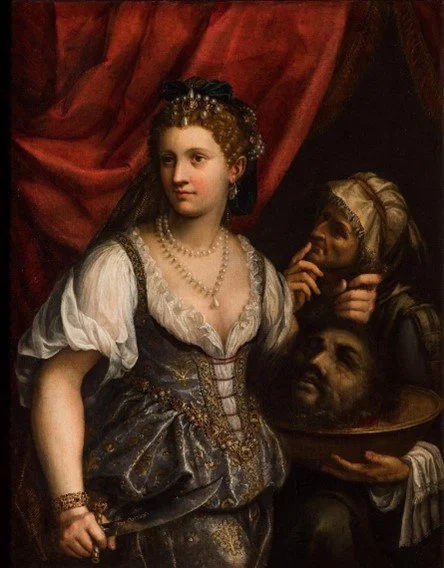
Fig. 12. Fede Galizia, Judith, 1596, oil on canvas, 120.7 × 94 cm, Florida/Sarasota, Ringling Museum of Art
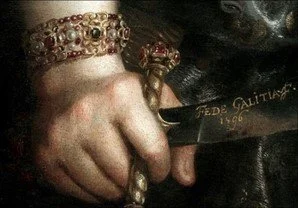
Fig. 13. Fede Galizia, Judith, 1596, oil on canvas, 120.7 x 94 cm, Florida/Sarasota, Ringling Museum of Art, detail showing the signature.
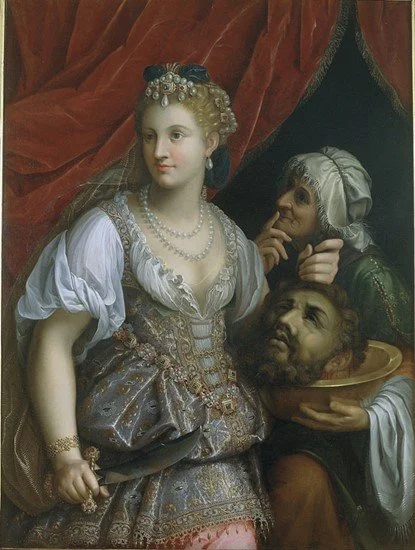
Fig. 14. Fede Galizia, Judith with the Head of Holofernes, 1601, oil on canvas, 141 x 108 cm, Rome, Galleria Borghese; the pearl in the centre of the necklace is missing
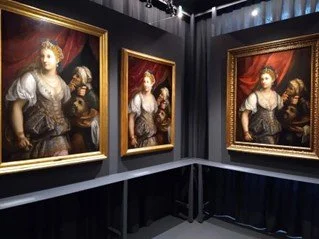
Fig. 15. Photograph of the ‘Judith room’ during the exhibition Fede Galizia, mirabile pittoressa in Trento, 2021, showing three of the five versions of Judith with the Head of Holofernes
A brief historical note
According to the curators of the 2018 exhibition The Ladies of the Baroque at the Museum of Fine Arts in Ghent, little attention has so far been paid to the fact that, in the second half of the sixteenth century, particularly in northern Italy, a number of women – such as Fede Galizia, Sofonisba Anguissola (1532–1625), Lavinia Fontana and, somewhat later, Elisabetta Sirani, suddenly began to make their mark with patrons. According to these curators, this was entirely down to the momentum of the time: the Counter-Reformation and the Council which was held in the city of Trento between 1545 and 1563. The Papal States were expanding into northern Italy, the Church was omnipresent, and artists were committed to bringing the story of Rome to the fore. Following the 25th session of the Council – in 1563 – the Church resolved to renew itself. Better governance was required to put an end to the many heresies, and efforts had to be made to uplift the people and protect the faith. Paintings with religious themes and, often, smaller devotional pieces could contribute to this; they could visualise the Church’s message and ensure it permeated every corner of the Pope’s realm (fig. 16).
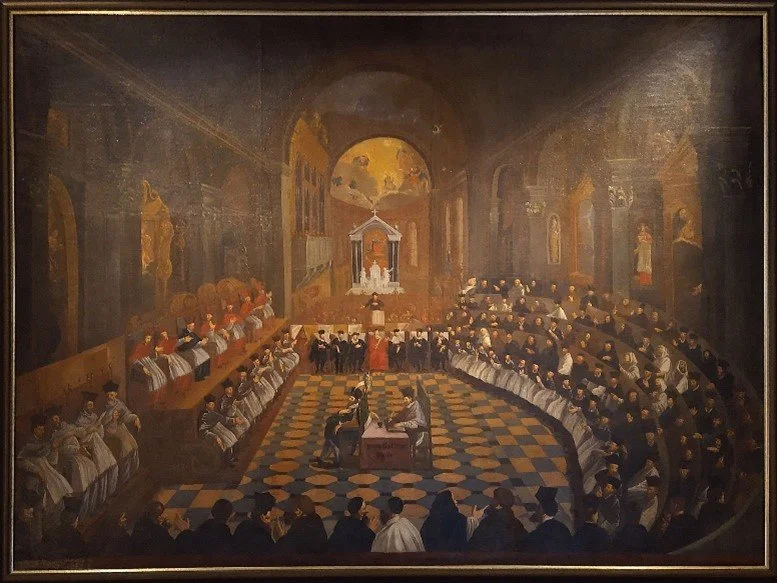
Fig. 16. Artist unknown, General Assembly of the Council of Trent in the Church of Santa Maria Maggiore, 1634–1678, oil on canvas, 109.5 × 146.2 cm, Innsbruck, Tiroler Landesmuseum Ferninandeum. This work was thought to have been painted by Fede on the basis of a signature on the side of the writing desk, but this was later retracted. The work was ultimately dated much later.
Thanks to the emergence of oil painting techniques and a better understanding of perspective, painters are now able to depict biblical stories in a highly realistic manner. They turn them into compelling visual narratives, which the Church finds very useful. Members of the elite, too, become eager patrons, keen to show one another just how important the word of God is to them. During this period, artists also rose up the social ladder, moving from the status of craftsmen to more privileged positions such as – for example – advisers to a monarch or a cardinal. They gain patrons and positions at royal courts.
It seems as though there is also more scope for women who have been able to develop their talent for painting in their father’s studio, as in the case of Fede. Or for women with an ambitious father who, whilst not an artist himself, sees in his talented daughter an opportunity to generate family income, as with Sofonisba and Lucia Anguissola. These women might then be apprenticed to a local painter, whilst their father handles the public relations with potential clients and patrons.With their technical skills and expressive qualities, these women prove themselves just as capable as their male counterparts of embodying the unwritten rules and conventions of the Renaissance courts regarding beauty, grace, charm and loveliness. They are just as capable of inventing, modifying and interpreting iconographies and genres, and of creating works on religious, apocryphal and mythological subjects – something that has hitherto been the preserve of men.
Fede’s talent as a painter and her work are appreciated right up until the nineteenth century, certainly in her native region, but she subsequently disappeares from view. Then, in 1938, a still life is discovered bearing her signature and a date – 1602 – on the reverse (fig. 17). This is the first dated still life by an Italian artist. From 1960 onwards, recognition of her artistry really begins to take off again, but it soon fades once more. For example, her work is not included in the major textbooks that art history students are required to study, at least until 2014 – the year I begin my studies. Incidentally, this also applies to the work of all the women mentioned in this article.
Now, in 2023, Fede Galizia is best known as one of the most important still-life artists of seventeenth-century Italy. Her compositions demonstrate a balance in her use of light and shadow, and the slightly elevated viewpoint reveals her keen understanding of form, space and line.
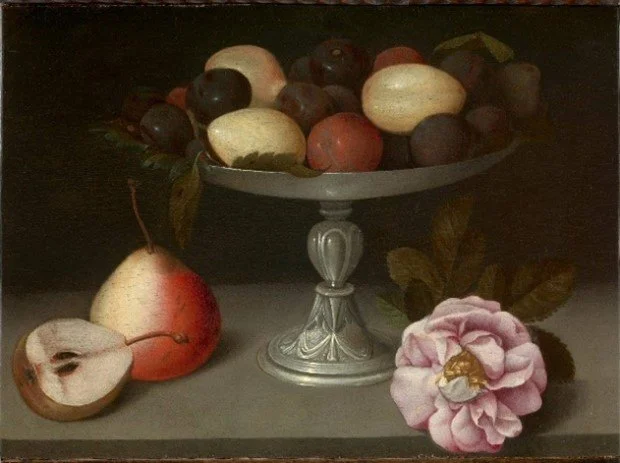
Fig. 17. Fede Galizia, Metal Stand with Vine Leaves, Plums, Pears and a Flower, c. 1602, oil on panel, 30 x 35 cm, private collection
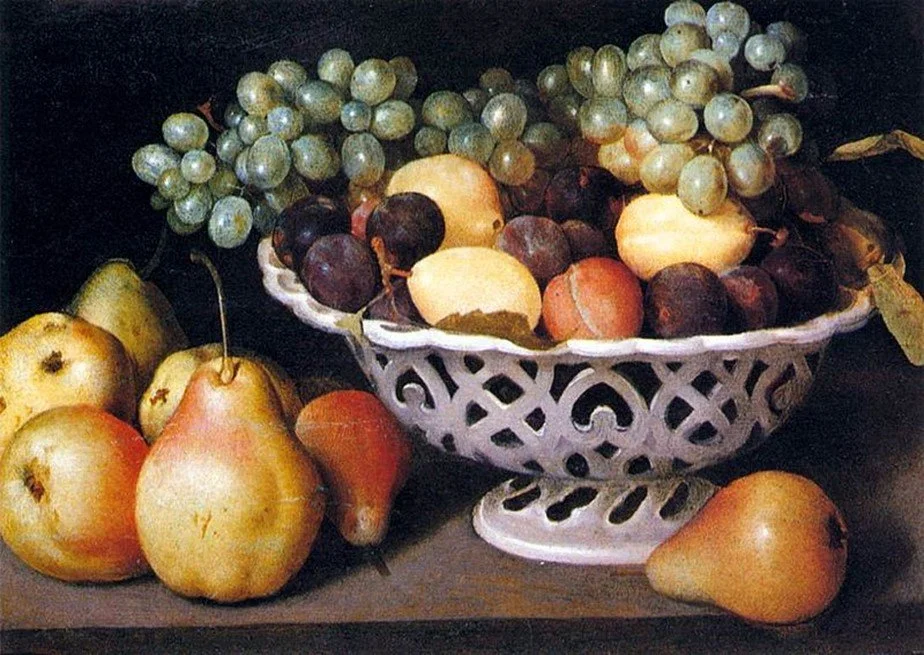
Fig. 18. Fede Galizia, White Bowl with Fruit, c. 1610, oil on canvas, 108 x 77 cm, private collection
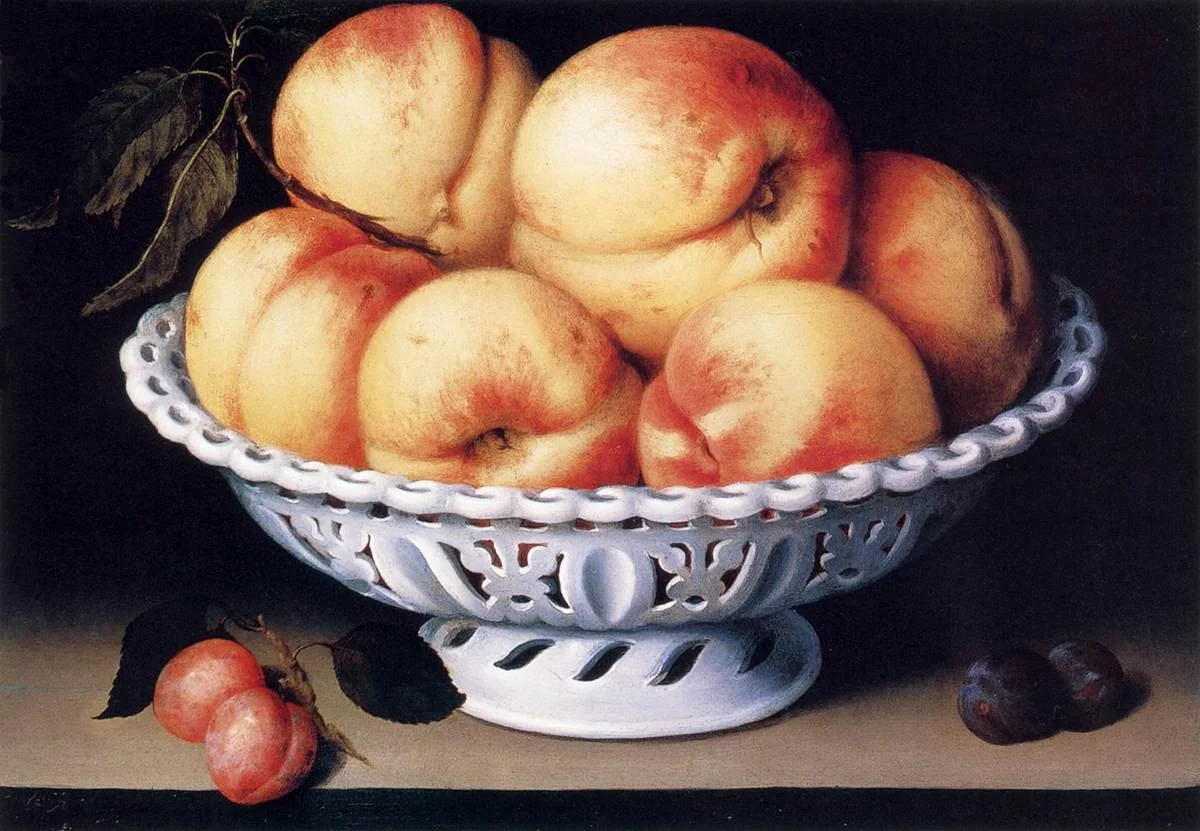
Fig. 19. Fede Galizia, White dish with peaches, red and blue plums, c. 1610, 30 x 42 cm, Campione, Silvano Lodi Collection
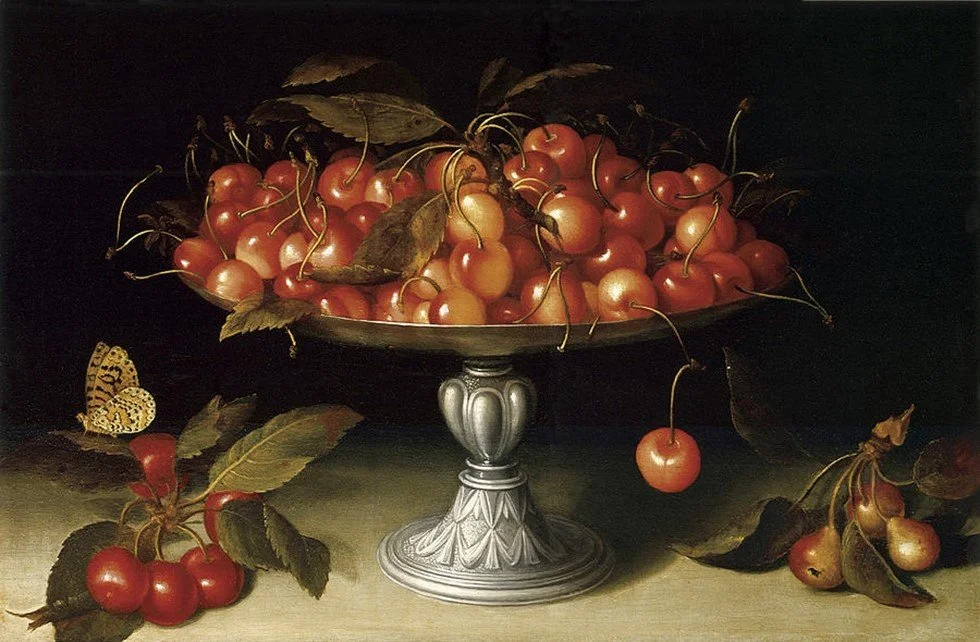
Fig. 20. Fede Galizia, Cherries in a silver bowl with apples on a stone rim and a mother-of-pearl butterfly, undated, 28 x 42 cm, oil on canvas, Washington, Wallace and Wilhelmina Holladay Collection
The still life Six Peaches, Three Quinces, Jasmine Blossoms and Fig Leaves on a Crystal Dish from after 1607 (fig. 21), for example, shows how this can lead to a prayer. The six peaches are ripe and, in places, overripe; they already show some spots indicating that they have passed their peak. The quinces are from a later harvest and do not really belong here, any more than the jasmine blossoms do. This depicts a sense of a-synchrony and serves as a reflection on nature and life itself: everything comes and goes, but not at the same time. The spots indicate decay, whilst the reflection of light in the base of the glass bowl alludes to the ever-present reality and the ceaseless passing of time. In Fede’s day, such a work encouraged contemplation, prompting reflection on one’s own actions and morality, and thus fitted perfectly with the ideas of the Counter-Reformation.
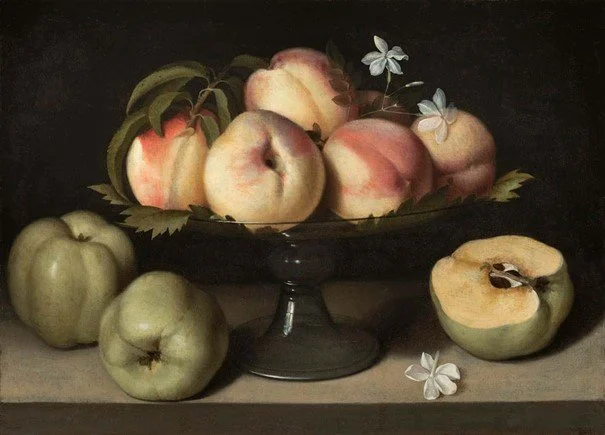
Fig. 21. Fede Galizia, Six Peaches, Three Quinces, Jasmine Blossoms and Fig Leaves on a Crystal Dish, after 1607, oil on canvas, Montreal, Montreal Museum of Fine Arts
And so Fede Galizia proves to be an artist who was a jack of all trades in her day. To see her solely as that brilliant still-life painter does her a disservice; she has a much broader repertoire. Furthermore, she has undoubtedly been an inspiring example to the girls and women around her in terms of what one can achieve in life as a woman, and she has surely also been a source of inspiration to both male and female colleagues in the painting profession.
Bibliography:
Ann Sutherland Harris and Linda Nochlin, Women Artists, 1550–1950, Los Angeles: Los Angeles Museum of Art; New York: Alfred A. Knopf, 1976. (catalogue of the Los Angeles County Museum of Art (LACMA));
Germaine Greer, Women’s Work: An Obstacle Race, 1980, Amsterdam, Meulenhoff (Dutch translation of The Obstacle Race from 1979);
Italian Women Artists from Renaissance to Baroque, Milan, Skira Editore, 2007; (exhibition catalogue, National Museum of Women in the Arts);
Jane Fortune, Invisible Women: Forgotten Artists of Florence, Florence, The Florentine Press, 2009;
V. de Beir, F. Solinas and A. Tapié, The Ladies of the Baroque: Female Painters in 16th- and 17th-Century Italy, Ghent, Ghent Museum of Fine Arts/Snoeck Publishers, 2018 (exhibition catalogue);
By her hand. Artemisia Gentileschi and women artists in Italy, 1500–1800, ed. Eve Straussman-Pflanzer and Oliver Tostmann, Detroit, Detroit Institute of Arts, 2021 (exhibition catalogue)
Fede Galizia, Mirabile Pittoressa, edited by Giovanni Agosti, Luciana Giacomelli and Jacopo Stoppa, Trento, Castello del Buonconsiglio/Monumento collezioni provinciali, 2021 (exhibition catalogue)
Websites consulted in autumn 2023
https://nl.wikipedia.org/wiki/Fede_Galizia
https://it.wikipedia.org/wiki/Fede_Galizia#/media/File:Bodegon_galizia.jpg
[https://www.collezionegalleriaborghese.it/en/opere/judith-with-the-head-of-holofernes-2
https://www.raicultura.it/arte/eventi/Fede-Galizia-Mirabile-pittoressa-fe4bd302-1cb5-479a-8dd9-eddb7bf7256e.html
http://www.arte.it/notizie/trento/a-casa-della-pittoressa-fede-galizia-si-racconta-a-trento-18481
https://www.finestresullarte.info/recensioni-mostre/recensione-mostra-fede-galizia-castello-del-buonconsiglio-trento
https://www.finestresullarte.info/en/exhibition-reviews/the-ladies-of-art-in-milan-merits-and-limitations-of-the-exhibition-on-women-artists-of-the-sixteenth-and-seventeenth-centuries
https://www.treccani.it/enciclopedia/
Image credits:
Fig. 0.
https://www.wga.hu/support/viewer/z.html
Fig. 1.
https://it.wikipedia.org/wiki/Fede_Galizia#/media/File:Facciata_di_Palazzo_Ranzi,_busto_Fede_Galizia.jpg
Fig. 2.
https://www.rijksmuseum.nl/en/collection/SK-A-3036
Fig. 3.
https://www.finestresullarte.info/recensioni-mostre/recensione-mostra-fede-galizia-castello-del-buonconsiglio-trento
Fig. 4.
https://www.finestresullarte.info/recensioni-mostre/recensione-mostra-fede-galizia-castello-del-buonconsiglio-trento
Fig. 5.
https://www.progettostoriadellarte.it/wp-content/uploads/2021/07/Fig.-3-scaled.jpg
Fig. 6.
https://pinacotecabrera.org/en/collezione-online/opere/noli-me-tangere/
Fig. 7.
https://nl.wikipedia.org/wiki/Fede_Galizia#/media/Bestand:Fede_Galizia_-_Portrait_of_Paolo_Morigia_-_WGA08429.jpg
Fig. 8.
https://it.wikipedia.org/wiki/Fede_Galizia#/media/File:Fede_Galizia_-_Portrait_of_Paolo_Morigia_(detail)_-_WGA08430.jpg
Fig. 9.
https://nl.wikipedia.org/wiki/Fede_Galizia#/media/Bestand:Fede_Galizia_-_Portrait_of_Federico_Zuccari_-_WGA8432.jpg
Fig. 10.
https://www.finestresullarte.info/recensioni-mostre/recensione-mostra-fede-galizia-castello-del-buonconsiglio-trento
Fig. 11.
https://www.wga.hu/support/viewer_m/z.html
Fig. 12.
https://www.finestresullarte.info/recensioni-mostre/recensione-mostra-fede-galizia-castello-del-buonconsiglio-trento
Fig. 13.
https://1.bp.blogspot.com/-zPLiI_lArLw/ XfKRblcga2I/AAAAAAAGieQ/bVmRfgc5Tgg17WNSK1YflvQXAMymT3GLwCKgBGAsYHg/s1600/Fede-Galizia-Judith-with-the-Head-of-Holofernes-1596-detail-Galleria-Borghese-Rome-3.jpg
Fig. 14.
https://www.finestresullarte.info/recensioni-mostre/recensione-mostra-fede-galizia-castello-del-buonconsiglio-trento
Fig. 15.
https://www.finestresullarte.info/recensioni-mostre/recensione-mostra-fede-galizia-castello-del-buonconsiglio-trento
Fig. 16.
https://www.finestresullarte.info/recensioni-mostre/recensione-mostra-fede-galizia-castello-del-buonconsiglio-trento
Fig. 17.
https://www.finestresullarte.info/recensioni-mostre/recensione-mostra-fede-galizia-castello-del-buonconsiglio-trento
Fig. 18.
https://www.finestresullarte.info/recensioni-mostre/recensione-mostra-fede-galizia-castello-del-buonconsiglio-trento
Fig. 19.
https://nl.wikipedia.org/wiki/Fede_Galizia#/media/Bestand:Basket111.jpg
Afb. 20.
https://commons.wikimedia.org/wiki/File:Fede_Galizia_White_Ceramic_Bowl_with_Peaches_and_Red_and_Blue_Plums.jpg.
Fig. 21.
https://nl.wikipedia.org/wiki/Fede_Galizia#/media/Bestand:Fede_Galizia_Cherries_in_a_silver_compote_crabapples.jpg
Fig. 22.
https://www.finestresullarte.info/recensioni-mostre/recensione-mostra-fede-galizia-castello-del-buonconsiglio-trento