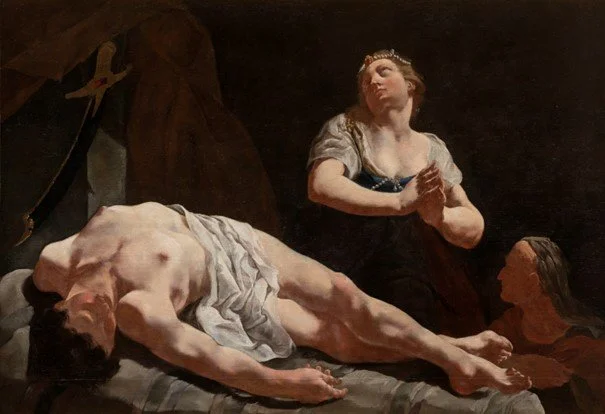
Seventeenth-century Italian artist Giovanna Garzoni: “Behold, O curious eye, the grandeur of the universe”
She was famous in her own time, traveled throughout Europe, could charge whatever price she wanted for her work during her lifetime, and was wealthy when she died. She was a member of the Accademia di San Luca—the association of painters and sculptors founded in Rome in 1577—which was unusual for a woman. She bequeathed part of her work and all her possessions to the Accademia on one condition: that she be buried in the church on that complex’s grounds. We are talking about the Italian artist Giovanna Garzoni (1600–1670), a new name in my search for forgotten Italian female artists from the seventeenth and eighteenth centuries.
She died in 1670, and for reasons that remain unclear, her tomb was not completed until 29 years later, to the right of the entrance to the church, the Chiesa dei Santi Luca e Martina. She was finally laid to rest there in 1698, and it is also there that one can admire the beautiful, matronly portrait of her, painted shortly before her death by the Italian Baroque painter Giuseppe Ghezzi (1634–1721) (fig. 1). In addition to many other works, she left behind more than fifty undated still lifes.
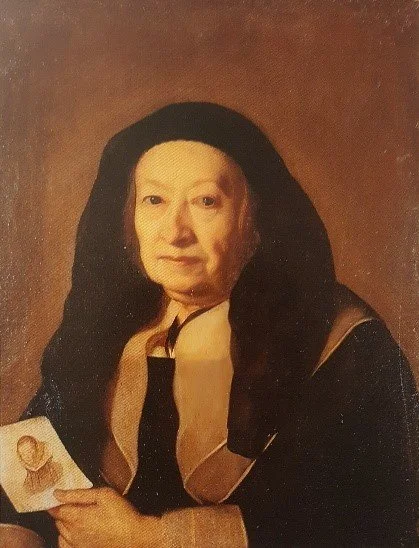
Fig. 1. Giuseppe Ghezzi (attrib.), Portrait of Giovanna Garzoni,
c. 1670, oil on canvas, Rome, Accademia Nazionale di San Luca
Giovanna is best known for her still lifes and botanical works: plants and flowers, as well as scenes featuring insects and shells. The compositions appear simple, but appearances can be deceiving. She works with watercolor and tempera on parchment or vellum (also a type of parchment made from untanned animal skin, intended for writing and painting). Her backgrounds are often light, and her work exudes a remarkable clarity—quite different from seventeenth-century Dutch still lifes with their often dark backgrounds (fig. 2). Due to its precise floral and botanical depictions, Giovanna’s work can be viewed as a marriage of art and science, which must have stemmed from a deep need to understand the natural world in minute detail. This was particularly fitting in an era marked by an immense curiosity about how the cosmos worked.
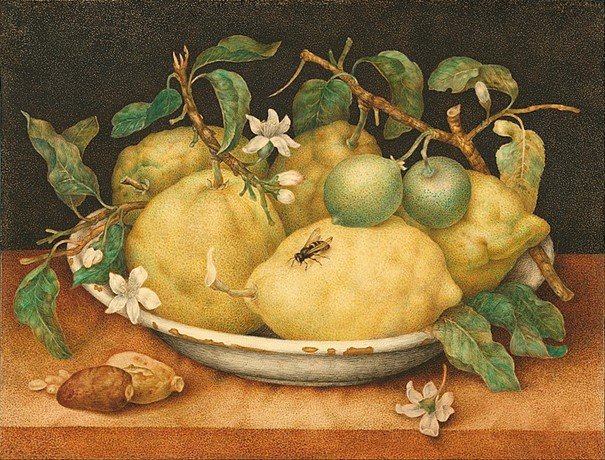
Fig. 2. Giovanna Garzoni, Bowl of Lemons, ca. 1660, tempera on parchment, Los Angeles, Getty Museum
Start
Little is known about her early years. Born in Ascoli Piceno, her mother’s hometown in the southern part of the Marche region, she moved to Venice, her father’s hometown. There, she was likely briefly married to Tiberio Tinelli (1586–1638), a Venetian portrait painter and miniaturist, but he is said to have practiced witchcraft, prompting Giovanna’s father to intervene. The marriage was annulled because it had not yet been consummated, and Giovanna vowed never to marry again.
In Venice, she learned to paint in oils and also honed her skills in singing, playing a stringed instrument, writing elegant letters, and calligraphy—all to cultivate her erudition, which was essential for an artist wishing to work at royal courts. For that was her ambition. She writes about this in her diary between 1618 and 1620. She sends letters to various potential patrons—beautifully calligraphed with vivid depictions of birds, flowers, and insects—asking if she might come to work for them. She likely also included samples of her work (fig. 3).
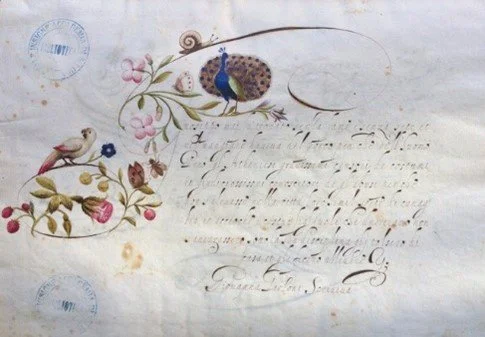
Fig. 3. Giovanna Garzoni, Libro de’caratteri cancellereschi corsivi, fol. 1r, c. 1617–22, ink and tempera on paper, Rome, Biblioteca Accademica di San Luca. A letter decorated with calligraphic depictions of plants and animals.
These letters reveal her deep affinity for the beauty of the universe. She wrote in a letter to a patron in 1618.
“Behold, O curious eye, the grandeur of the universe, embodied on a small canvas.”
And it worked. As a young woman of twenty, she arrived at the Medici court in Florence and entered the service of Grand Duchess Maria Magdalena De’Medici (1600–1633). She proved popular and in demand, and according to an eyewitness, Giovanna “had more talents than fingers.” It is almost certain that she also encountered the painter Artemisia Gentileschi (1593–1653) there, who was slightly older and already an established artist. Giovanna would later meet Artemisia again at other courts—in Venice, Naples, Rome, and possibly London as well—working for the same patrons.
Giovanna’s early work demonstrates that she is a jack-of-all-trades. She created large-scale works featuring allegorical, religious, and mythological subjects—themes held in high regard by both patrons and artists. (fig. 4, 5) Despite her young age, she had already painted a self-portrait in which she associated herself with none other than the god Apollo, complete with lyre and laurel wreath—a symbol of fame. (fig. 6)
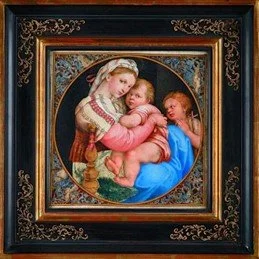
Fig. 4. Giovanna Garzoni, Madonna of the Chair (after Raphael), 1649, tempera on parchment glued to slate, 23.5 x 23.5 cm, private collection. Signed on the leg of the chair: “Giovanna Garzoni. F.”
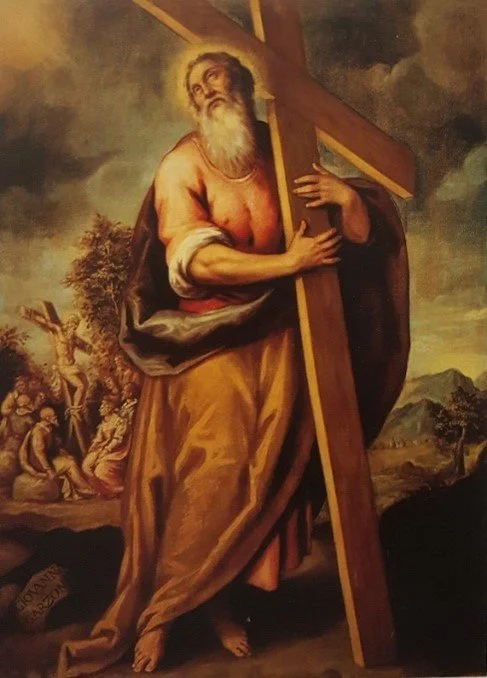
Fig. 5. Giovanna Garzoni, Saint Andrew, n.d., oil on canvas, 158 x 115 cm, Venice, Galleria dell’Accademia, signed “Giovanna Garzoni F”
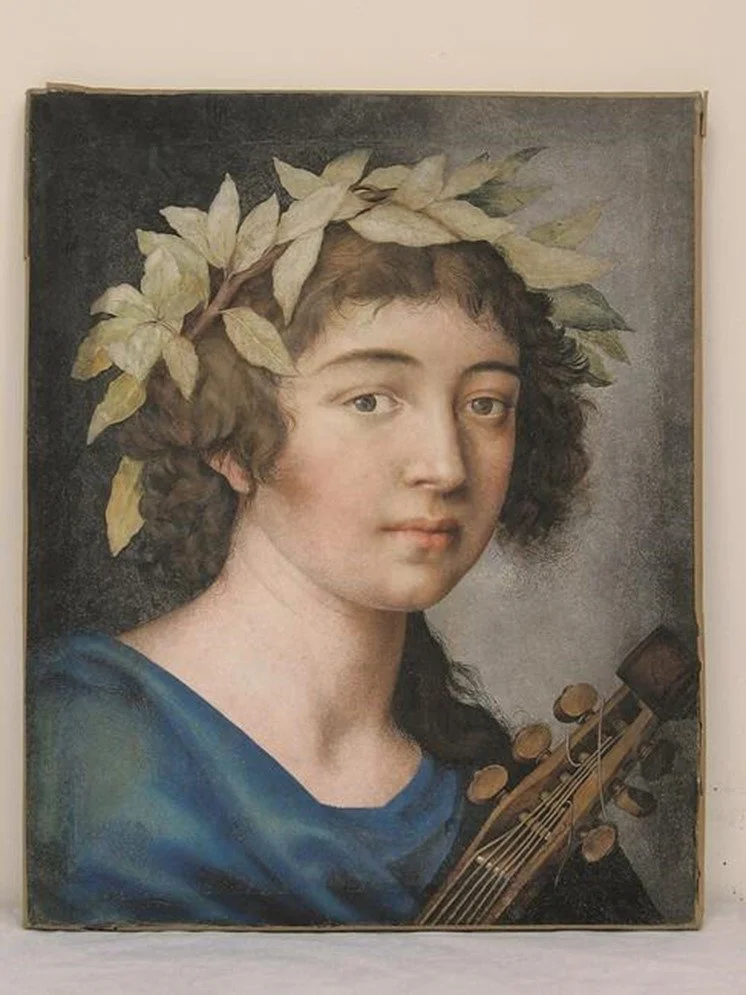
Fig. 6. Giovanna Garzoni, Self-Portrait as Apollo, c. 1618–20, tempera on parchment or linen, Rome, Palazzo del Quirinale
Ultimately, however, she chose the botanical genre. It has been suggested that this was primarily to avoid competing with Artemisia Gentileschi, especially since they encountered each other at various courts. Another explanation offered is that commissions for historical works were often given to men. Through this choice, she distinguished herself—just as she did by focusing on miniatures, scientific illustrations, and still lifes, which also became a distinct genre by the end of the sixteenth century. Giovanna became a pioneer in this field and was of great significance to later generations.
Giovanna, the Traveler
Giovanna stayed in Florence only very briefly and traveled via Rome to Naples in 1621. There, in 1630, she entered the service of the Duke of Alcalá, the Spanish viceroy of the Kingdom of Naples, who maintained a court in the city of Naples itself. At that time, Naples was Europe’s second-largest capital. It is highly likely that she met Artemisia here as well. She did not stay long here either, as in 1632 she accepted an invitation from Christina of France, Duchess of Savoy. She departed for bustling Turin, where she would remain until 1637. There she saw still lifes by the Milanese artist Fede Galizia (1578–1630), portraits by English artists, and works by artists from the Low Countries and northern Italy. (fig. 7) It was here that she began painting fruit still lifes, thus establishing the core of her body of work. (fig. 8)
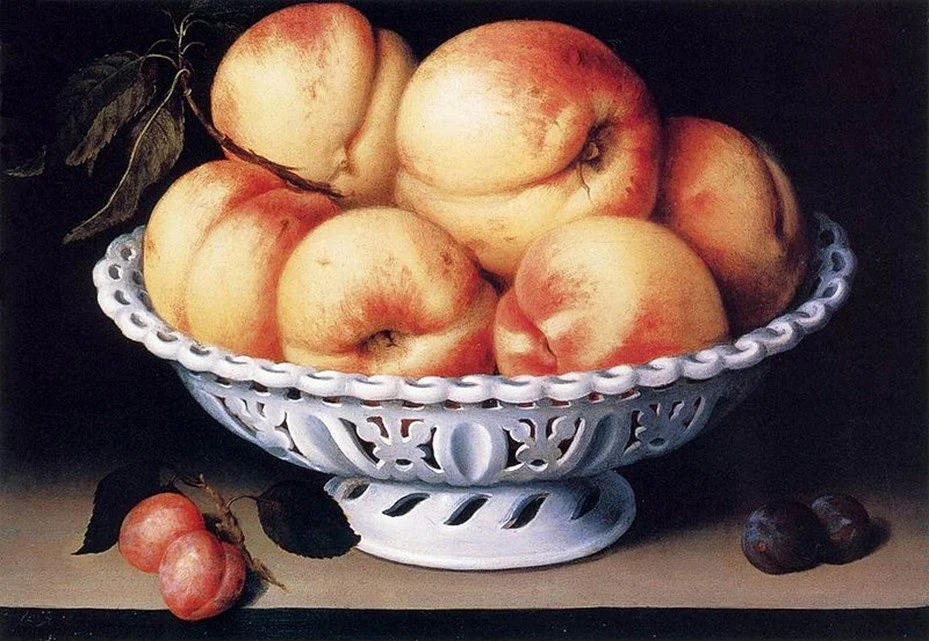
Fig. 7. Fede Galizia, White Ceramic Bowl with Peaches and Red and Blue Plums, ca. 1610, oil on canvas, 30 x 42 cm, Campione, Silvano Lodi Collection
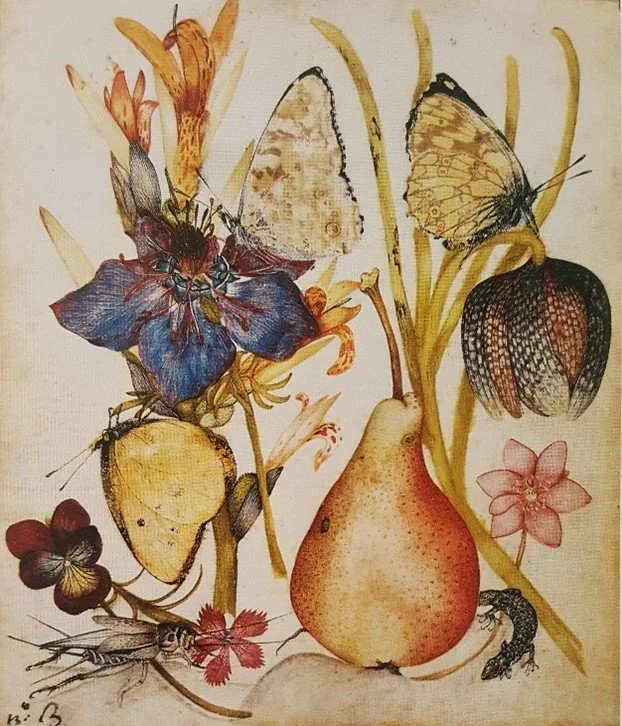
Fig. 8. Giovanna Garzoni, Flowers, a Pear, Insects, and a Lizard, n.d., tempera on parchment, 14.5 x 12.3 cm, Florence, Uffizi Gallery?
In Search of the Origins of the Earth and the Cosmos
From Turin, she set out for Paris and possibly London, and in 1640 she returned to Rome. There, she had previously become acquainted with the Accademia dei Lincei, a scientific society founded in 1603 by the eighteen-year-old Federico Cesi (1585–1630), an aristocrat from Umbria, and the Dutch physician, naturalist, alchemist, and astronomer Johannes van Heeck (1579–1620). The Accademia’s goal was to study the natural sciences. The famous Italian physicist, astronomer, mathematician and philosopher Galileo Galilei (1564–1642) was also a member. Despite the fact that, according to the Catholic faith, God created the world and no questions need to be asked about it, there is a great deal of scientific curiosity—one of the typical Renaissance paradoxes that is why I find that period so incredibly interesting. (Fig. 9)
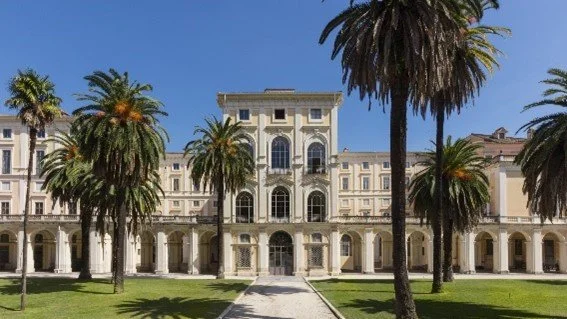
Fig. 9. The Accademia Nazionale dei Lincei today, housed in the 15th-century Palazzo Corsini. It is the oldest scientific institute in the world, with a collection of more than 600,000 scholarly works in the fields of science, history, literature, astronomy, physics, and botany.
Members of the Accademia dei Lincei published scientific works and commissioned anonymous artists to create—among other things—botanical illustrations, which they produced using the newly invented microscope. Women were often recruited to create these kinds of illustrations because, according to prevailing opinion, while they were not capable of original artistic creativity, they were capable of copying nature with great precision. One such work by the Lincei, as the members were called, is the Syntaxis Plantaria, which Giovanna Garzoni certainly knew and studied. At the Accademia she observed how botanists classified plants taxonomically and how botany was practiced.
Giovanna began her botanical work during her second stay in Rome. She created an album of watercolor drawings, the Piante Varie, now housed at Dumbarton Oaks, a research institute of Harvard University in Washington that features not only a library but also a museum and garden. She likely created the drawings on commission from the apothecary and horticultural expert Enrico Corvino—the Italian name of the Dutchman Hendrik de Raef of Delft (d. 1639), who was not a member of the Accademia but moved in the circles surrounding it and maintained his own botanical garden. Giovanna creates beautiful work that goes beyond mere exact representation. She breathes life into what she depicts, infuses it with energy, and “plays” with it. (fig. 10, 11, 12, 13)
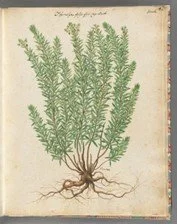
Fig. 10. Giovanna Garzoni, Piante Varie, thymelaea (thyme), ca. 1631, watercolor and gouache, folio 34r, signed “GARZON,” Washington, D.C., Dumbarton Oaks
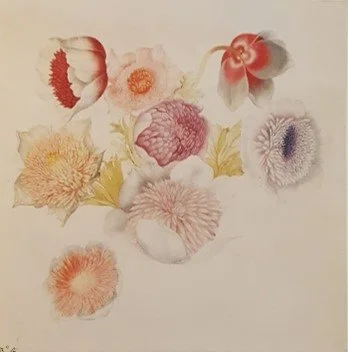
Fig. 11. Giovanna Garzoni, Anemoni, n.d., tempera on parchment, no further details
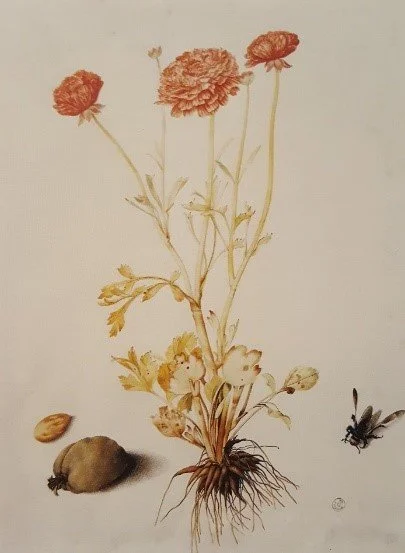
Fig. 12. Giovanna Garzoni, Ranunculus Plant with Two Almonds and a Hymenoptera (Insect), n.d., tempera with traces of pencil, 53.7 x 41.1 cm, Florence, Gabinetto dei Disegni e delle Stampe delle Gallerie degli Uffizi
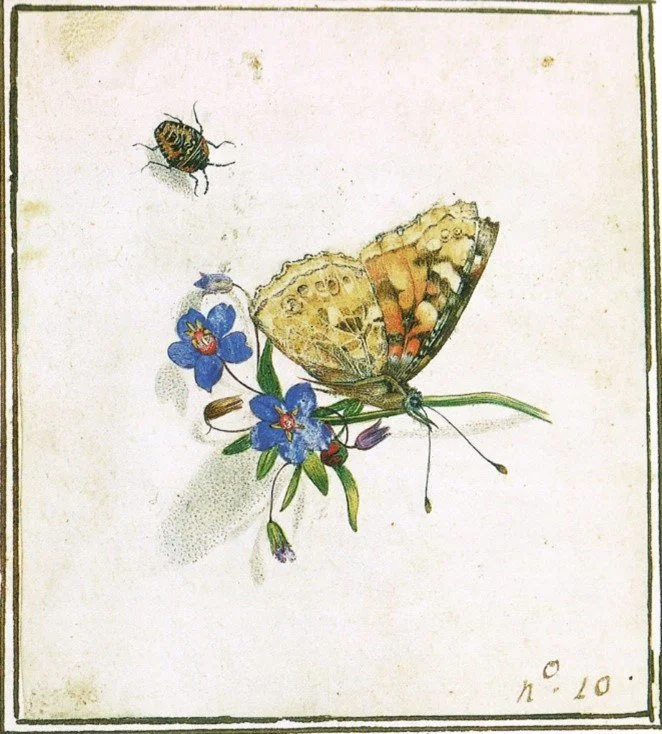
Fig. 13. Giovanna Garzoni, Butterfly, Flowers, and an Insect, c. 1632–49, tempera on parchment, in Libro di miniature e disegni, fol. 10, Rome, Accademia Nazionale di San Luca, Rome
In her Hyacinth with Four Cherries, a Lizard, and an Artichoke (fig. 14), she depicts leaves in a state of decay, with imperfections and diseases, whereas in botanical illustrations everything normally appears healthy and perfectly symmetrical. She turns them into individualized “portraits,” as if she playfully wants to disrupt the scientists’ dull abstraction. She ‘tinkers’ with scale and format. Or with the combination of plants and animals—sometimes based on natural history, literary or religious symbols, and sometimes on similarities in form. She also plays with spatial elements. In Fig. 14, the hyacinth seems to merge with the sterile white parchment, rising straight up without a shadow. But the accessories appear real precisely because here she does make use of perspective and shadow, as if they were lying on the parchment. It seems as though Giovanna wants to unite the visual experience of looking at illustrated botanical texts with the actual study of the material itself.
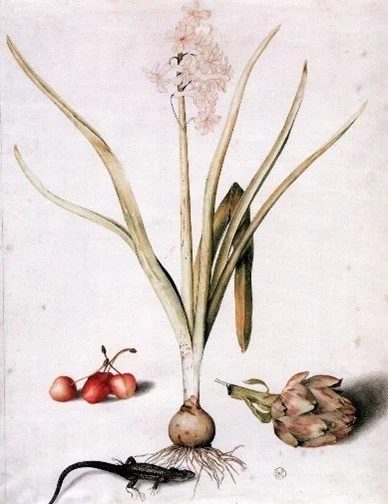
Fig. 14. Giovanna Garzoni, Hyacinth with Four Cherries, a Lizard, and an Artichoke, n.d., tempera and traces of black ink on vellum, 53.2 x 40.1 cm, Uffizi Gallery, Florence
Around 1640, she wrote a letter to the Medici court asking if she might return. She had only been there briefly, but, as mentioned earlier, she had certainly made an impression during that visit. For example, Cristoforo Bronzini (c. 1580–1633) wrote about her 1620 visit in his
Della dignità et della nobilità delle donne, and the poet Francesco Maria Gualterotti (1543–1638) also dedicated a sonnet to her, in which he described her as ‘exceptionally gifted’. In 1642, she returned to the Medici court, this time as a professional court painter, and she would remain there until 1651. She worked there for Grand Duke Fernandino II (1621–1670), as well as for Grand Duchess Vittoria della Rovere (1622–1694), who was very fond of the arts. In addition, she also worked for other members of the court (fig. 15).
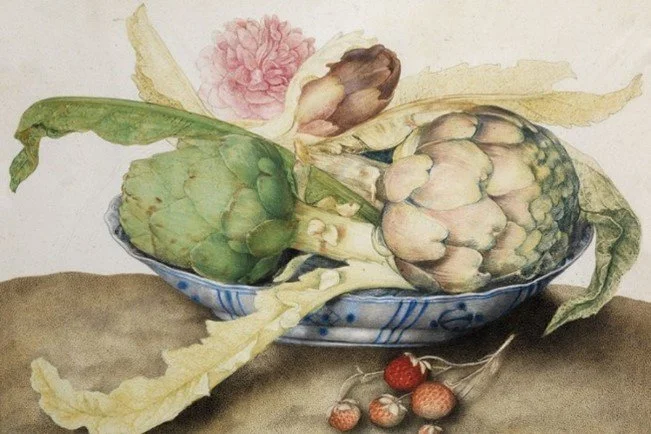
Fig. 15. Giovanna Garzoni, Chinese Bowl with Artichokes, a Rose, and Strawberries, ca. 1655–62, tempera on parchment, Florence, Uffizi Gallery/Palatine Gallery
Ultimately, Ferdinand II included twenty-one of her still lifes depicting plants and animals in his collection, which is now part of the collection of the Uffizi Gallery in Florence. (fig. 16) According to an inventory, Grand Duchess Vittoria left behind twenty works signed by Giovanna. These works were viewed by the English traveler Sir Philip Skippon (1600–1660) during his Grand Tour in 1664–1665, during which he also visited Vittoria’s favorite room, the Aurora Room on the ground floor of the Villa Medicae in Poggio a Caiano near Florence, Vittoria’s favorite country retreat. The room is a sort of cabinet of curiosities, a Wunderkammer in keeping with the Medici’s new interests in the natural sciences, and one in which Giovanna’s botanical miniatures fit perfectly. It is highly likely, moreover, that she also created a miniature allegorical portrait of the duchess as Judith with the head of Holofernes for this room. (fig. 17)
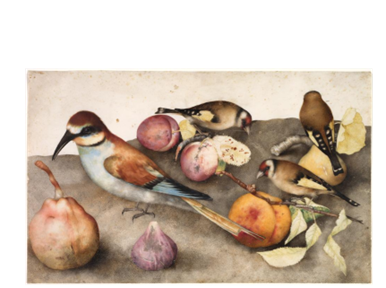
Fig. 16. Giovanna Garzoni, Still Life with Birds and Fruit, ca. 1650, tempera on parchment, Cleveland, The Cleveland Museum of Art
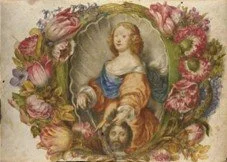
Fig. 17. Giovanna Garzoni (attrib.), Portrait of Grand Duchess Vittoria della Rovere as Judith with the Head of Holofernes in a Shell, surrounded by a Garland of Tulips, Carnations, and other Flowers, n.d., watercolor on parchment, 28.5 x 40.3 cm, private collection
During this second stay at the Florentine court, she also saw the earlier, similarly botanical miniatures by Jacopo Ligozzi (1547–1627), who was called a ‘pictor universalissimo’ because he was skilled in all genres—a description that, incidentally, also applies to Giovanna, who likewise works with many different media and subjects. (fig. 18, 19)
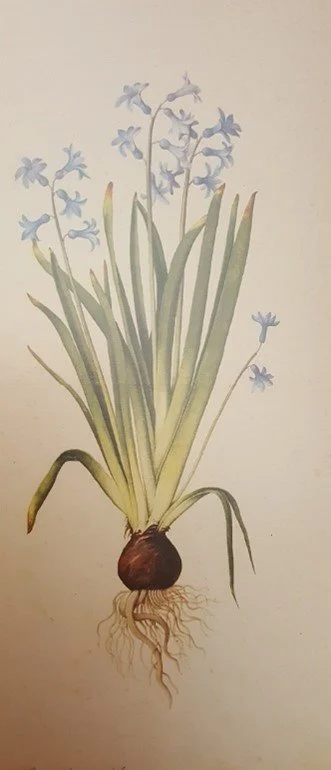
Fig. 18. Jacopo Ligozzi, Valeriana Phu and Valeriana Officialis, ca. 1577–1587, organic and inorganic pigments over black ink on paper with a smooth white background, 68 x 45.5 cm, Florence, Uffizi Gallery, Department of Drawings and Prints.
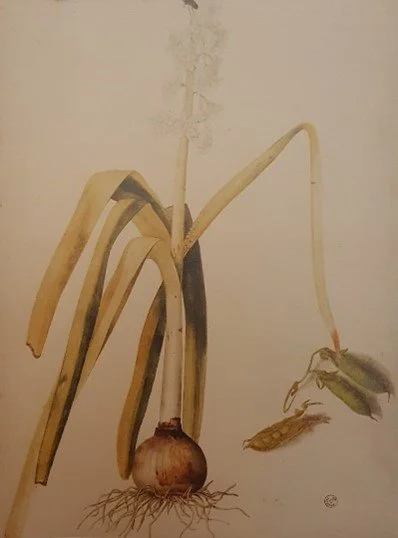
Fig. 19. Giovanna Garzoni, Hyacinthus Orientalis with Peas, c. 1648, tempera on parchment, Florence, Uffizi Gallery
Still Lifes: lower Status but very Beloved
Still lifes often have an extra sensory aspect. Seeing painted fruit can make your mouth water—it’s like eating with your eyes. In ancient times, these types of paintings were given to guests as a sign of hospitality. Even in the early modern period, these kinds of paintings were used to whet the appetite.
Nevertheless, at the end of the sixteenth century, humanists and art theorists considered this type of work to be of a lower order than, for example, works with religious and/or mythological subjects—the so-called history paintings. The view was that all natural things in the order of life have a lower status than humans. Still lifes allude to the most primitive level of human activity—namely, the satisfaction of hunger—and this lacks intellectual depth.
The situation is different for clients from the elite. Among them, these types of works are very popular, and there is a specific and practical reason for this. People at that time were very afraid of diseases and believed that if you thought about an illness, you would also become sick. Viewing works that depict the good life was thought to have a healing effect—a therapeutic power that could nurture health, especially when another plague epidemic was raging. A Roman physician once advised an aristocrat to display these paintings throughout his palace as visual stimuli to combat ailments. Much like the recommendation to hang cheerful works as a therapy for melancholy. (fig. 20)
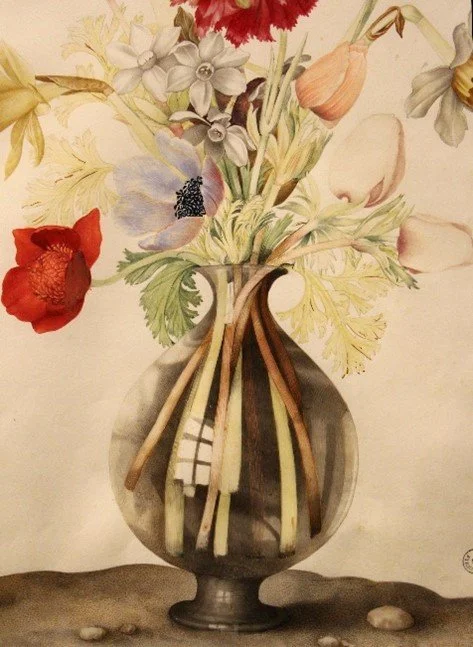
Fig. 20. Giovanna Garzoni, Still Life with Flowers in a Vase, c. 1640–1650, tempera on vellum with traces of black pencil, 44.8 x 37.5 cm, Uffizi Gallery, Florence. Note the reflection in the glass. She also possessed the ability to depict that.
It was believed that the plague spread through contaminated air. Fumes and warm air carried by westerly and southerly winds were considered the culprits, and homeowners were warned about southerly winds. A description indicates that when Giovanna is in Turin, her works featuring fruit and flowers are primarily found on the ground floor and first floor of the apartments located on the south side of the palace, serving as a healthy counterbalance to the potential health hazard.
Natura morte or ‘natura vive’?
In the Northern Netherlands, these types of works are called still lifes as a counterpart to subjects featuring movement, such as people and animals. In Italy and France, they are referred to as natura mort or nature morte. Sometimes artists add a ‘vanitas’ element to express the fleeting nature and vanity of sensory pleasure: a candle that has just been blown out, a clock that has stopped, or fruit that is rotting. This notion of ‘vanitas’ plays a much smaller role in Italy than in the Protestant north.
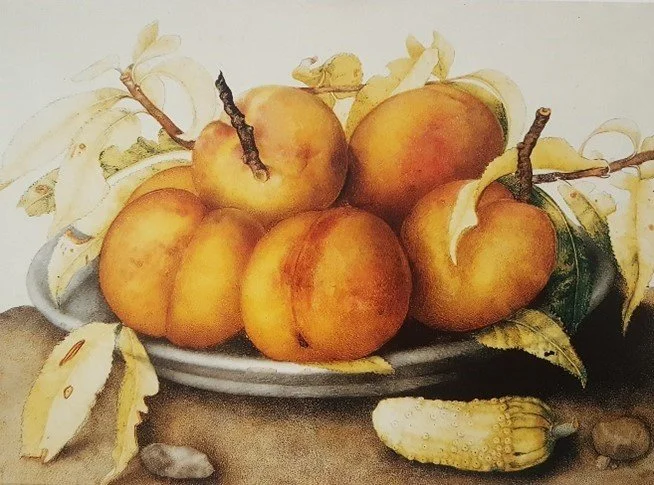
Art historians are now looking at works such as Giovanna’s—which have long been classified as still lifes—with fresh eyes. The works are not lifeless; on the contrary, they exude great vitality and sometimes even—in Giovanna’s work—sensuality. She captures a moment in life: not a memento mori but a momento vitae. She paints cherries at their peak: the moment when their health benefits are greatest and simply looking at them provides a health boost. The figs are bursting out of their skins, and the plums show that they’re almost past their prime—you’d better eat them quickly. She paints a bowl of plump peaches; one might see a woman’s breast or buttock in them. (fig. 22, 22, 23)
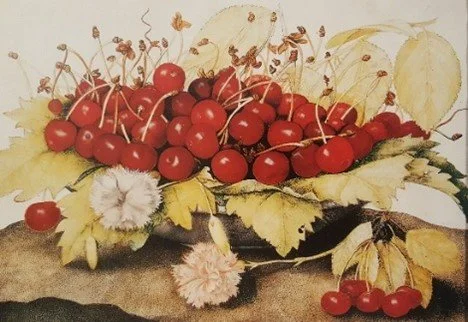
Fig. 21. Giovanna Garzoni, A Plate of Cherries, tempera on parchment, 24.5 x 34.5 cm, Florence, Galleria Palatina
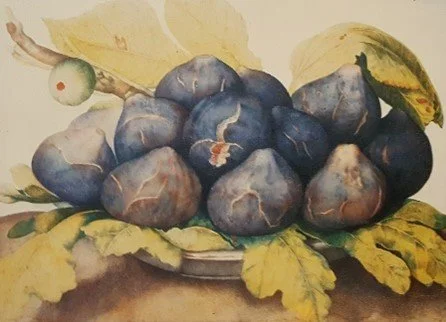
Fig. 22. Giovanna Garzoni, Bowl of Figs, c. 1655–62, tempera on parchment, Florence, Uffizi Gallery/Palatine Gallery
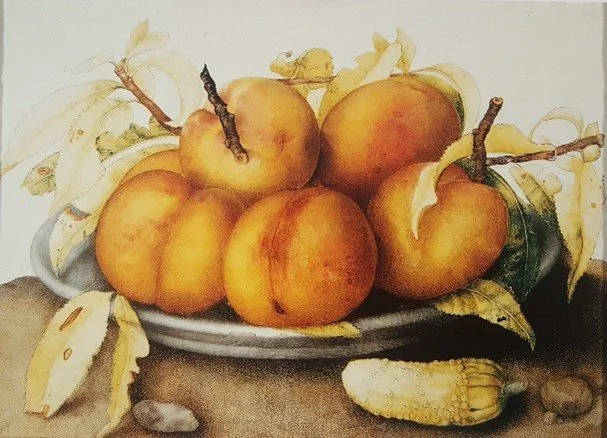
Fig. 23. Giovanna Garzoni, Platter with Peaches and a Cucumber, c. 1655–62, tempera on parchment, Florence, Uffizi Gallery, Palatine Gallery
She paints a melon that has been cut open, giving you a clear view of the seeds, and there are seeds lying there that can be planted again. (Fig. 24) Fertility is also suggested by the pomegranate, which appears to have burst open to reveal its juicy seeds, combined with a spiral-shaped snail that also symbolizes fertility: the reproductive power of nature with its mysteries of birth, growth, and regeneration of plants and animals. (Fig. 25) Giovanna’s work explores the cycle of life, depicted with keen observational skill, a playful spirit, and a deep love for nature. And she is back in full force: in 2021, the Uffizi Gallery in Florence organized a solo exhibition titled La grandezza dell’Universo nell’arte di Giovanna Garzoni about her life and work, accompanied by a beautiful catalog in both Italian and English.
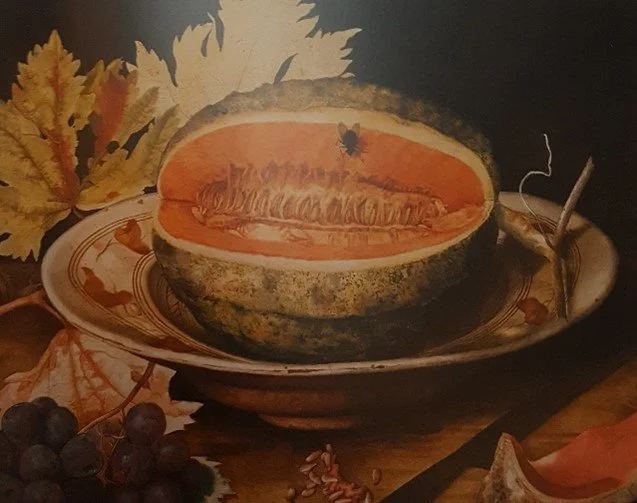
Fig. 24. Giovanna Garzoni, Cantaloupe with a Piece beside it, with Grapes and a Fly, c. 1650, tempera on parchment, Florence, Villa Medicea di Poggio a Caiano
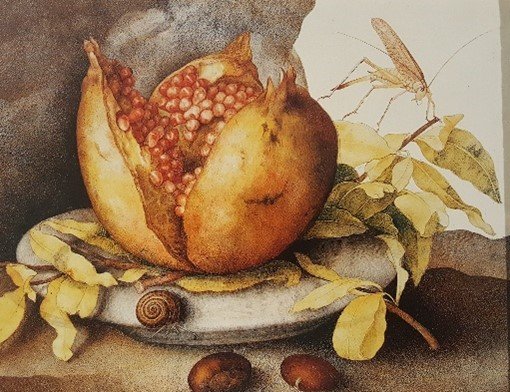
Fig. 25. Giovanna Garzoni, Bowl with a Cut-Open Pomegranate, a Grasshopper, a Snail, and two Chestnuts, n.d., tempera on parchment, 27 x 35 cm, Florence, Galleria Palatina
NB. This article has been translated from Dutch to English with DeepL and afterwards edited.
References:
Adeline Modesti, Women’s Patronage and Gendered Cultural Networks in Early Modern Europe: Vittoria della Rovere, Grand Duchess of Tuscany, New York/London, Routledge, 2020
Sheila Barker, ed., The Immensity of the Universe: In the Art of Giovanna Garzoni, Florence, Gallerie degli Uffizi (catalog)
Lucia Tongiorni Tomasi and Gretchen A. Hirschauer, The Flowering of Florence: Botanical Art for the Medici, Washington, National Gallery of Art, 2002 (catalog)
Online sources:
https://artherstory.net/two-of-a-kind-garzoni-and-gentileschi/ accessed May 1, 2023
https://www.arthistorynews.com/articles/5418_Artherstory_Giovanna_Garzoni_and_Artemisia_Gentileschi/accessed May 5, 2023
https://www.treccani.it/enciclopedia/giovanna-garzoni_ (Dizionario-Biografico), accessed on May 6, 2023
Image Credits:
Fig. 2.
https://it.wikipedia.org/wiki/Giovanna_Garzoni#/media/File:Giovanna_Garzoni_(Italian)_-_Still_Life_with_Bowl_of_Citrons_-_Google_Art_Project.jpg
Fig. 4.
https://indestilte.blog/2020/06/08/giovanna-garzoni-het-eeuwige-ademt-in-het-detail/
Fig. 7.
https://commons.wikimedia.org/wiki/File:Fede_Galizia_White_Ceramic_Bowl_with_Peaches_and_Red_and_Blue_Plums.jpg
Fig. 9.
https://www.turismoroma.it/en/places/accademia-nazionale-dei-lincei
Fig. 10.
https://www.doaks.org/resources/online-exhibits/margaret-mee-portraits-of-plants/visualizing-knowledge/thymelaea
Fig. 15.
https://www.apollo-magazine.com/still-lifes-giovanna-garzoni-pitti-palace/
The remaining figures are taken from the literature reviewed.