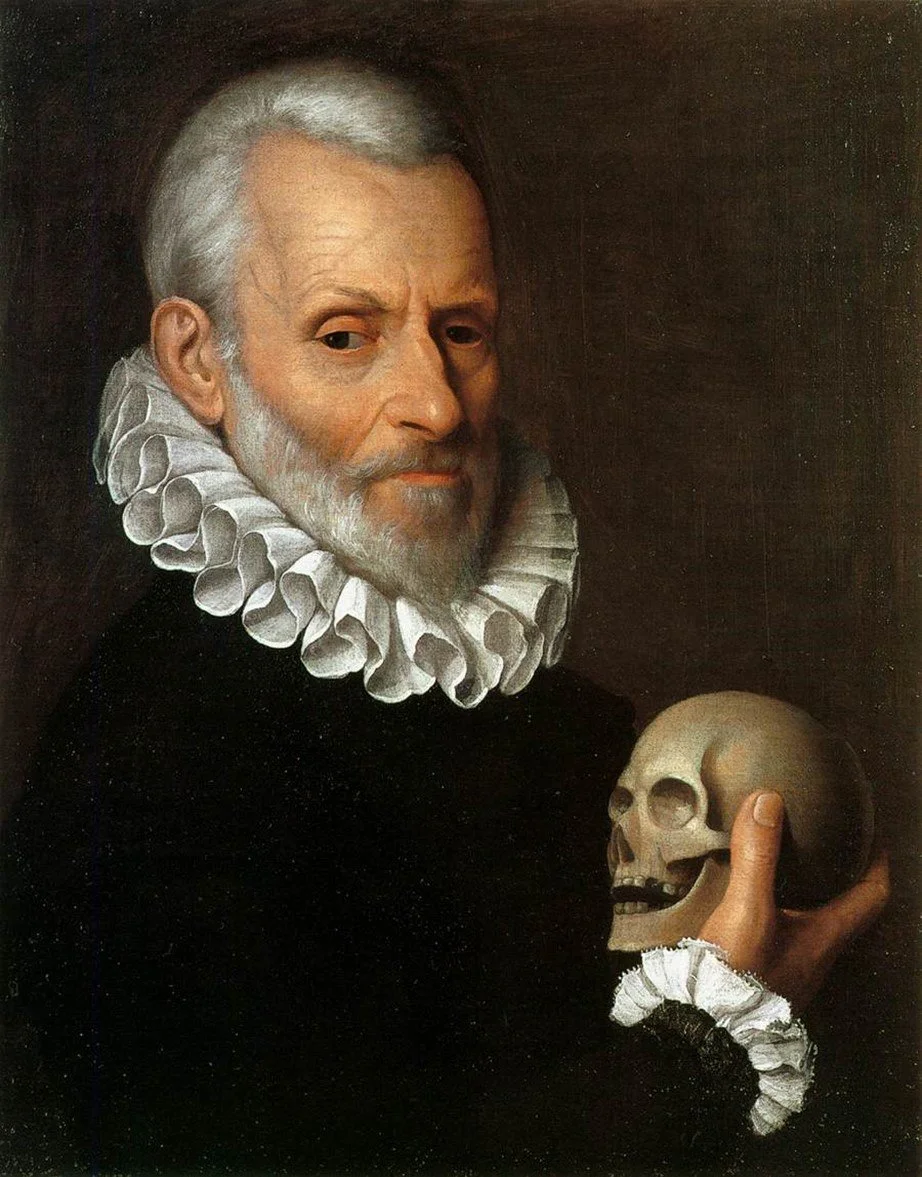
The 16th-century Bolognese artist Lavinia Fontana: a painter renowned for her phenomenal rendering of drapery and nudes – a first for her time
Lavinia Fontana, born in Bologna on 24 August 1552 and died in Rome on 11 August 1614, is by no means the least significant figure in my search for Italian female artists of yesteryear. During her lifetime, she painted more than 100 works, of which 30 survive. A further 25 are attributed to her. At the same time, she gave birth to eleven children. Only three of them – all sons – would survive her. She worked in both small and large formats, on canvas and on copper, and was regarded as an equal by her male colleagues and patrons. And on top of that, she was the first woman to paint a large altarpiece in a public space and to paint nudes – for a cardinal, no less, for his private residence – something entirely unusual in her day (I mean the nudes, not the cardinal). Last summer, at long last, the first solo exhibition on her life and work took place at the National Gallery of Ireland in Dublin. I was unable to see the exhibition, but I did immediately purchase the beautifully designed catalogue, which forms an important basis for this article. For it is indeed fascinating to situate this artist within the transition from Mannerism to the Baroque.
Lavinia is living in the right era. Sixteenth-century Bologna is characterised by an enlightened humanist atmosphere. It is a city with a vibrant arts scene, which also offers opportunities for women: in the archives of the civil registry of the time, 23 names of female artists can be found under the heading ‘painter’ for the sixteenth and seventeenth centuries. It is also a city of scholars who populate Italy’s first university, where women have been welcome since 1158.
There is a wealth of cultural entertainment organised by, for and featuring the many wealthy patrician families. There is no secular court; in Lavinia’s time, Bologna is part of the Papal States and is governed by Cardinal Gabriele Paleotti (1522–1597), Bologna’s first archbishop, together with a body of ecclesiastical administrators. In short, there are plenty of patrons for a fine portrait or a grand work on a religious or mythological subject. Female artists are often expected to confine themselves to portraits and domestic scenes, and Lavinia is highly skilled in this and much loved for it. She paints women, men, children and widows, thereby serving as a visual chronicler of her time. (figs. 1, 2)
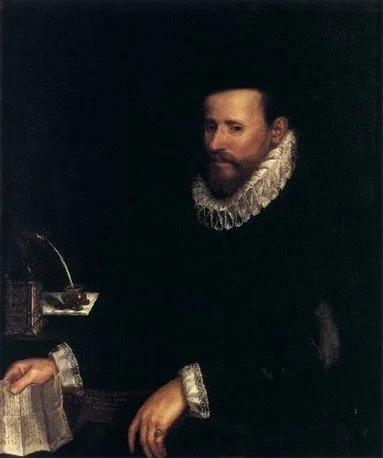
Fig. 1. Lavinia Fontana, Portrait of a Notary, 1583,
oil on canvas, 98 x 82 cm, private collection
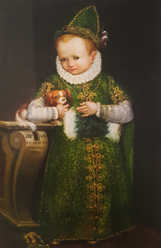
Fig. 2. Lavinia Fontana, Portrait of Ippolita Savignani at the age of twelve months, 1583, oil on canvas, 125 x 85 cm, Scotland, Hopetoun Collection
But she does more than that. Her father, Prospero Fontana (1512–1592), is a prominent Mannerist fresco painter and teacher, and well-connected in cultural circles. He knows Giorgio Vasari (1511–1574) – the artist and biographer famous to this day for his biographies of artists – and assists him with a commission at the Palazzo Vecchio in Florence. Vasari’s work is also inspiring Lavinia. When she is twenty, she paints The Wedding at Cana. It is a sort of test of her skill in which she – headstrong as she is – makes a few alterations to Vasari’s design. (figs. 3a and b)
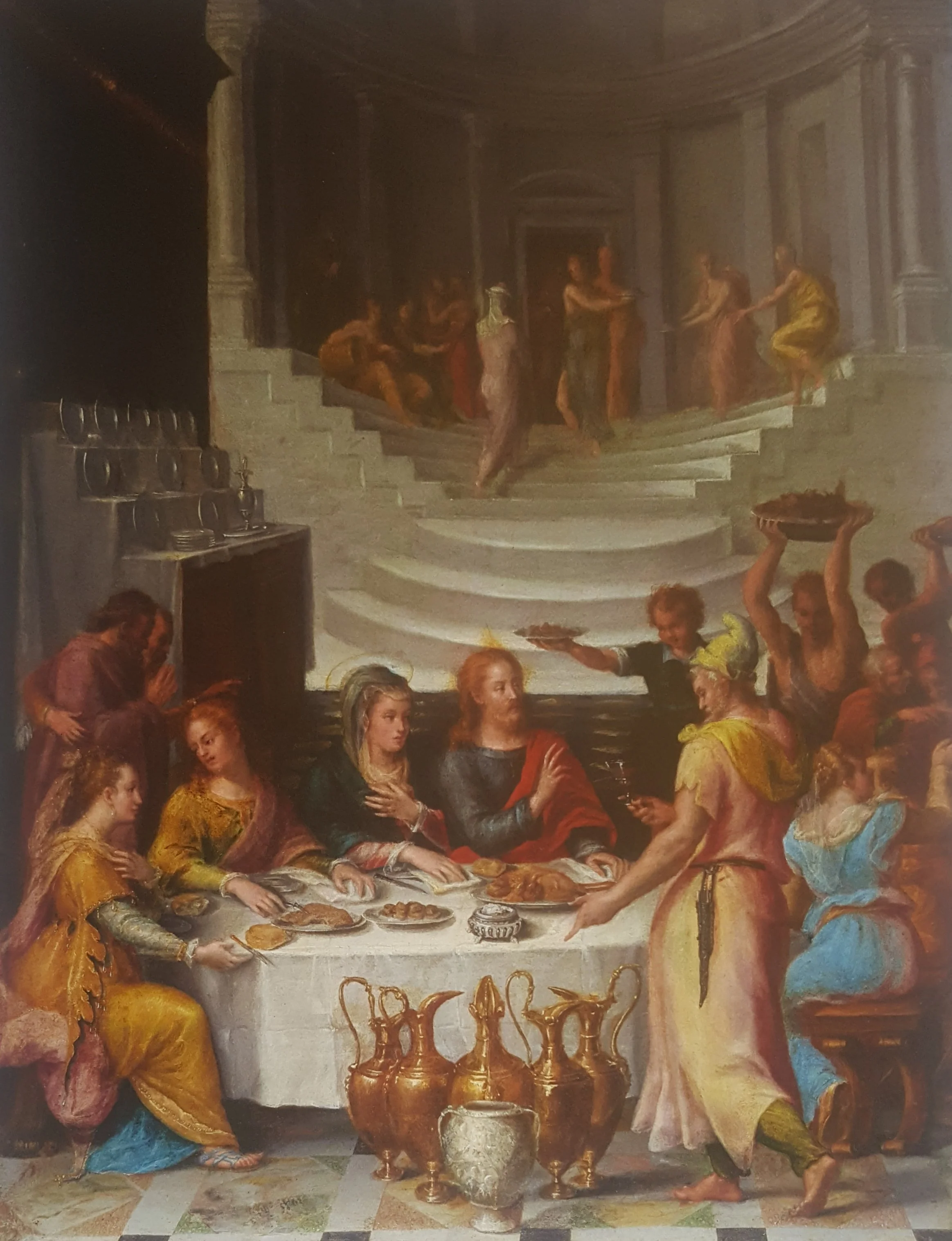
Fig. 3a. Lavinia Fontana, The Wedding at Cana, c. 1575–1580, oil on copper, 47.3 × 36.2, Los Angeles,
J. Paul Getty Museum
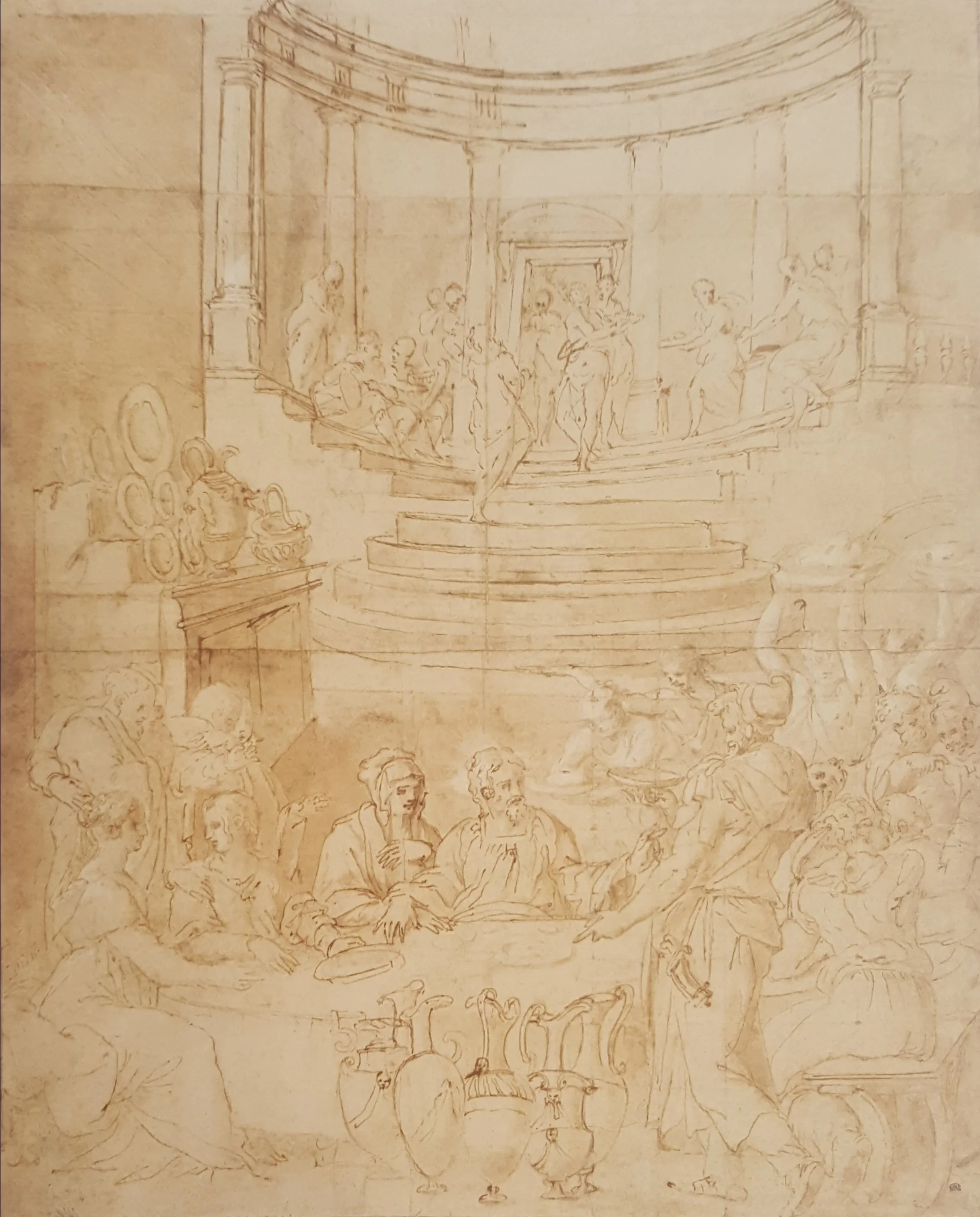
Fig. 3b. Giorgio Vasari, Study for The Wedding at Cana, undated, ink, black chalk and white watercolour, 45.1 x 36.8 cm
Prospero’s sons die before reaching adulthood, and that – along with, no doubt, her emerging talent – is why he trains his daughter in the art of painting at his studio, so that she can contribute to the family income. He clearly recognises her talent, but he need also to find her a husband who will support her career and enhance her social status. The choice falls on Giovanni Paolo Zappi (jr.), the son of a wealthy merchant from nearby Imola and a painter himself, albeit one of mediocre talent.
As is customary at the time, marriage is a business matter. Fathers set about finding suitable partners for their children. Once a suitable match is found, a marriage contract is drawn up.
In 1577, the couple marry, and in the handwritten contract being drawn up in advance, Prospero stipulates that Gian Paolo will live in the family home until Prospero’s death. After that, they will be free to come and go as they please, but they are required to look after Lavinia’s mother until she, too, passes away. He also stipulates that Lavinia must be able to continue working during the marriage and that her husband must support her in this. A major advantage of this arrangement for Prospero is that he does not have to pay a dowry. A friend of the Fontana family conducts the marriage negotiations and praises Lavinia to Gian Paolo’s father as follows: ‘if she [Lavinia] lives for a few more years, she will be able to make a good profit from her paintings and also lead a God-fearing and virtuous life, as befits a lady’. In the end Zappi helps her in the studio and develops into a business manager and accountant.
Thanks to her father’s wide circle of learned friends and creative connections, Lavinia becomes well acquainted with cultural life in Bologna. She gaines important patrons, such as Lodovico Carraci (1555–1619), who, together with his two nephews – Annibale and Agostino — found the Accademia degli Incamminati in 1582 and. They introduce as a counterpoint to the idealisation of figures in paintings—which is customary during the Renaissance and, indeed, in the often contrived Mannerist period—a more naturalistic and expressive style.
Lavinia also paintes, rather unusually, large-scale religious and mythological works. In 1583 – when Lavinia is 31 years old – she receives her first public commission for an altarpiece for the cathedral of Imola, her husband’s birthplace. It becomes the first work in the history of Western art depicting a religious subject, painted by a woman and intended for a public space. She goes on to paint some thirty other works with religious subjects. There is a great demand for this type of work in Bologna, particularly as the Roman Catholic Church has lost many of its faithful as a result of the Reformation and is now conducting an active campaign to win back the faithful – amongst other things – through paintings that visualis stories from the Bible in an appealing manner. (fig. 4)
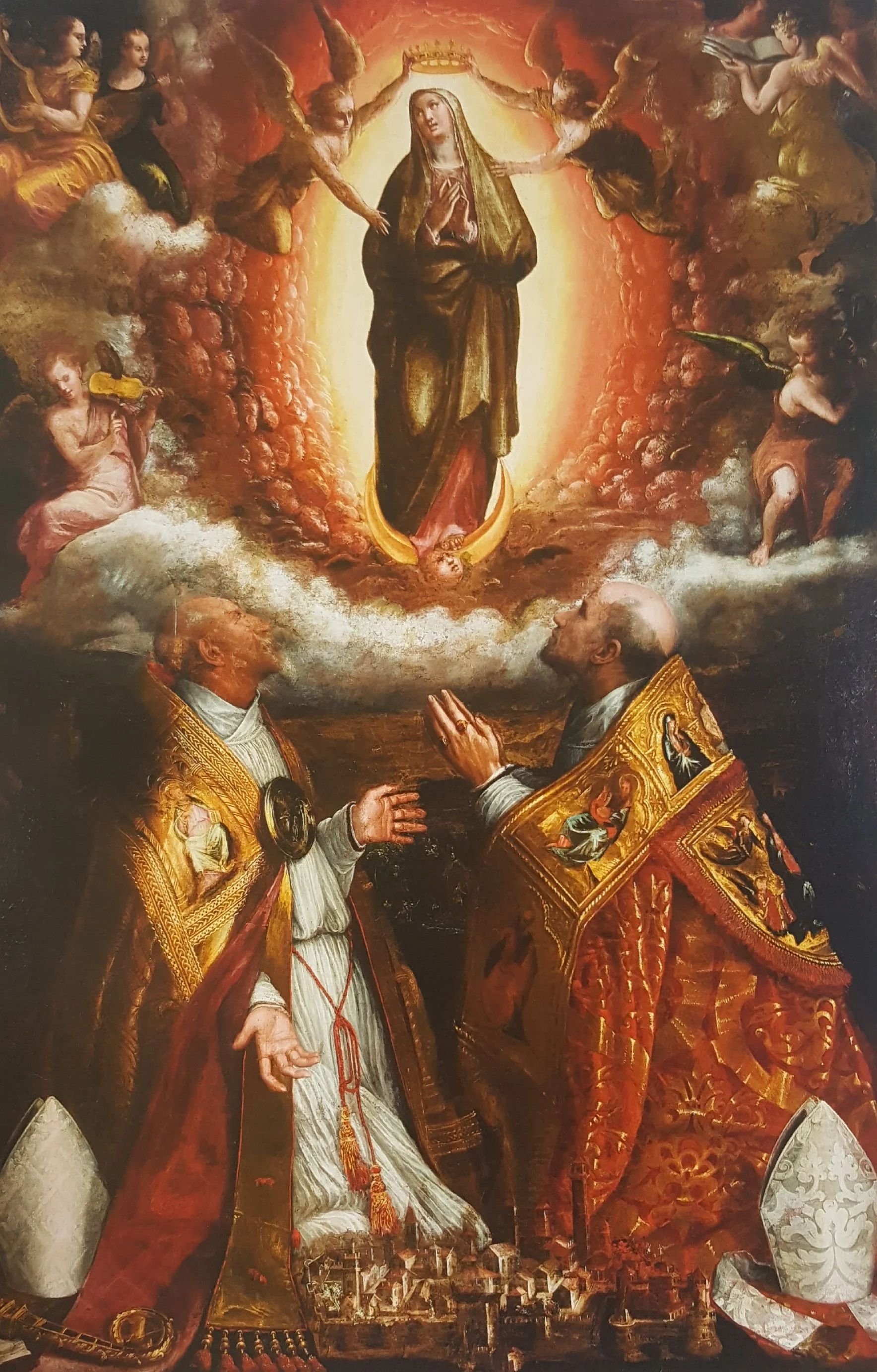
Fig. 4. Lavinia Fontana, The Assumption of the Virgin with Saint Peter Chrysologus and Saint Cassian, 1584, oil on panel, 252 x 165 cm, Imola, Collezione d’Arte della Città del Museo di San Domenico
This work helps her to establish herself as a professional artist. At the same time, it also attractes the attention of the noble families in Bologna, who begin to commission her to paint portraits, an emerging genre at the end of the sixteenth century because a portrait allows one’s status and prestige to be immortalised. Lavinia works tirelessly. Two of her supporters, the scholar Carlo Sigonio (c. 1524–1584), of whom she paints one of her earliest portraits, and the historian Fluvio Orsini (1429–1600), write to one another in a letter dated 3 January 1579, stating ‘that Signora Lavinia has given birth to a son and returned to work after just two days’. Whilst the artist and philosopher Leon Battista Alberti, between 1433 and 1440, writes in his series I libri della famiglia that a pregnant woman ‘must avoid heavy work and, after giving birth, must not go out into the cold and wind until she has fully recovered and her body has regained its full strength’. Incidentally, this advice dates from 140 years earlier, but Alberti’s works have endured for centuries. (figs. 5, 6, 7, 8, 9, 10)
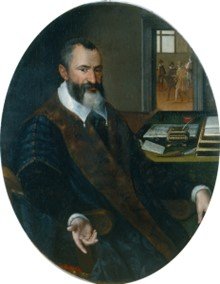
Fig. 5. Lavinia Fontana, Portrait of Carlo Sigonio, c. 1578, oil on canvas, 122 x 95 cm, Modena, Museo Civico di Modena
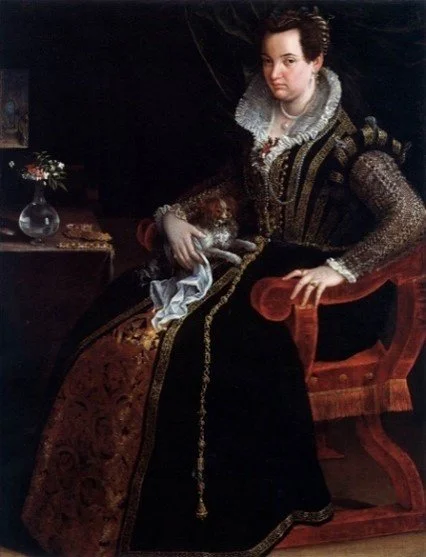
Fig. 6. Lavinia Fontana, Portrait of Costanza Alidosi, c. 1595, oil on panel, 157.5 × 120 cm, Washington, National Museum of Women in the Arts
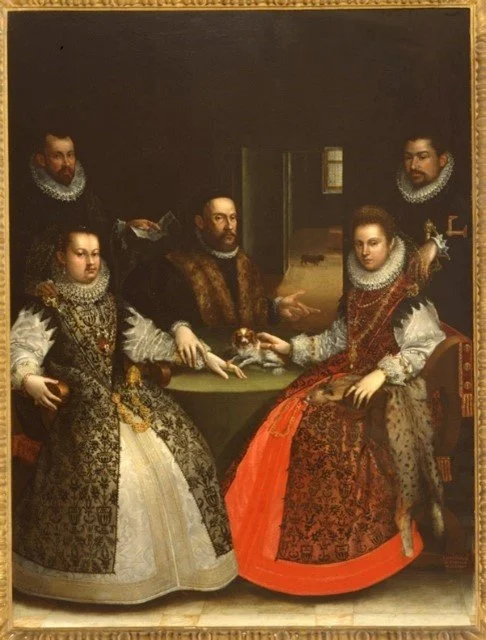
Fig. 7. Lavinia Fontana, Portrait of the Gozzadini Family, 1584, oil on canvas, 253 x 191 cm, Bologna, Pinacoteca Nazionale
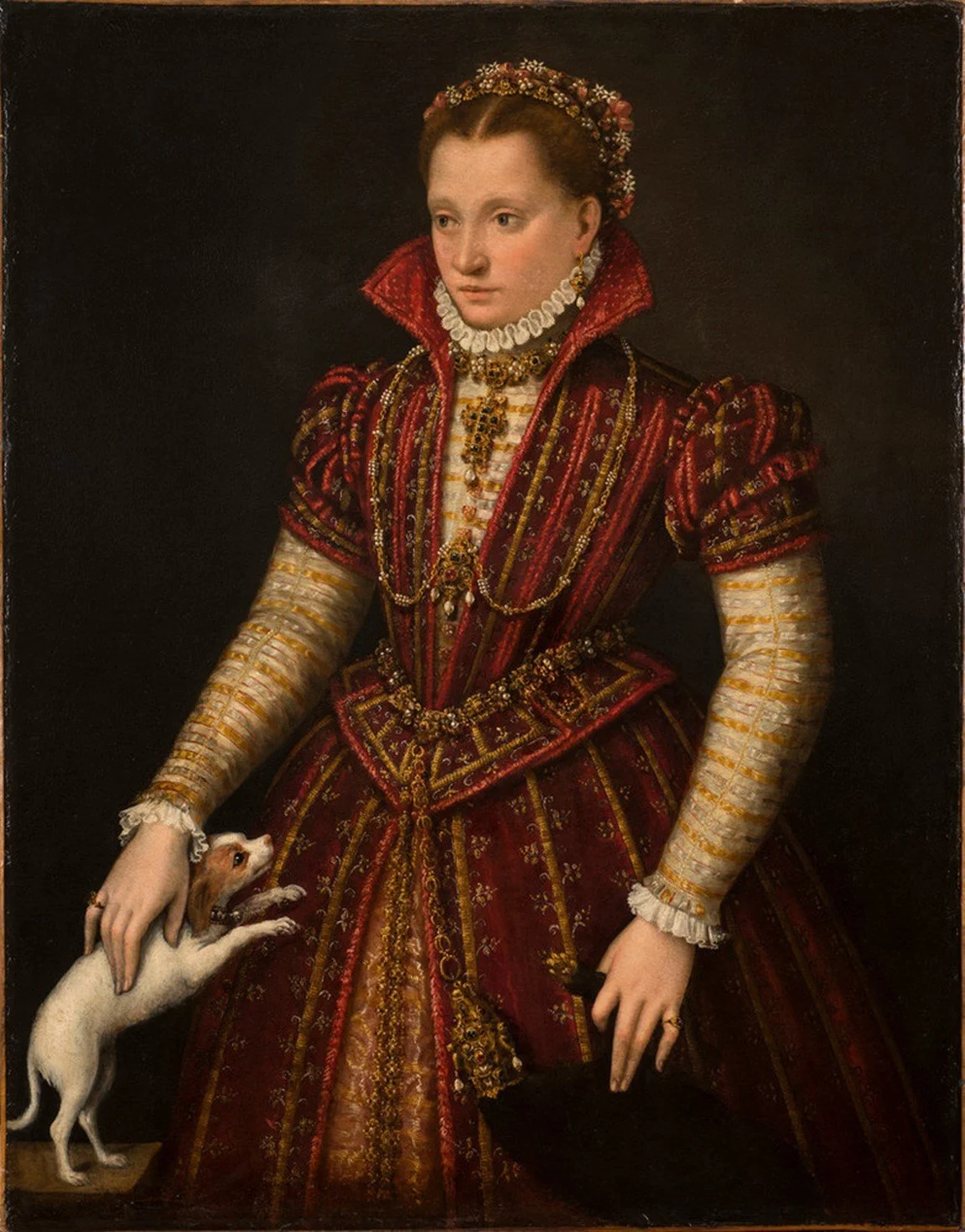
Fig. 8. Lavinia Fontana, Portrait of a Noblewoman, c. 1590, oil on canvas, 107.32 x 89.54 cm, Washington DC, National Museum of Women in the Arts
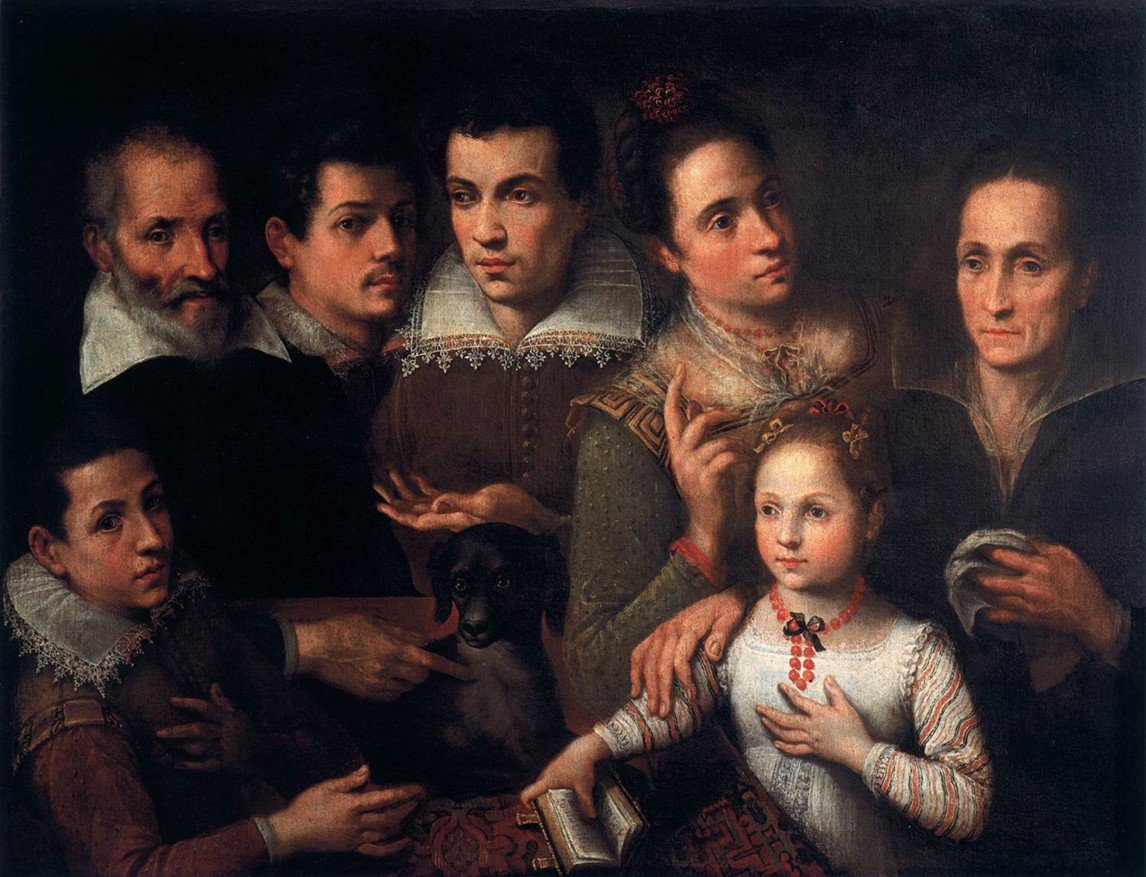
Fig. 9. Lavinia Fontana, Family Portrait, 1598–1600, oil on canvas, 85 × 105 cm, Milan, Pinacoteca di Brera
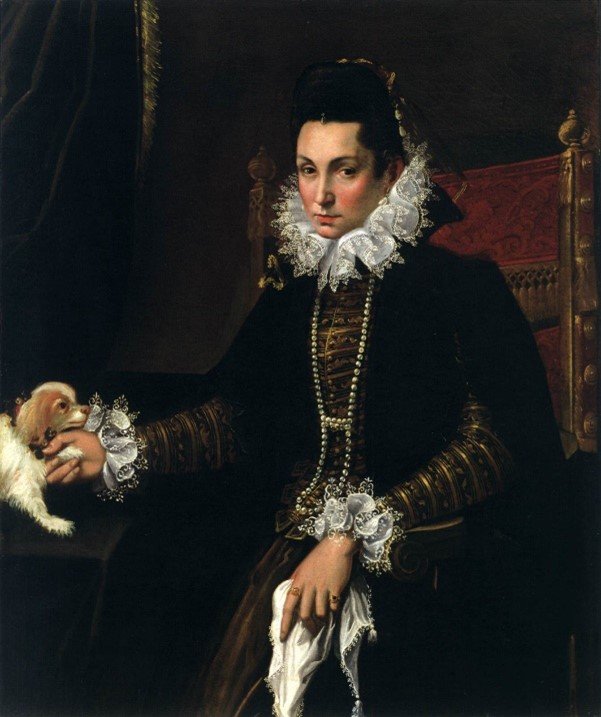
Fig. 10. Lavinia Fontana, Portrait of Ginevra Aldrovandi Hercolani as a widow, c. 1595–1600
oil on canvas, 115 x 90 cm, Baltimore, Walters Art Museum
As mentioned, Lavinia is pregnant eleven times, between the ages of 26 and 43, meaning she is pregnant almost constantly throughout her working life in Bologna. Not many women will be able to match this. She must be extremely flexible in her working life. Furthermore, giving birth in her day is a dangerous business. For instance, her husband writes to his father, Severo Zappi, on 17 January 1578 – two days before the birth of their first child, Emilia – stating that their doctor, Vincenzo Ghini, ‘had complained that insufficient care had been taken to ensure a successful birth (…) and that there is a risk of death’. Giovanni Paolo Zappi proves to be a devoted husband, for he also wrote: ‘Every day I await this ordeal for my wife, and pray that, God willing, this trial will soon come to an end’.
From the thirteenth century onwards, Bologna developes into a textile centre. In Lavinia’s time, the silk industry becomes the leading sector and the gold industry also flourish. The number of workers in these sectors rise sharply between 1570 and 1580. A group of prominent figures emerge and grow wealthy as a result; they begin to dress in a manner befitting their prosperity and are keen to display their wealth. It is during this period that Lavinia also begins to paint these prominent figures.
In her early work, her colour palette was still somewhat subdued, befitting the type of patrons she had: scholars and clergy. But that changes with her new clientele. Lavinia is second to none at beautifully rendering the richness of the fabrics and jewellery worn by her clients. She is renowned for this. The lap dog, a sought-after accessory, is also part of the picture, complete with jewelled collars and pearl earrings.
She is particularly popular with women. As her later biographer, the prominent Bolognese historian Count Carlo Cesare Malvasia (1616–1693), who devotes no fewer than four pages to Lavinia in his Felsina pittrice (The Lives of Bolognese Painters) in 1678, writes: “For some time now, you have seen all the ladies of the city flocking round her, clinging to her and caressing her (…) that they are delighted to see her in the street or at gatherings (…) they are very keen to have their portraits painted by her”. Lavinia also pays close attention to her relationships with her patrons. She proves to be a good communicator, and this even goes so far as to her asking a number of them to become godfather or godmother to one of her children.
Her colour palette becomes more daring, and fabrics and jewellery are rendered with even greater precision. She develops an unrivalled sense of texture – as art historians call this – and her eye for detail is her hallmark. It is said to be a Flemish influence, but it is undoubtedly also the result of the emergence of the more naturalistic style of painting – ‘from life’ – which the Carracci family introduces and begins teaching at their painting academy in Bologna, a place Lavinia was, incidentally, barred from attending because she was a woman. Women were not permitted to draw the male nude, and that was precisely the core focus of the course. After all, working in a naturalistic style means depicting reality as accurately as possible, and that applies to the human body as well. This is practised, on the one hand, by copying plaster casts of ancient sculptures of human figures – the originals of which are increasingly becoming available from archaeological excavations – and, on the other hand, by practising with male nude models; according to the prevailing norms, neither of these is considered appropriate for the female gaze.
Lavinia’s skill in naturalistic painting is evident in the remarkable narrative work The Visit of the Queen of Sheba to King Solomon from 1599, the centrepiece of the collection at the National Gallery of Ireland in Dublin and the inspiration for the recent exhibition. First of all, its size: the work measures no less than 251.7 x 326.6 cm. Lavinia tells the story through a large number of magnificently dressed figures – it almost resembles a theatrical scene. The story from 1Kings10 recounts the tale of the Israeli King Solomon.
Everyone knows how rich and wise the king is, not only within Israel but also far beyond its borders. Even the Queen of Sheba from Ethiopia has heard of him. She travelles to him with a large caravan laden with riches to see if it is true, and she is so impressed by his wisdom that she showers him with gifts.
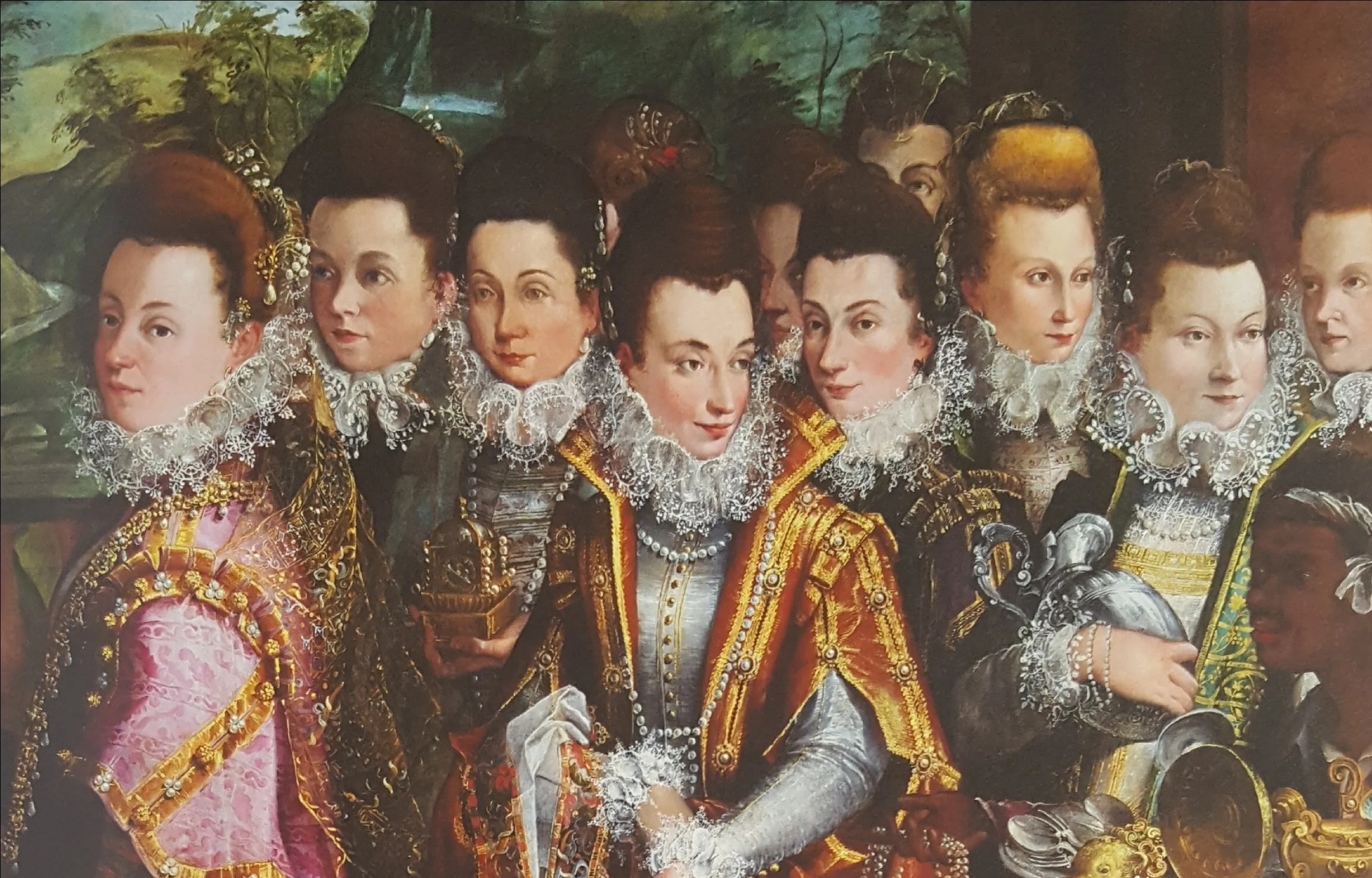
In Lavinia’s interpretation, we see not so much a historical Eastern court as a contemporary sixteenth-century Renaissance court, full of glitz and glamour, with a riot of colours and fabrics rarely seen. The ladies are dressed in the latest fashions. The Queen of Sheba kneels before the king, who leans towards her benevolently. Out of respect, she has removed her crown and handed it to the first lady-in-waiting in the row – the one in the pink robe. The queen has brought with her a vast retinue of ladies-in-waiting, who are also dressed so magnificently. A black servant carries a silver tray laden with treasures, whilst a ‘dwarf’ hands him pearls. The fabrics and their patterns are rendered in minute detail. The collars are exquisitely refined, as are the many jewels set upon and within the garments; rarely have so many pearls been incorporated into a painting. In this way, Lavinia gives form to the new naturalism, with the story going that the faces can be traced back to women whom Lavinia had previously portrayed. (Fig. 11a, b, c).
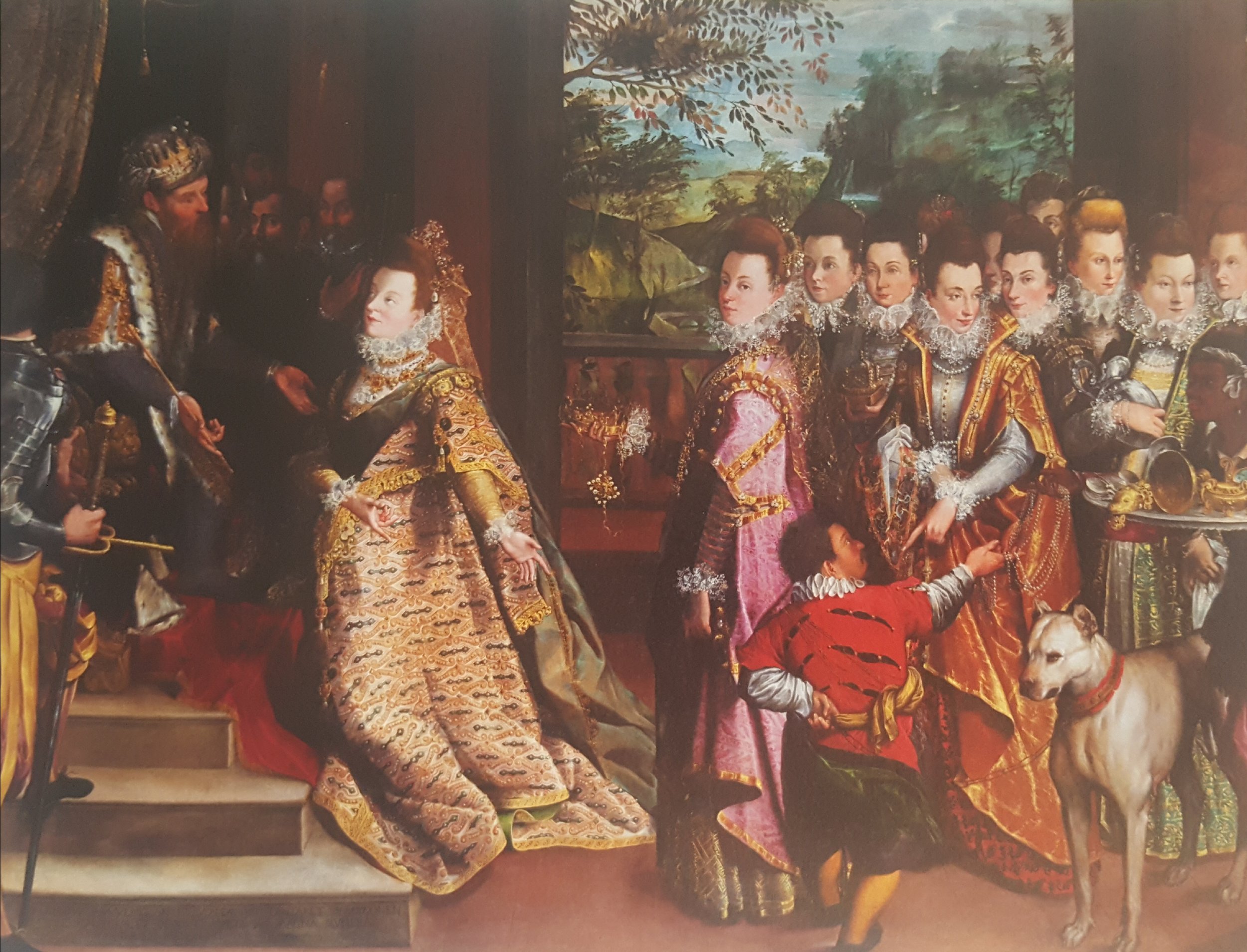
Fig. 11a. Lavinia Fontana, The Visit of the Queen of Sheba to King Solomon, 1599, oil on canvas, 251.7 x 326.5 cm, Dublin, National Gallery of Ireland
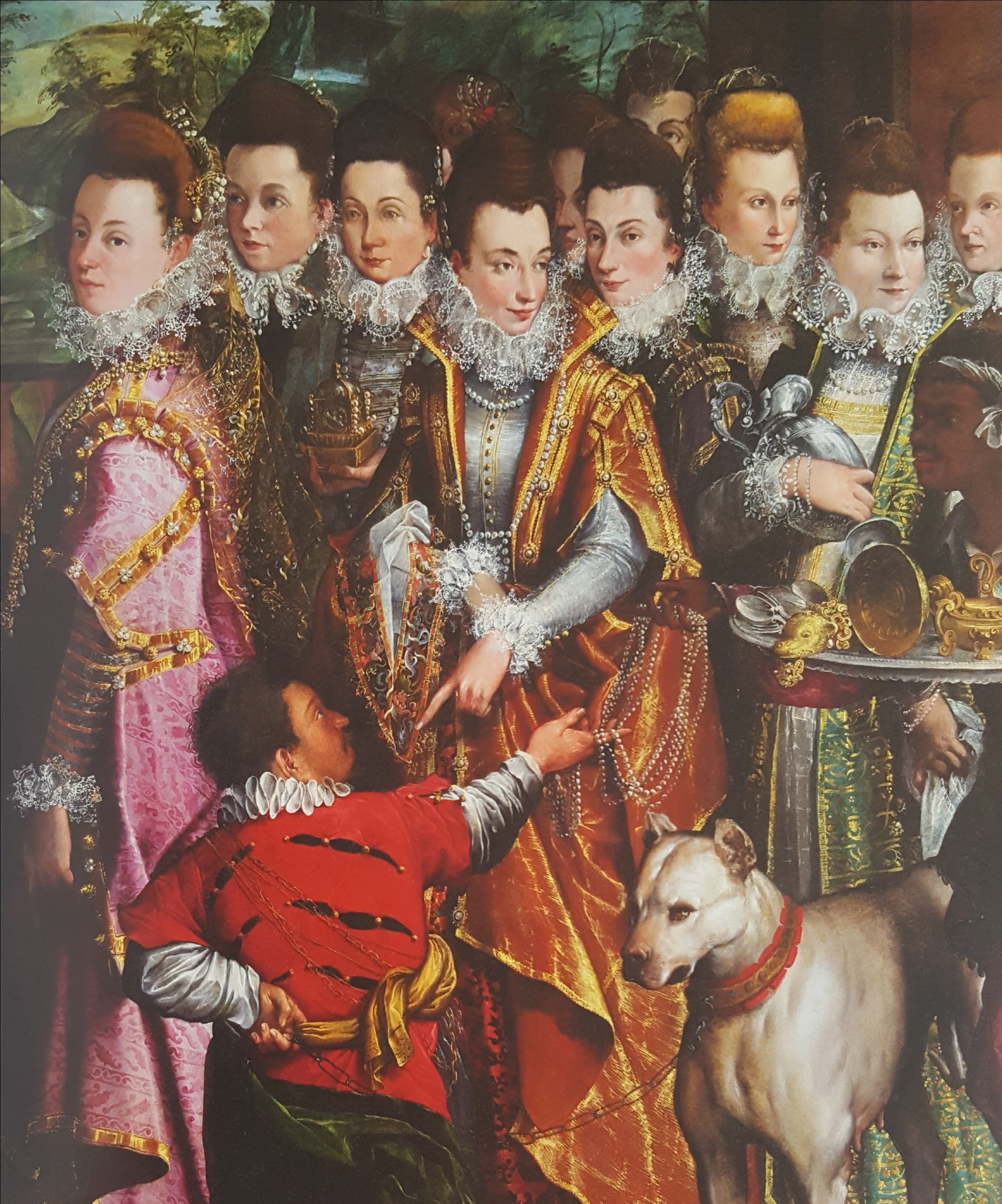
Fig. 11b. Detail from Fig. 10
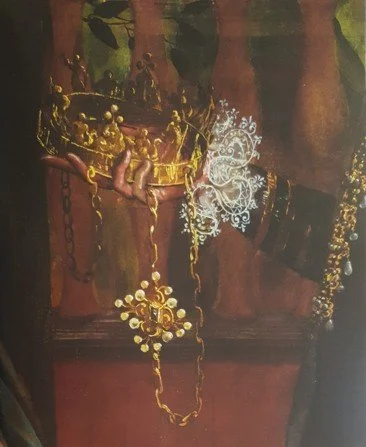
Fig. 11c. Detail from Fig. 10
The client is unknown and the work has probably never left Bologna. The first reference to the work is found in 1635 in the collection of the prominent Bolognese patrician family, the Beròs, though Lavinia’s name is not yet mentioned. It is, however, mentioned in a later inventory from 1696 belonging to the same family. This inventory lists both the artist’s name and the title of the work.
Earlier, in 1690, Lavinia depictes a similarly magnificent array of clothing in a religious work: Saint Francis of Paola Blessing a Newborn Child from a Noble Family. The work has been probably commissioned by the Vizzani family, one of Bologna’s prominent families, for their chapel in the church of Santa Maria della Morte in Bologna, to mark the birth of a child. Infant mortality is high in the sixteenth century, and the gratitude feeels when a child was born healthy is even greater. Here too, Lavinia uses bright colours for the magnificent robe worn – particularly – by the woman in the foreground, who is holding the child aloft. And here too, the clothing almost resembles a theatre costume; the robe worn by the woman in the foreground, in particular, is more colourful than in the portraits. Along the edge of her outer garment, miniature medallions depicting narrative scenes have been painted. What kind of fine brush must she have used to paint these? (Fig. 12).
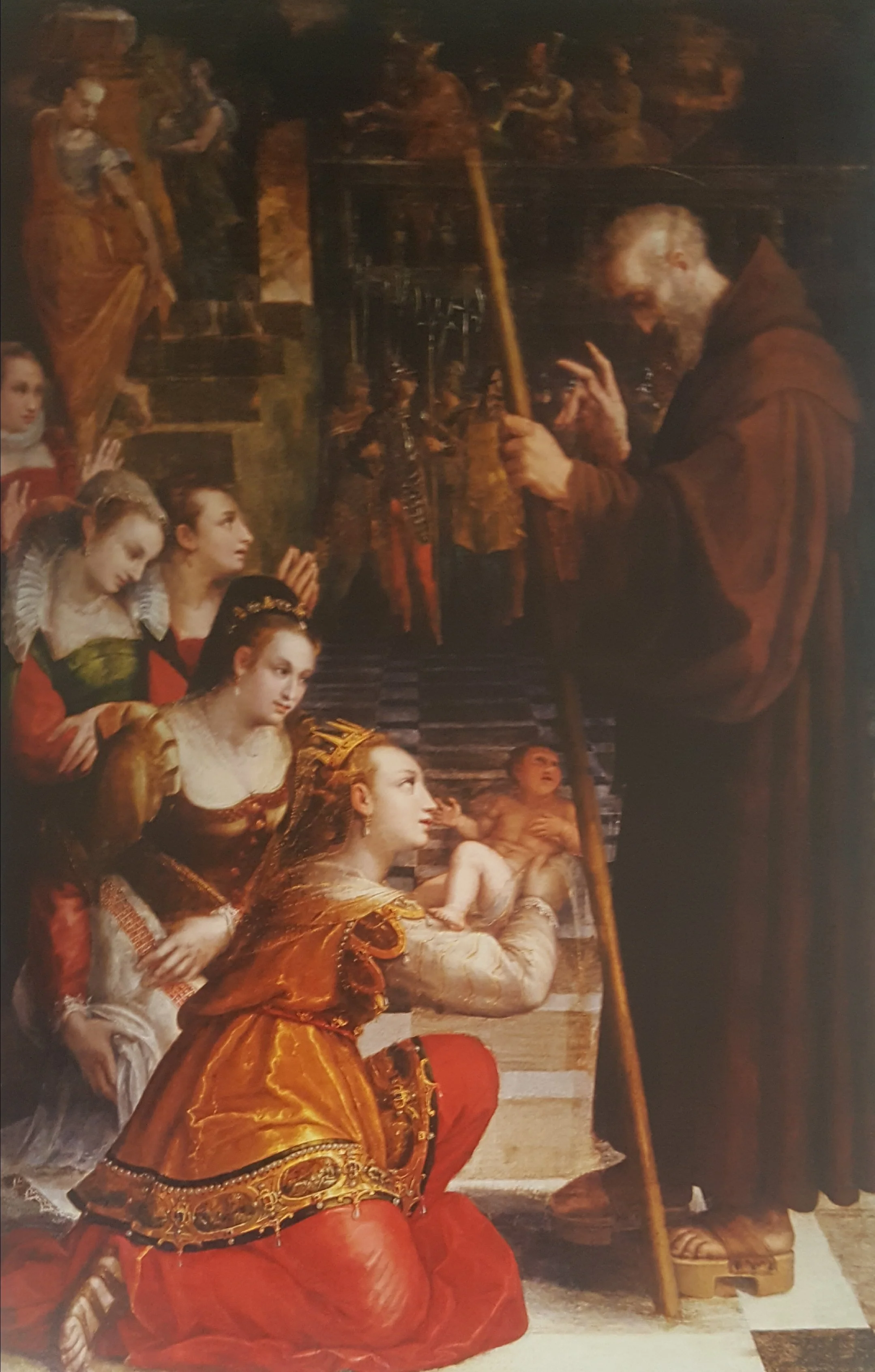
Afb. 12. Lavinia Fontana, De heilige Franciscus van Paola zegent een kind uit een adellijke familie, 1590, olieverf op doek, 212,3 x 139,2 cm, Bologna, Pinacoteca Nazionale di Bologna
Lavinia also paints three versions of the much-depicted theme of Judith and Holofernes. That is a favourite subject amongst sixteenth-century patrons. (Fig. 13). Judith is a devout, beautiful and wealthy Jewish widow who lives in the mountain village of Betulia, which is under siege by the Babylonian general Holofernes. Under the pretence of a pretext, she enters his tent. He hopes for a long, passionate night of love and therefore sends his servants away. But Judith has a different plan. She gets Holofernes drunk and, together with her maidservant, beheads him in the hope of saving her fellow villagers. And so it happens: his soldiers flee when they realise their leader is dead.
Here too, Lavinia depicts a richly dressed woman – some say it is a self-portrait – holding the sword aloft in her right hand and Holofernes’ head in her left. The dress and petticoat appear to be made of a satin fabric, partly surrounded by a beautifully rendered sheer fabric woven with gold thread. This sheer fabric flows towards the back and appears to be fastened at the nape of the neck, possibly to convey an exotic or Eastern feel. The dress is lavishly adorned with jewellery, which Lavinia is said to have sometimes borrowed from her wealthy clients to serve as examples in her studio. The work may later have served as an example for the slightly younger, also Bolognese, painter Elisabetta Sirani (1638–1665), who will paint the same theme some forty years later.
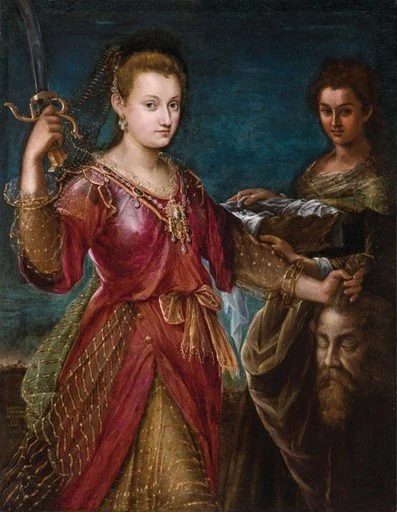
Fig. 13. Lavinia Fontana, Judith with the Head of Holofernes, c. 1595–1600, oil on canvas, 125 x 97 cm, Bologna, Museo Civici d’Arte Antica/Museo Davia Bargellini
Lavinia also paintes self-portraits, as is customary at the time. These are often given as gifts to potential patrons. Artists use these to demonstrate their skill and to reveal something about themselves through the portraits. In fig. 16, Lavinia depicts herself seated at a spinet, thereby showing that she is a cultured woman who, in addition to painting – see the easel in the room behind her – also plays music. Moreover, with this glimpse through the spinet, she demonstrates her mastery of the laws of perspective. In the second self-portrait she produces – not on canvas but on copper and much smaller in scale – she again portrays herself as a cultured individual by depicting herself writing, surrounded by bronze and plaster casts from her own private collection. She is not of noble birth, but Vasari is so impressed by her that he – incorrectly – refers to her as such in his Vite. (figs. 14, 15)
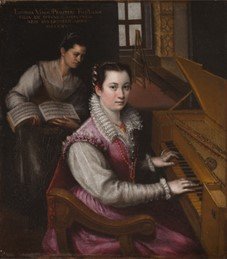
Fig. 14. Lavinia Fontana, Self-Portrait at the Spinet, 1577, oil on canvas, 27 x 24 cm, Rome, Accademia di San Luca. Compare her face here with that of Judith in Fig. 15.
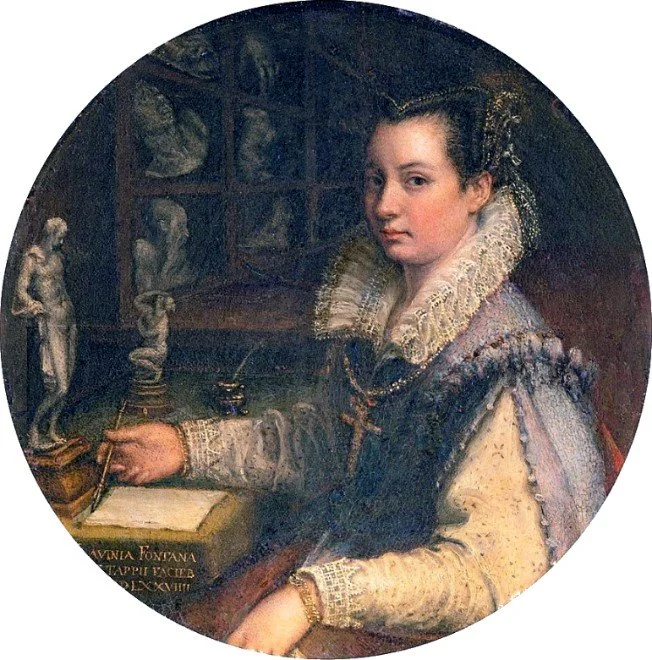
Fig. 15. Lavinia Fontana, Self-Portrait, 1579, oil on copper, 15.7 cm in diameter, Florence, Uffizi Gallery. Zie haar signering links onder.
Just like her male colleagues, Lavinia uses myth and allegory as a vehicle to demonstrate her skill in depicting nudes. For a long time, the Church had no issue with nudity. Christ is also depicted naked, with a small covering over his genitals. But times are changing. The nude is becoming increasingly realistic, and sensuality and eroticism are coming into play. Particularly in historical paintings, which are held in the highest regard, artists are pushing the boundaries under the guise of stories from the Bible and mythology, with the wishes of patrons also playing a part.
Archbishop Paleotti of Bologna takes part in the Council of Trent, where guidelines are drawn up regarding the role of art in conveying the Roman Catholic message to the faithful. In 1582, in consultation with local artists and scholars, he writes a pamphlet on the subject: Discorso intorno alle image sacre e profane (Treatise on Sacred and Secular Images). The purposte of this pamphlet is to influence religious art in the city, as art is playing a crucial role in instructing the faithfull. In such a way that everyone, whether literate or not, can understand the images, the image has to be clear and accurate. The depiction of nudity is restricted to scientific purposes and private quarters.
Blood is thicker than water, and as a result, a niche market has emerged for mythological and allegorical works aim at a clientele of wealthy patrons. Lavinia, too, is subject to the principle of ‘you ask, we deliver’, just like her male colleagues. Lavinia’s 1592 work Venus and Cupid can be categorised under this heading. In this allegorical work, Venus appears half-naked, yet she is not, as her body is covered by a beautifully rendered veil of transparent fabric. The jewellery is depicted with great refinement. A painter can accept such a commission with a clear conscience if the work is intended for private purposes
Perhaps this work has been commissioned by a patron who wants a painting for his private quarters featuring his wife in the leading role as Venus – as a source of sensual inspiration. For a year later, Lavinia has been commissioned to paint a portrait of a woman who bears a striking resemblance to this Venus. Is the husband so pleased with the Venus and Cupid that Lavinia is now permitted to create a work that may be seen by the outside world? On the basis of a later copy of this work, the woman depicted in the portrait is identified as a lady from the noble House of Ruini – Isabella Ruini, to be precise – the reigning beauty of late-sixteenth-century Bologna. (Figs. 16, 17).
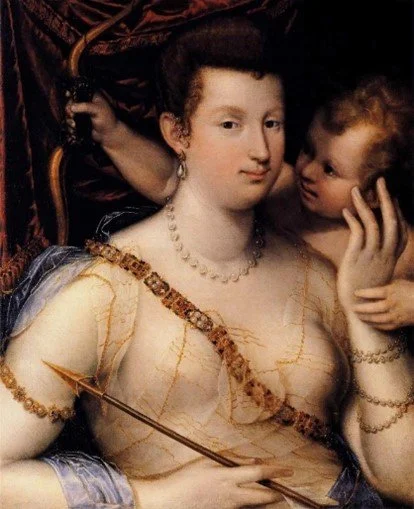
Fig. 16. Lavinia Fontana, Venus and Cupid, 1592, oil on canvas, 75 x 60 cm, Rouen, Musée des Beaux-Arts
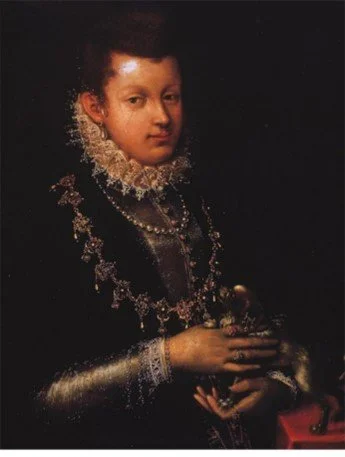
Afb. 17. Lavinia Fontana, Portret van Isabella Ruini?, 1593, olieverf op doek, 90 x 74 cm, Florence,
Gallerie degli Uffizi
Following the death of Lavinia’s father, Prospero Fontana, in 1597, the Zappi family, now free from the ties that keeps them in Bologna. Lavinia and her husband decide around 1604, to comply with the earlier request made to Lavinia by Cardinal Girolamo Bernerio (1540–1611), a member of a prominent Bolognese family, to come to Rome. They move to Rome with their four children who are still alive at the time. In Rome, Lavinia works for prestigious patrons and various popes, including Paul V, whom she has known in Bologna as Cardinal Camillo Borghese (1552–1621). This pope, too, is an admirer, and their bond is close; as early as 1592, whilst they ware both still in Bologna, she askes him to be godfather to her son Severo.
During this period, Lavinia produced a great deal of religious work, but will ultimately be most highly regarded for her portraits. Another notable commission is the one she receives from Cardinal Scipione Borghese (1577–1633), also a scion of the Borghese family, with whom her ties in Rome deepens during her stay. The work for the cardinal, Minerva Dressing, is regarded as the first documented, freestanding, full-length female nude painted by a female artist, thereby breaking all the rules. It demonstrates courage and a refusal to be constrained by existing conventions.
Lavinia signes the painting beneath Cupid’s foot: ‘FACIEBAT MDCXIII’, with her name having been lost. As a result, it is not immediately clear that this work is hers. It is therefore initially attributed to Titian. However, in 1955 a document came to light concerning a payment to Annibale Durante, the Borghese family’s carpenter, for a frame for a ‘Pallas by Donna Lavinia Fontana’, which also listed the dimensions. These correspond exactly to the work that was later given the title Minerva Dressing Herself.
In the painting, the figure is not rendered in great detail, possibly because Lavinia lackes sufficient training in this area, but it may well have been a deliberate choice to depict Minerva’s figure as primarily spherical. It is also unclear whether Lavinia paintes the woman from life or whether she has a model at her disposal. This may have been a courtesan, but more often than not a mistress serves as the model. After all, it is quite common for cardinals to have mistresses and children. Lavinia may also have worked from an existing example in another work or from a print.
In any case, it is almost certain that the subject is chosen by the cardinal and that there is consultation regarding the manner of its execution. Furthermore, the work is undoubtedly intended for his private quarters. Lavinia does as she is asked and adds her own interpretation. She certainly also wants to prove that she can rival her male colleagues in depicting the nude in an interesting way. (Fig. 18).
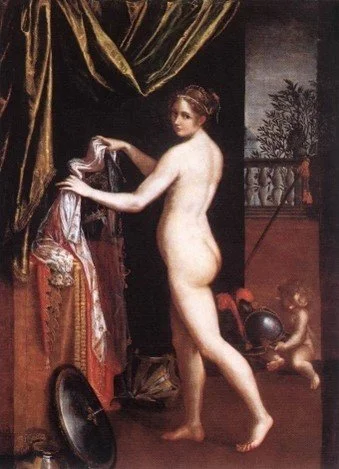
Fig. 18. Lavinia Fontana, Minerva Dressing Herself, 1613, oil on canvas, 258 x 190 cm, Rome, Galleria Borghese
Professionally, things are going well for Lavinia in Rome. She has been admitted to the prestigious Accademia di San Lucca there, which is a special mark of appreciation for her work. And in Rome too, as the painter and art historian Giovanni Baglione (1566–1643) writes, potential female patrons ‘molto frequentata’ flutter around her home. The prevailing opinion is that, whilst fellow portraitists often paint an idealised version, Lavinia is better able to capture the likeness and imbue her subjects with a more powerful presence that reveals their character. Moreover, the ladies are very pleased with the way Lavinia so beautifully highlights their affluence through their clothing. Their husbands must have been delighted that a woman is wielding the brush here, ensuring that their wives’ carefully guarded reputations remain unthreatened.
In 1611, the sculptor Felice Antonio Casoni (1559–1634) designs a bronze portrait medallion honouring Lavinia’s contribution to the art world. (fig. 19) Casoni depicts Lavinia as a sort of Roman matron, with the Allegory of Painting on the reverse, modelled on the 1603 Iconologia by Lavinia’s contemporary Cesare Ripa (c. 1555–1622). He describes painting as a ‘beautiful woman, with dishevelled hair sticking out in all directions (the ‘madness’ of artistic inspiration, a state of uncontrolled excitement and wild behaviour), with furrowed brows symbolising thought. Her mouth is covered with a band, for painting is done in silence, and she wears a gold chain from which hangs a mask bearing the word ‘imitation’.’
Casoni also depicts the attributes of a painter: the easel, a brush, a painter’s stick to steady the hand during precise work, and on the floor a palette, a palette knife and brushes. Along the edge, he depicts a number of measuring instruments – a compass and a set square – which allude to Lavinia’s working method, where determining proportions is crucial. This suggests that painting is a noble pursuit requiring intellectual rigour – an indication that Lavinia possesses such qualities. The text ‘PERTE STATO GIOIOSO MI MANTENE’ (through you I am kept in a joyful state) is a quotation from Petrarch and refers to the liberating power of creation – something one can continue to do well into old age. With this medallion, Lavinia is fully immersed in the world of painting.
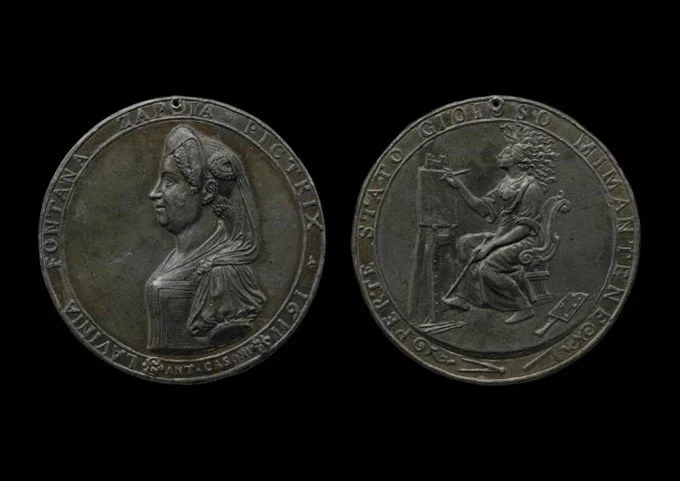
Fig. 19. Felice Antonio Casoni, Bust of Lavinia Fontana, 1611, lead, 6.7 cm in diameter, with inscription, London, British Museum
Lavinia is not only innovative on canvas; she is also a pioneer when it comes to generating income. She is often paid in the form of a gift, such as a piece of jewellery, but Lavinia also sets very specific prices for her work. As a woman, she has no legal standing to negotiate or sign contracts herself, so her husband takes on that role. The income – incidentally – also goes to him. Nevertheless, her final 10 years were difficult. In a letter from 1609 – when she was 57 years old – she writes of her ‘broken hands’; she may have been suffering from arthritis. In addition, there is the profound grief over the loss of her children, and in particular over her daughter Laudomia, who dies at the age of fourteen – in 1602 or 1603 – just before the family’s move to Rome. The physician and biographer Giulio Mancini (1558–1630) writes in 1621 ‘that this grief would never leave her’. Lavinia dies in Rome in 1614 at the age of 62. She is buried in the Chiesa di Santa Maria Sopra Minerva, a Dominican basilica not far from the Pantheon. Her grave is no longer there.
But the memory remains. Lavinia Fontana was an extraordinary woman who achieved many ‘firsts’: she was the first woman to have her own studio and the first woman to be commissioned to create a religious work for a public space. She was the first woman to paint mythological subjects, and the first documented full-length painting of a female nude was created by her. She was the first woman to enjoy the same standing as her male colleagues and the first woman to be admitted to the Accademia di San Luca in Rome. She also understood the power of fashion and how to ‘sell’ it in her work, which brought her great success. In doing so, she paved the way for female successors; by the end of the eighteenth century, Bologna boasted no fewer than 68 female artists, more than any other city in Italy.
Lavinia Fontana was simply a phenomenal painter. (fig. 20)

Fig. 20. Lavinia Fontana, Woman with a Small Dog, 1590, oil on panel, 89.5 x 61.9 cm, private collection
References:
Aoife Brady, Babette Bohn, Jonquil O’Reilly, Lavinia Fontana, trailblazer, rulebreaker, Dublin/New Haven/London, National Gallery of Ireland/Yale University Press, 2023 (exhibition catalogue);
Katy Hessel, The Story of Art without Men, London, Hutchinson/Heinneman, 2022;
Jennifer Higgie, Mirror and Palette: Resistance, Rebellion and Resilience: 500 Years of Self-Portraits by Women Artists, Amsterdam, Spectrum, 2021;
Valentine de Beir, Francesco Solinas, Alain Tapié, The Ladies of the Baroque, Ghent, Museum of Fine Arts, 2018 (exhibition catalogue);
Jill Burke, The Renaissance Nude, New Haven, Yale University Press, 2018;
Liana de Girolami Cheney, ‘Lavinia Fontana’s Nude Minervas’, Woman’s Art Journal, 36 (2015) no. 2, pp. 30–40;
Jane Fortune, Invisible Women, Florence, The Florentine Press, 2009;
Mary Garrad, ‘Here’s Looking at Me: Sofonisba Anguissola and the Problem of the Woman Artist’, in Renaissance Quarterly, 47 (1994) 3, pp. 556–622;
Whitney Chadwick, Women, Art, Society, London, Thames & Hudson, 1990;
Germaine Greer, The Obstacle Race: The Fortunes of Women Painters and Their Work, London, Secker & Warburg, 1979.
Various websites:
https://nl.wikipedia.org/wiki/Lavinia_Fontana (24 August 2023)
http://www.enciclopediadelledonne.it/wp-content/uploads/2020/07/Lavinia_fontana (12 September 2023)
http://www.enciclopediadelledonne.it/biografie/lavinia-fontana/ (12 September 2023) National Gallery of Ireland: https://www.google.com/search?client=firefox-b-d&q=google+translate (12 September 2023)
https://www.treccani.it/enciclopedia/lavinia-fontana_(Dizionario-Biografico) (12 September 2023)
rct.uk/collection/selfportrait-as-the-allegory-of-painting-la-pittura (19 September 2023)
dbnl.org/tekst/pers001cesa01_01/
Verantwoording afbeeldingen:
Afb. 1.
https://www.wga.hu/support/viewer/z.html
Afb. 2.
Aoife Brady etc., p. 93
Afb. 3a.
Aoife Brady etc., p. 67
Afb. 3b.
Aoife Brady etc., p. 68
Afb.4.
Aoife Brady etc., p. 55
Afb. 5.
https://upload.wikimedia.org/wikipedia/commons/8/8f Lavinia_Fontana%2C_Ritratto_di_Carlo_Sigonio%2C_Museo_Civico_di_Modena.png
Afb. 6.
https://www.wga.hu/support/viewer/z.html
Afb. 7.
https://www.pinacotecabologna.beniculturali.it/en/content_page/item/2816-the-gozzadini-family
Afb. 8.
https://nmwa.org/art/collection/portrait-noblewoman/
Afb. 9.
https://www.wga.hu/support/viewer/z.html
Afb. 10.
https://www.wga.hu/support/viewer/z.html
Afb. 11a, 11b, 11c.
Aoife Brady etc., p. 127, 129.
Afb. 12.
Aoife Brady etc, p. 75.
Afb. 13.
https://www.theartnewspaper.com/2023/04/27/how-lavinia-fontana-went-from-prospect-to-first-professional-woman-artist
Afb. 14.
Aoife Brady etc, p. 40.
Afb. 15.
Aoife Brady etc, p. 46.
Afb. 16.
https://upload.wikimedia.org/wikipedia/commons/e/e3/Lavinia_Fontana_-_Isabella_Ruini_as_Venus.JPG
Afb. 17.
Aoife Brady etc, p. 113.
Afb. 18.
https://commons.wikimedia.org/wiki/File:Minerva_dressing_by_Lavinia_Fontana_%281613%29.jpg Afb. 19.
https://www.britishmuseum.org/collection/image/250437001
Afb. 19.
https://www.britishmuseum.org/collection/image/250437001
Afb. 20.
https://historicalportraits.com/artworks/2540-lavinia-fontana-portrait-of-a-lady-with-a-dog-1590s