Sixteenth-century artist Sofonisba Anguissola from Cremona: An unconventional woman in a male world
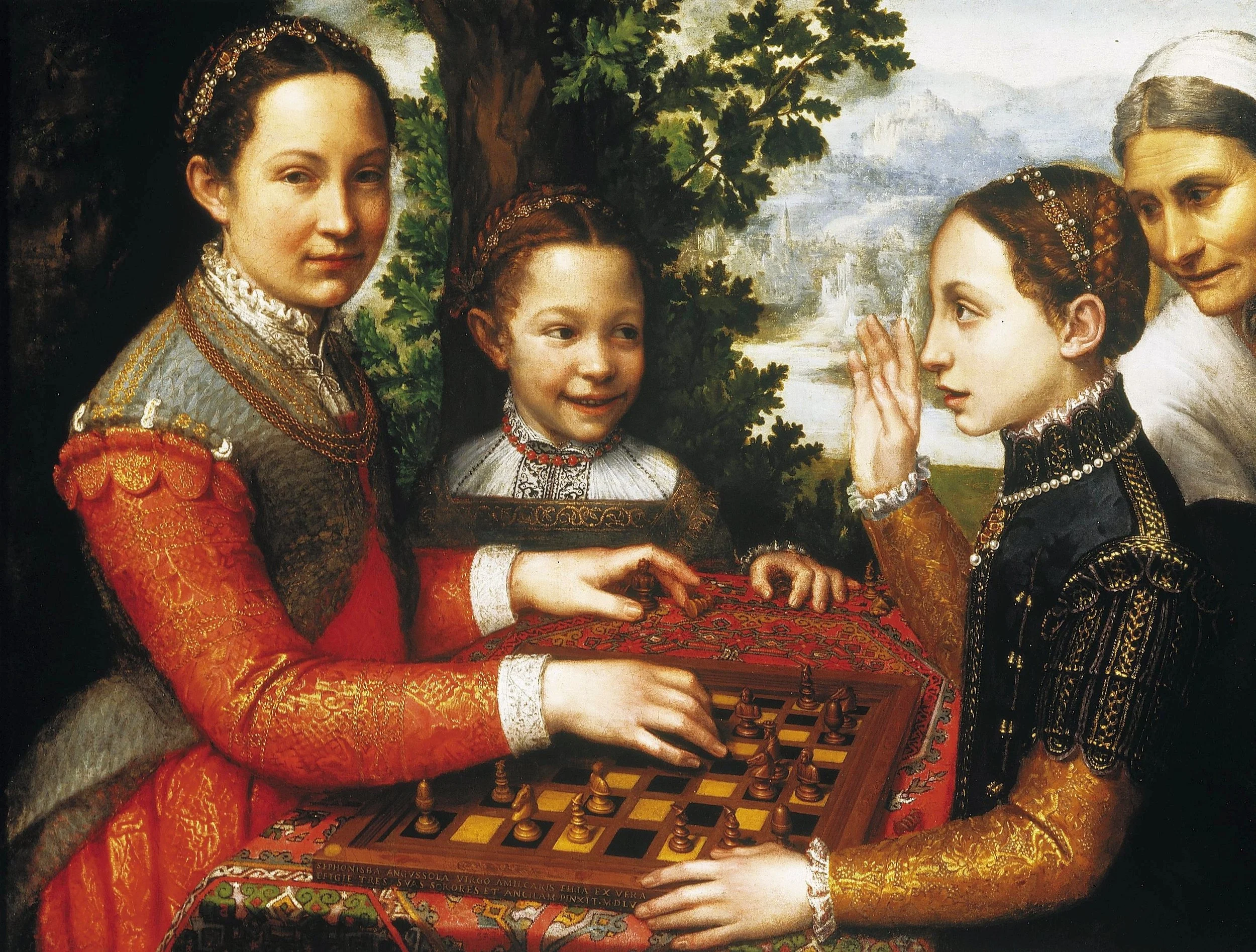
December 2021 I visited the beautiful exhibition Don’t Forget Me at the Rijksmuseum in Amsterdam, featuring Renaissance portraits from Europe. It was right up my alley — I really enjoy portraits from that period. To my great surprise, I saw The Chess Game hanging there, a painting by the 16th-century Italian artist Sofonisba Anguissola (c. 1535–1625; see above and fig. 10). I was already familiar with it, so how special it was to be able to admire it in person on the spot and what an amazing work it was. Normally if you’d like to see this work, you’ll have to go all the way to Poland!
At the end of the exhibition, I also found one of Sofonisba Anguissola’s self-portraits. She painted several of them and depicts herself in this work as a painter (fig. 1). With this work, she aims to show the world that as a woman, in what had until then been primarily a male-dominated profession, she was a professional. She looks confidently at the viewer, with her palette on the easel, a brush in her hand, and a painter’s stick — an implement used to support the hand with which she paints. She is dressed modestly, as if to emphasize her femininity in an ‘appropriate’ way, because she doesn’t want to tarnished her reputation as a virtuous woman. Nor can anyone take offense at the subject of the painting she is creating — a sweet scene depicting the virgin with child. She shows who and what she is: Sofonisba Anguissola, the artist.
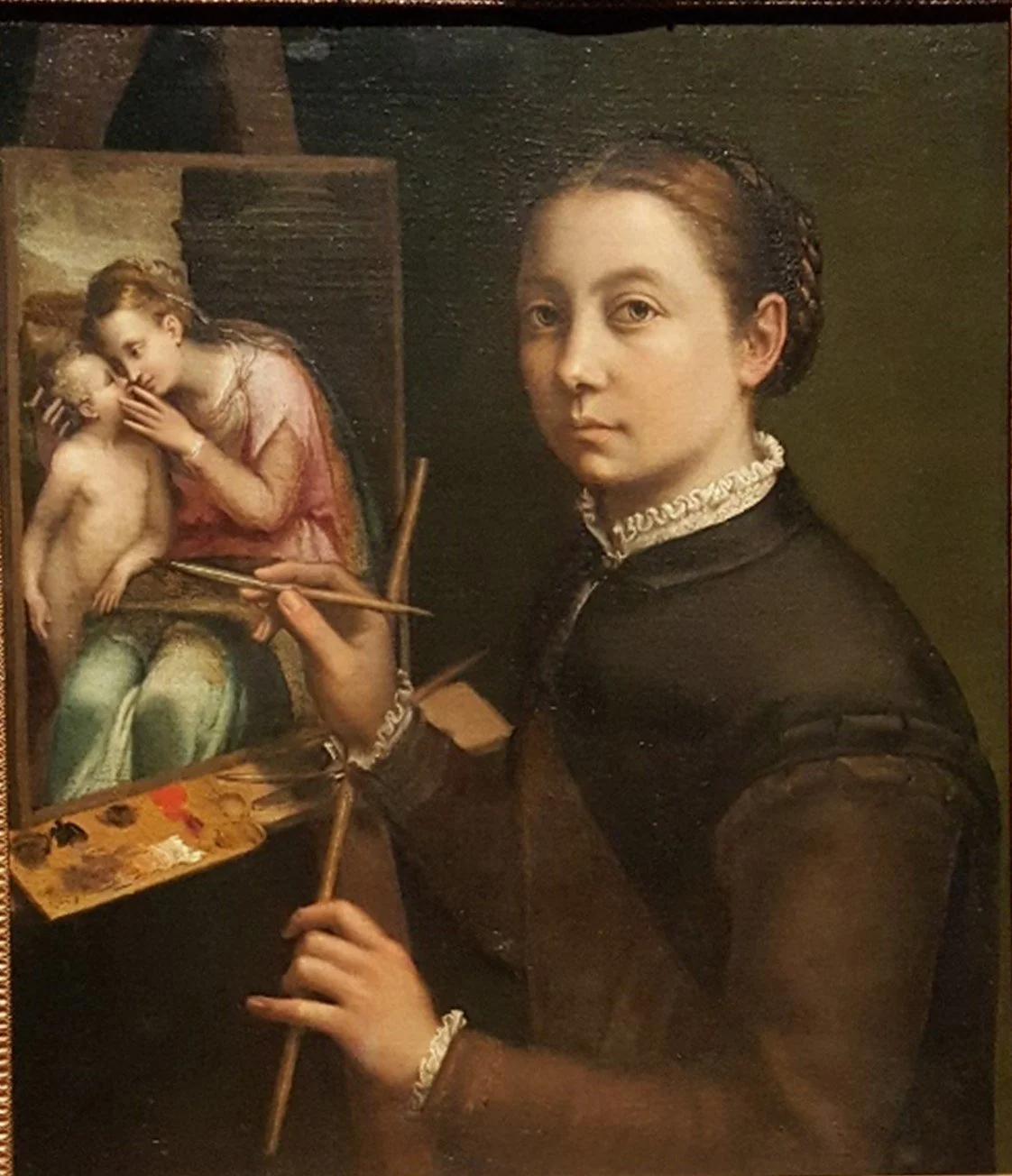
Fig. 1 Sofonisba Anguissola, Self-Portrait at the Easel, c. 1556, oil on canvas, 65.7 x 59 cm, Lancút, Poland, Museum-Castle. Dressed simply and working on an innocent subject
In my search for the forgotten female artists in art history, I had come across her before. Sofonisba Anguissola (was also famous in Europe during her time, just like the Italian artist Artemisia Gentilleschi (1593–1653), who lived a century later. This direct encounter with her work immediately prompted me to finally learn more about her.
Sofonisba Anguissola was born around 1535 in Cremona, in northern Italy, and was the eldest child in a family of impoverished nobility: Amilcare Anguissola (1494 - 1573) who married in 1530 with Bianca Ponzioni (? - 1558), his second wife. Sofonisba’s unusual first name refers to the bygone era of ancient Carthage, the great Phoenician trading city in North Africa during the third century B.C. There, the noblewoman Sofonisba refused a political marriage and poisoned herself to avoid being imprisoned for it. Later, she was honored by the Roman historian Titus Livius (died 17 CE) and others for her beauty and the way in which, by refusing to marry, she defended her family’s interests — a subject that has been a favorite one of painting throughout the centuries (fig. 2, 3).
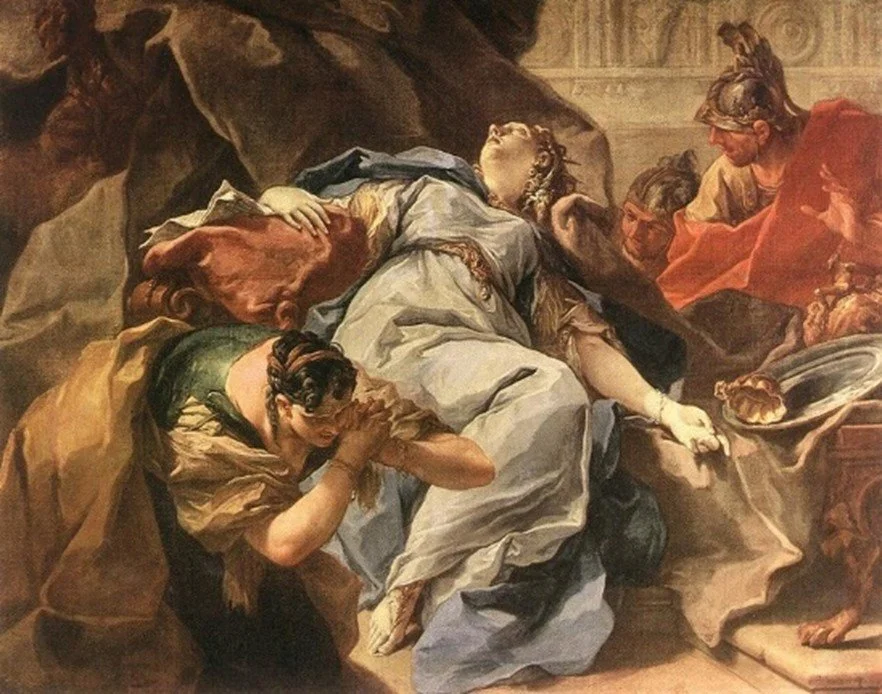
Fig. 2 Giambatista Bitoni, The Death of Sofonisba, c. 1730, oil on canvas, 165 x 215 cm, Moscow, Pushkin Museum of Fine Arts
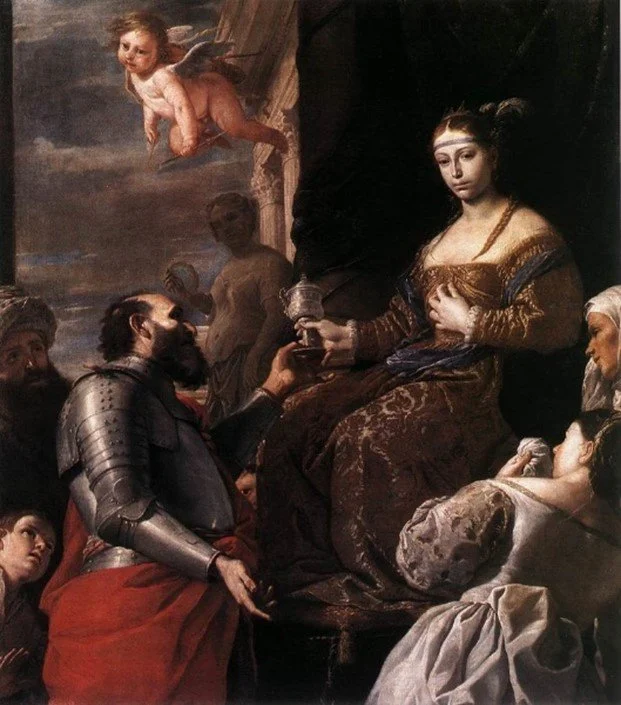
Fig. 3 Mattia Preti, Sophonisba Is offered the poisoned cup, c. 1670, oil on canvas, 198 x 174 cm, Lyon, Musée des Beaux-Arts
In 1537, her sister Elena was born; not must later the third sister, named Lucia, was born and not much later her fourth and fifth sister (Minerva and Europa). In 1551, her only brother, Asdrubale, saw the light, and finally — in 1555 — the youngest: Anna Maria. All the names in the family refer to the past. Elena is named after Helen of Troy from Greek mythology, and the name Lucia refers to the Catholic saint. The names of the sisters Minerva and Europa refer to the mythological figures from Roman history with the same names, and the youngest sister — Anna Maria — unites in her name two important women from Christianity. Brother Asdrubale was named after the great Carthaginian politician and general Hannibal, who, during the Second Punic War in the third century B.C., led his army across the Pyrenees into Italy and won many victories there.
Amilcare Anguissola demonstrates in the name-giving of his children that he was a well-educated man. Prestige was everything in those days. He was ambitious, and in the absence — at first — of a son, he focused on the education of his daughters. Fathers in those days, incidentally, were not always happy to have so many daughters. When a daughter reached teh marriageable age, a dowry would be required, and with multiple daughters, this was often barely affordable.
At that time, art was linked to prestige and connections with royal courts. Painting was a valued way to gain knowledge — through personal development and education. “Then I’ll just have to use my daughters to climb the social ladder,” Amilcare must have thought when it became clear that two of his daughters had a talent for painting. Crucial to Sofonisba’s development as an independent artist was her father’s decision in 1546 to send her and her sister Elena away from home to apprentice with a professional painter. This was unheard of for a girl at that time — especially if she was of noble birth, since nobles were not expected to work. The girls are said to have asked for it themselves; they were around eleven and nine years old at that time.
The two were taken on as live-in apprentices by the young, newlywed painter Bernardino Campi (1522–1591), who also lived in Cremona. The girls were thus not far from home and remained there for three years, until 1549, when Campi left for Milan. Then they spent another three years as apprentices to Bernardino Gatti (1495–1576), also in Cremona. Sofonisba’s talent was undeniable, and around 1550, she was already famous in the region as a student and began teaching her sisters as well. Elena, with whom she studied under Bernardino Campi, chose to enter a convent. Sofonisba’s earliest known work appears to be the portrait of a young nun, and it is likely that this is her sister (fig. 4).
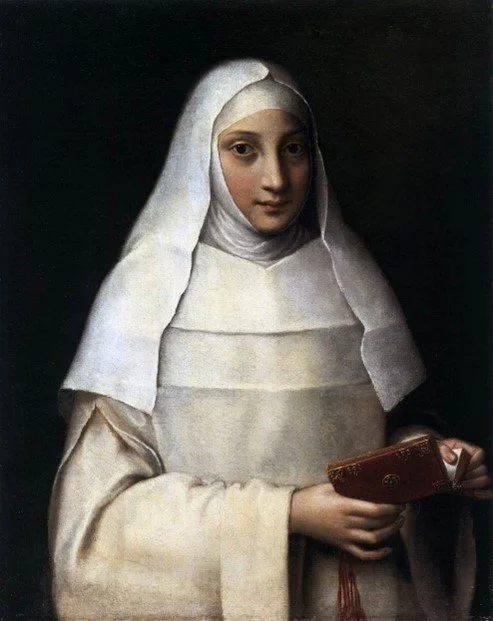
Fig. 4 Sofonisba Anguissola, Portrait of a Nun (Elena Anguissola?), 1551, oil on canvas, 169 x 53 cm, Southampton, City Art Gallery
It is important to realize that Sofonisba and her sister didn’t receive the same education that male students receive in their time. A woman was not allowed to draw from life or observe dissections to study the anatomy of the body, which was often part of the training. Women were also not allowed to travel freely, so Sofonisba couldn’t go out on her own to sketch outdoors. As a result, she gained less experience working with linear perspective.
Portraiture became a highly regarded genre in the sixteenth century. During the Renaissance, a process of individualization began after a long period in which individuality was subordinate to faith. The human being as an individual took center stage, fueled by humanism, which in turn was fueled by ancient texts emerging from libraries. Knowledge became important, and universities emerged. The art of printing facilitated the dissemination of knowledge. Alongside an intellectual elite, a bourgeois elite began to develop.
Painters, too, began to paint self-portraits, sometimes hidden within their own works, but also as standalone portraits. It was a form of self-promotion, in keeping with that growing individualism. And Sofonisba painted more self-portraits than any other artist of her time, with the exception of Albrecht Dürer (1471–1528). According to Jennifer Higgie, who wrote a book in 2020 about 500 years of self-portraits by female artists, women were not allowed to paint models in their studios. But of course, you always have yourself on hand. The mirror had by then been invented, so it was simply practical to use yourself as a model. That way, you could build a body of work and showcase your talents. The number of Sofonisba’s self-portraits is remarkable and, according to Michael Cole — who made the first attempt in 2019 to compile a catalog raisonné of Sofonisba’s work — gave the genre a significant boost.
Sofonisba signed about ten works, sometimes using the term “virgo.” Because she remained unmarried for a long time, it was very important for her to carefully safeguard her reputation— that of a virtuous, chaste woman, which was the most important ideal for women in her time. In doing so, she showed that she was not dependent on a husband and was still under her father’s parental care. She also sometimes signs her work “daughter of Amilcare” — another way of emphasizing this. She portrayed herself as a painter, a pianist, and a well-read woman to highlight her erudition. In doing so, she positioned herself as a professional painter in a male-dominated world: a woman, to be sure, but certainly not inferior to her male colleagues (fig. 5, 6, 7, 8).
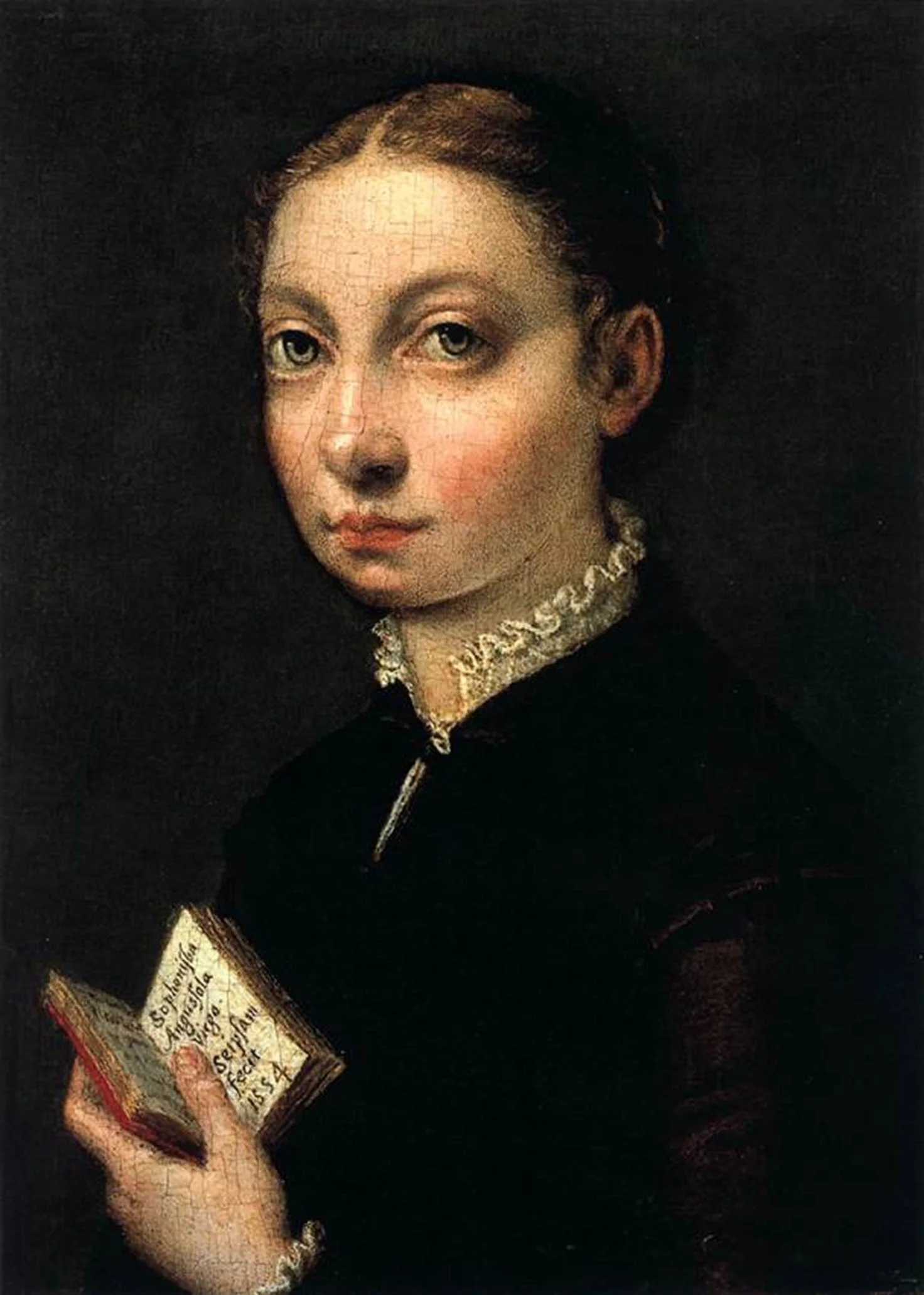
Fig. 5 Sofonisba Anguissola, Self-Portrait, 1554, oil on panel, 20 x 13 cm, Vienna, Kunsthistorisches Museum. Sofonisba as a cultured, well-read woman.
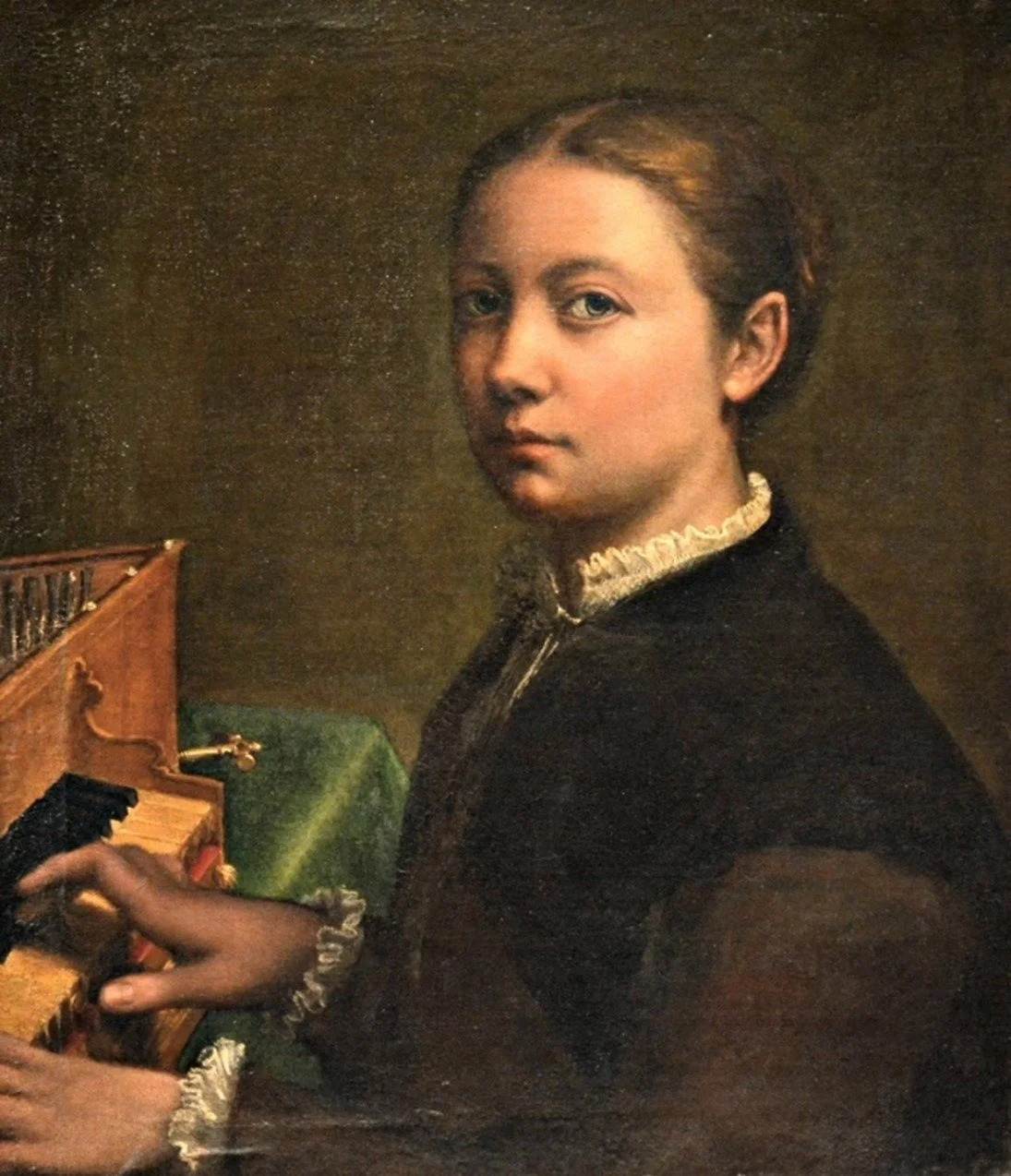
Fig. 6 Sofonisba Anguissola, Self-Portrait with a Spinet (or her sister Lucia?), c. 1556, oil on canvas, 58 x 48 cm, Naples, Museo Nazionale di Capodimonte. Sofonisba as a musician.
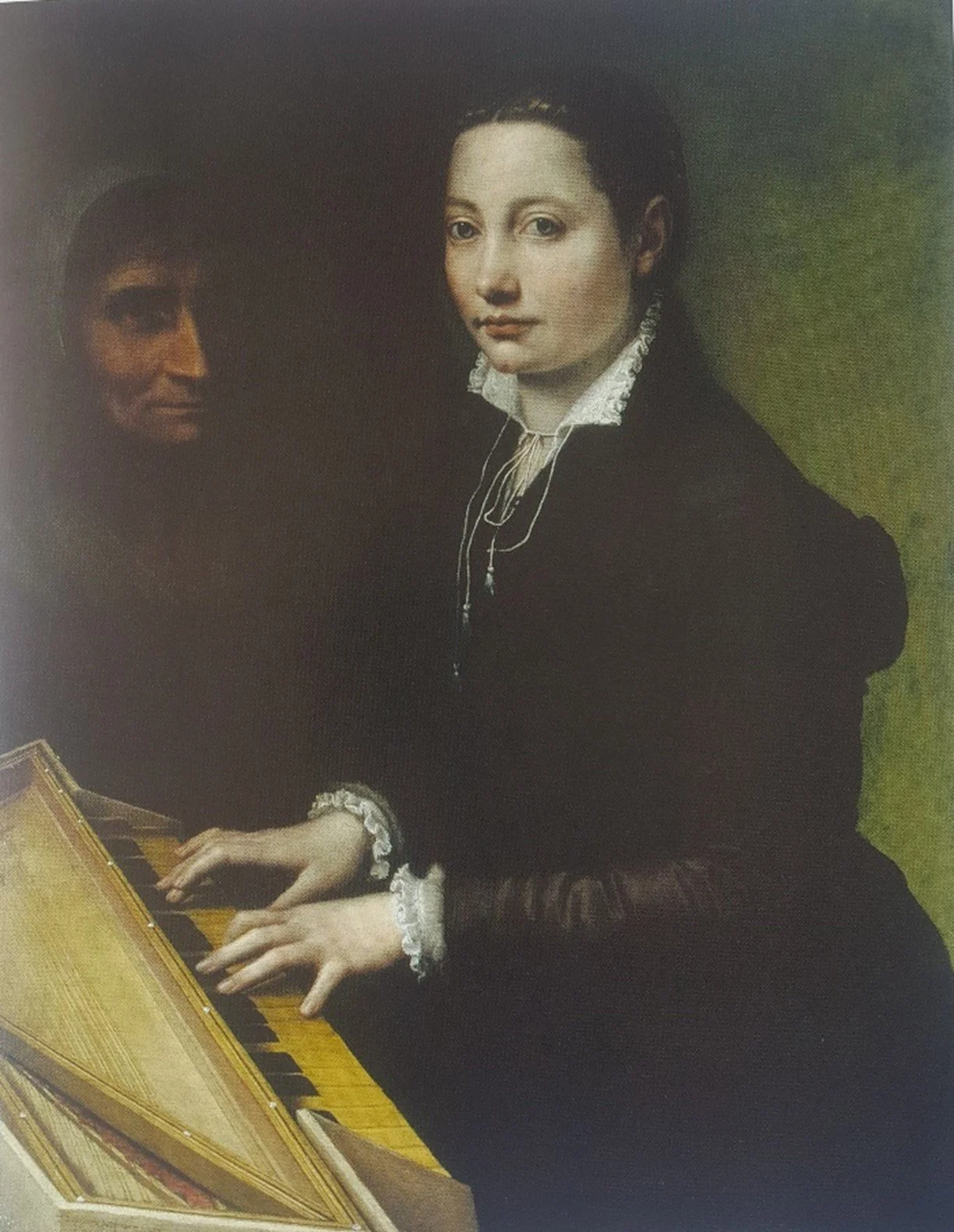
Fig. 7 Sofonisba Anguissola, Self-Portrait at the Spinet (or Her Sister Minerva), c. 1560, oil on canvas, 26 x 29 cm, Milan, Pinacoteca di Brera. Sofonisba as a musician
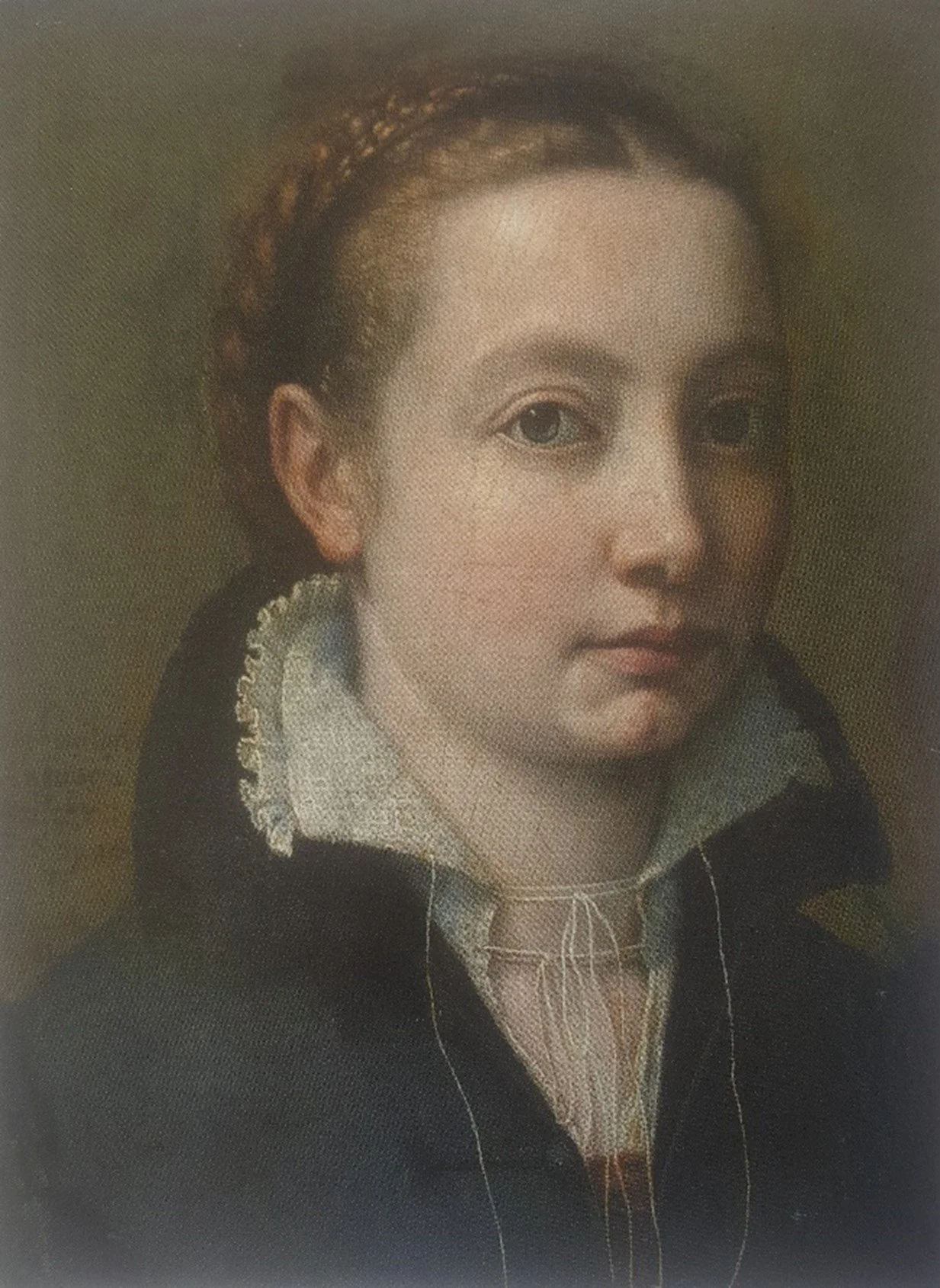
Fig. 8. Sofonisba Anguissola, Self-Portrait, 1558, oil on canvas, 25.6 x 19.3 cm, Rome, Palazzo Colonna
Sofonisba’s father became her greatest advocate and actively promoted her work. He sent samples of her work and letters of recommendation to influential men and women: for example in 1556 a letter to Duke Ercole II d’Este of Ferrara, Modena, and Reggio. And in 1557 he sent a painting to Margherita Paleologa, Duchess of Mantua, with a request to have this work delivered to Eleonora Gonzaga della Rovere, Princess of Mantua. He also sent a letter to Pope Julius II in Rome, who, it is said, wanted one of her works for his portrait collection. Amilcare sent two drawings by Sofonisba to Michelangelo Buonarroti (1475–1564), who was already famous during his lifetime, and corresponded around 1559 with King Philip II of Spain (1527–1598) regarding his daughter; at that time, Cremona was under Spanish rule. This helped her gain widespread recognition and led, in 1559, to Sofonisba being invited by the king to come to the court in Spain.
As is so often the case with female artists from the early modern period, there is little primary source material available about Sofonisba. Women had no legal status, and business transactions were conducted through the male line. Consequently, there is little mention of her in accounts, wills, and inventories. We must look primarily to her work. And there we see that, initially, she focused primarily on her family as her subject matter. That may not seem very spectacular, but Sofonisba was nonetheless a painterly innovator at a time when paintings primarily depicted religious subjects or people of high standing. Sofonisba’s focus is on ordinary people. Just look at the intimate portrait of her father and brother with one of her sisters, or the very first group portrait of women in art history: The Chess Game. What stands out is the relaxed, informal atmosphere and the direct connection the subjects seek with the viewer. You could almost say these are precursors to today’s family snapshots.
Another new aspect of The Chess Game is the scenes place outdoors, in the open air, with a Leonardo-esque glimpse of the landscape. The subject matter is also unusual: women — her sisters — playing a game of chess, an intellectual game (fig. 9, 10).
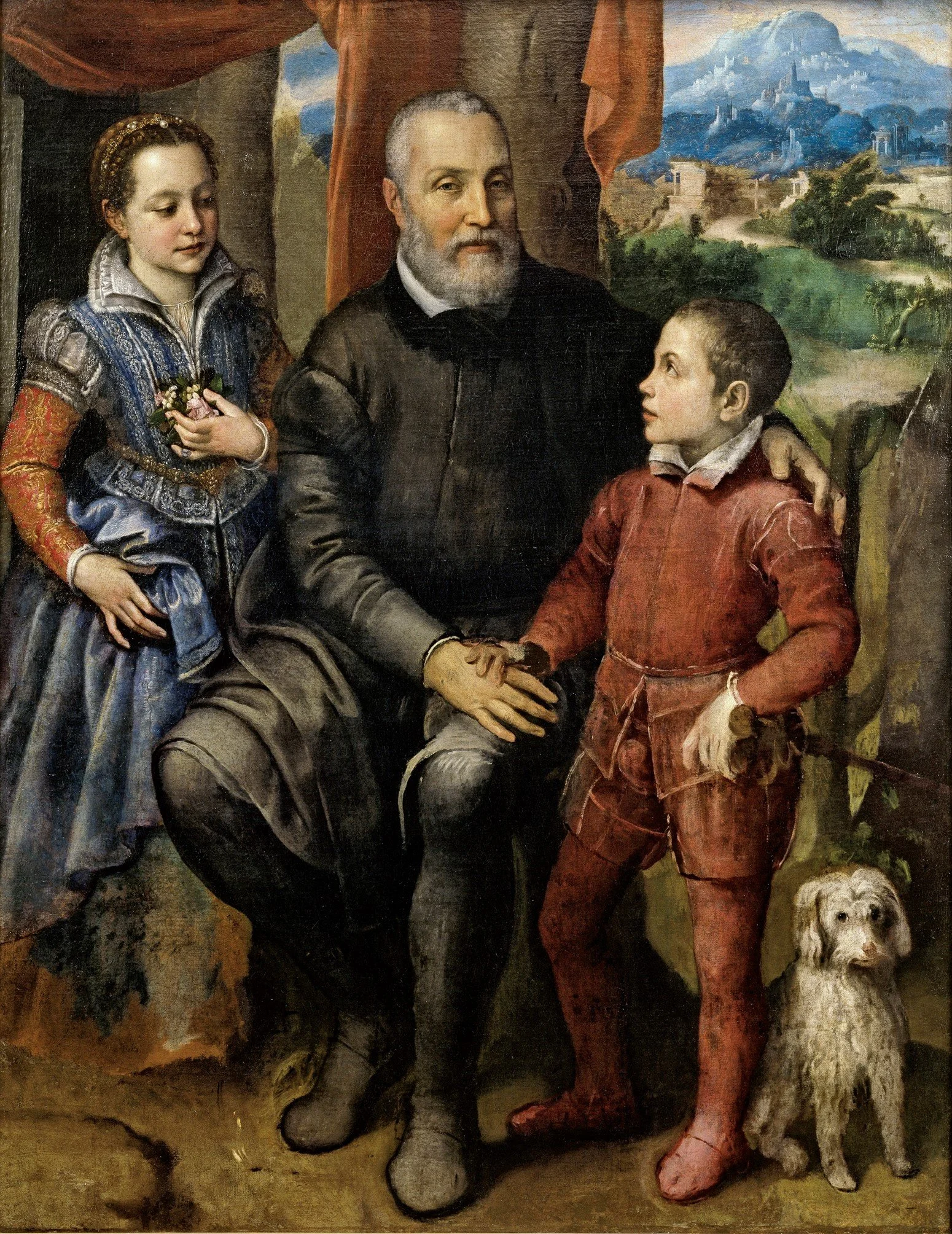
Fig. 9 Sofonisba Anguissola, Portrait of Amilcare, Minerva, and Asdrubale Anguissola, c. 1559, oil on canvas, 157 x 122 cm, Niva, Nivaagaards Malereisammlung
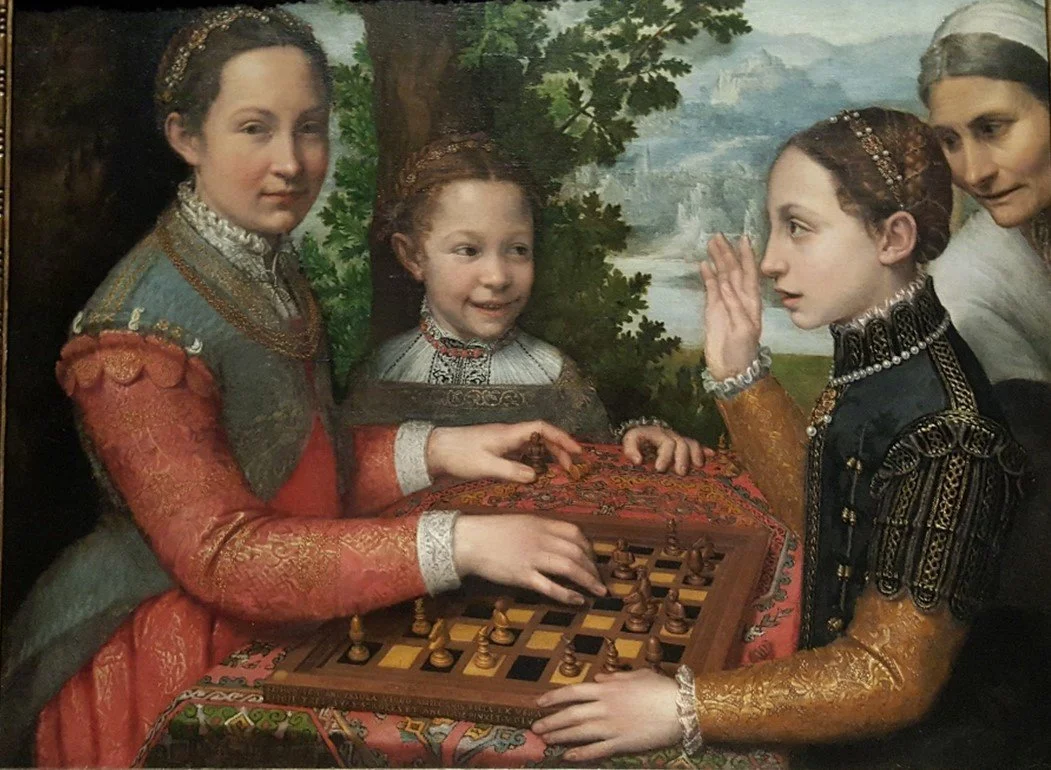
Fig. 10 Sofonisba Anguissola, The Chess Game, 1555, oil on canvas, 72 x 97 cm, Poznan, The Raczytski Foundation. Three of Sofonisba’s sisters - Lucia, Europa, and Minerva - and a servant
But in addition to family members and herself, Sofonisba also painted others, such as the young Massimiliano Stampa (1494–1543) around 1559, who was nine years old and had just become head of the family and a marquis (fig. 11).
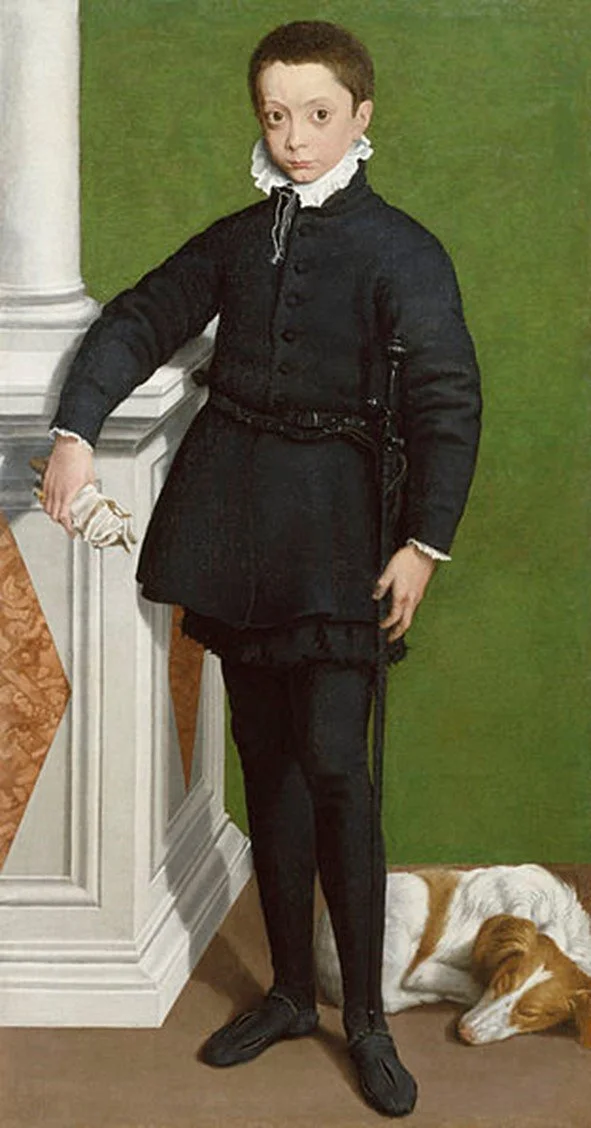
Fig. 11 Sofonisba Anguissola, Massimiliano Stampa, Marquis of Soncino, c. 1557, oil on canvas, 136.8 x 71.5 cm, Baltimore, Walters Art Museum
Sofonisba’s personal life reads like a thrilling novel. As is already clear, she charted a different course than was customary for women of her time. She remained single for a long time and had no children. In 1559, the Spanish king Philip II invited her to join his court in Madrid. She accepted the invitation and became a lady-in-waiting to his future wife, the French princess Elizabeth of Valois (Isabella in Spanish; 1545–1568), who was only fourteen at the time. Ladies-in-waiting were tasked with entertaining the queen; for Sofonisba, this was compounded by the responsibility of teaching the queen to paint. Sofonisba remained there for fourteen years and received a ‘generous salary.’ Her father, too, was well compensated by Philip: he received 800 lire for a number of Sofonisba’s works. She became friends with the queen and her two daughters and painted countless portraits, including those of the queen and the king (fig. 12, 13). Sofonisba was not granted the status of court painter; that honor went to Alonso Sánchez Coello (1532–1588), who also had his own studio there. Her work from the Spanish period later proved difficult to identify in many cases. These are primarily unsigned portraits, and over time her works were attributed to others, such as El Greco (1541–1614) and Coello himself.
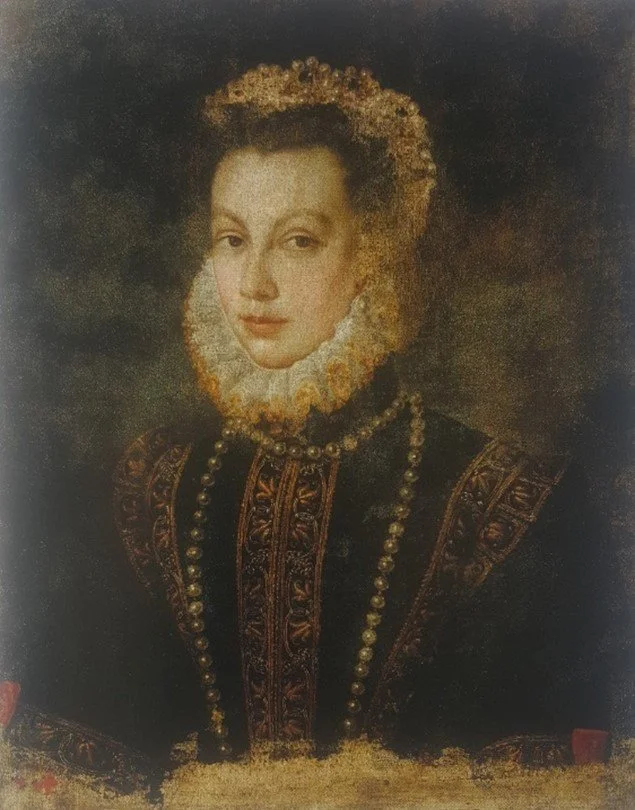
Fig. 12 Sofonisba Anguissola, Isabel de Valois, 1581, oil on canvas, Vienna, Kunsthistorisches Museum
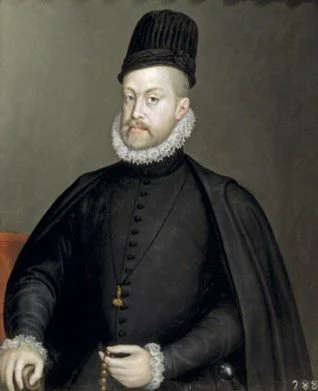
Afb. 13 Sofonisba Anguissola, Portret van Filips II van Spanje, 1565, olieverf op doek, 88 x 72 cm, Madrid, Museo del Prado
The queen died young, in 1568, following a miscarriage of her third child, and Sofonisba was inconsolable: “Lady Sofonisba says she no longer wishes to live,” wrote a fellow courtier. She remained at court for a while longer, serving as governess to Elizabeth’s daughter Isabella, and Philip set out to find a husband for Sofonisba. She told him she would like an Italian, and five years after the queen’s death, in 1573, a marriage was arranged with Fabrizio Moncada Pignatelli, the Prince of Paternò in Sicily. Philip paid the dowry and an annual allowance.
In Palermo, Sofonisba continued to paint and also opened her home to artists (fig. 14, 15). The marriage lasted only five years. Moncada died in 1578 when the ship on which he was sailing to Spain for business reasons was attacked by pirates.
Then Sofonisba fell in love with Orazio Lomellino, a ship’s captain ten years her junior. She married him in 1579, despite the fact that Grand Duke Francesco de’Medici of Florence advised her against it because Lomellino is beneath her status. This showed just how unconventional she is — and how well-known she was in the highest circles. With Lomellino — who had a son, Giulio, with whom she got along well — she moved to Genoa in 1581. There, she once again builded a network. She maintained her close ties with the Spanish court, continued to paint, and was a highly regarded teacher (fig. 14, 15). She also evolved herself into a miniaturist, and painters once again came to study with her.
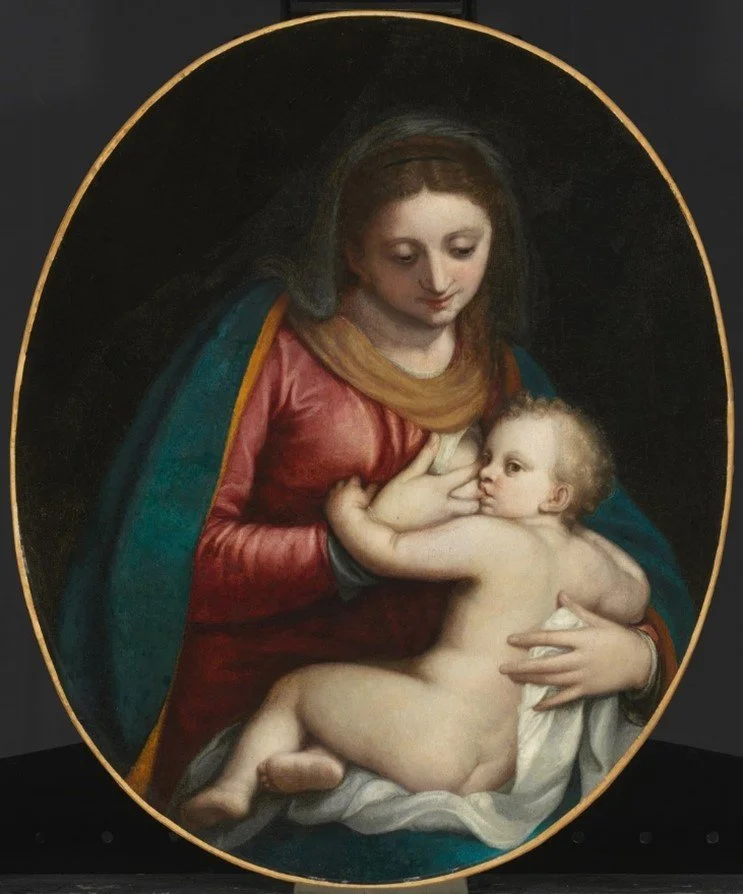
Fig. 14 Sofonisba Anguissola, Maria Lactans, 1588, oil on canvas, 77 x 63.5 cm, Budapest, Museum of Fine Arts/Szépművészeti Múzeum
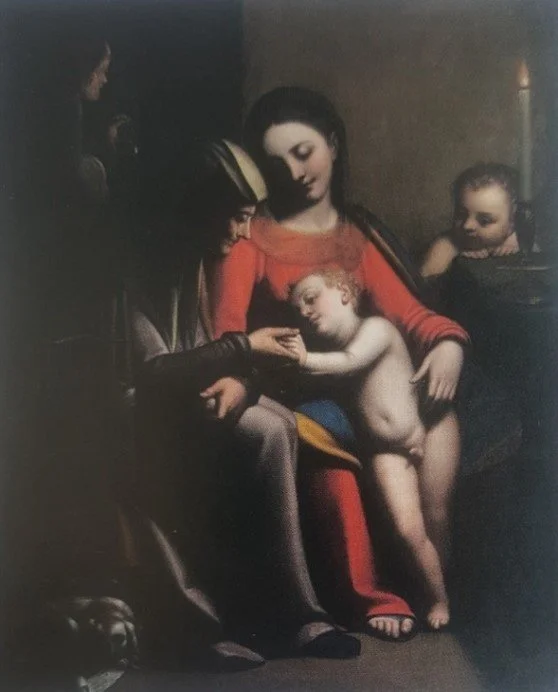
Fig. 15 Sofonisba Anguissola, The Holy Family with Saint Anne and Saint John, 1592, oil on canvas, 125.7 x 110.5 cm, Coral Gables, Florida
When Sofonisba turned 80, the couple moved to Palermo. There, nine years later, in 1624, the Antwerp painter Anthony van Dyck (1599–1641) — who rose to become court painter to King Charles I of England — visited her. By then, she was nearly blind. He noted with admiration — as he wrote in a letter —’ that she was still sharp of mind’. She told him, he wrote, about her life and gave him advice on how to depict light on the canvas. Van Dyck made a sketch, which he developed into an oil portrait at home. Later on he would say that he learned more from his conversations with Sofonisba than from studying the works of famous masters. Sofonisba died a year later, in 1625, at the age of 90.
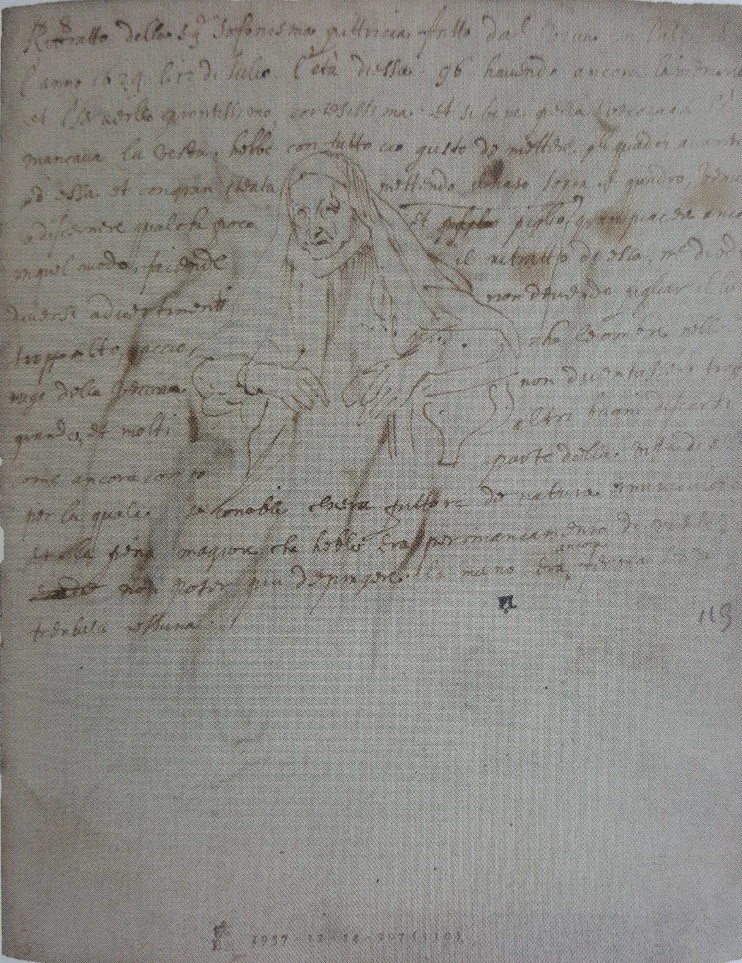
Fig. 16 Anthony Van Dyck, Sofonisba Anguissola, 1624, brown ink on paper, 19.9 x 15.8 cm, London, British Museum. A letter from Anthony van Dyck containing a sketch of Sofonisba at age 89. He based his later portrait of her on this drawing; see Fig. 17
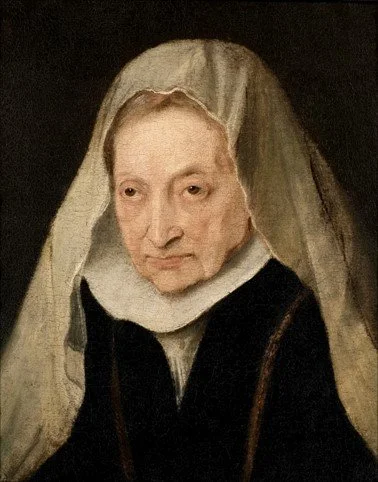
Fig. 17 Anthony van Dyck, Sofonisba Anguissola, 1624, oil on panel, 41.6 x 33.7 cm, Knole/Kent, Knole House. Detail from a larger portrait that has been cropped on all sides
So, does this description of a female artist’s life tell the whole story? As far as I’m concerned, not quite. Because the question that hasn’t yet been asked for is how Sofonisba herself would have viewed her position as a female artist and the limitations that this imposed on her. We can’t ask her ourselves, but various art historians have expressed their thoughts on the matter. Sofonisba’s work — and certainly her earlier works —might contain a deeper layer of meaning. After all, the paintbrush was her only instrument for expressing herself and commenting on her time and circumstances.
For while the painting depicting her father Amilcare, brother Asdrubale, and sister Minerva may seem like an innocent family portrait, Sofonisba is also depicting here the primacy of patriarchy, the status quo of her time (see Fig. 10). The father looks proudly at the viewer while touching his young son with both hands; the son, in turn, looks up at his father. Amilcare presents Asdrubale here as his heir: the heir apparent who will carry on both the family name and the family estate. His daughter Minerva stands nearby, watching. She might also want her father’s attention, but she does not receive it. Women take a back seat.
At first glance, the painting The Chess Game also appears to be a cozy family portrait (see Fig. 9), but there is more to it than meets the eye. During the Renaissance, chess was regarded as a highly intellectual game for men, a game whose rules underwent radical changes at the end of the fifteenth century. Chess historians refer to this as ‘the new chess’. What happened? The queen became the most powerful piece, even more powerful than the king. In the painting, Sofonisba links this fact to an all-female chess party. Women are smart, Sofonisba is saying here; they are every bit as intelligent as men.
At the same time, the painting also depicts a competition among women — the only arena where such competition was permitted for women. In Sofonisba’s time, it was common among artists to draw inspiration from the craftsmanship and creative abilities of their colleagues. Admiration for a fellow artist’s work spurs you to do even better, to surpass it. At that time, women were excluded from this professional competitiveness — which drives, motivates, and stimulates artists — simply because they were not recognized as artists or able to function as such in public.
But there is competition within the Anguissola family. As the eldest, Sofonisba gives her sisters painting lessons. If you follow their gazes, it is Lucia on the left who is smiling at the viewer. That gaze is also directed at Sofonisba, the painter, who is at the same time Lucia’s teacher and great role model. Sister Europa, on the right, looks at her sister Lucia, the winner of the game and Europa’s great role model to emulate. For little Minerva, Europa, in turn, can serve as a role model. Here we see a family of artists who constantly strive to improve and are competitive.
And then there is a rather interesting controversy surrounding the painting Bernardino Campi Paints Sofonisba Anguissola (fig. 18). What we see is Sofonisba being painted by her former teacher, Bernardino Campi. Campi depicts her larger than itself. Both are looking at the viewer. Opinions are divided as to who the creator of this work is: is it the teacher Bernardino Campi, or is it Sofonisba herself?
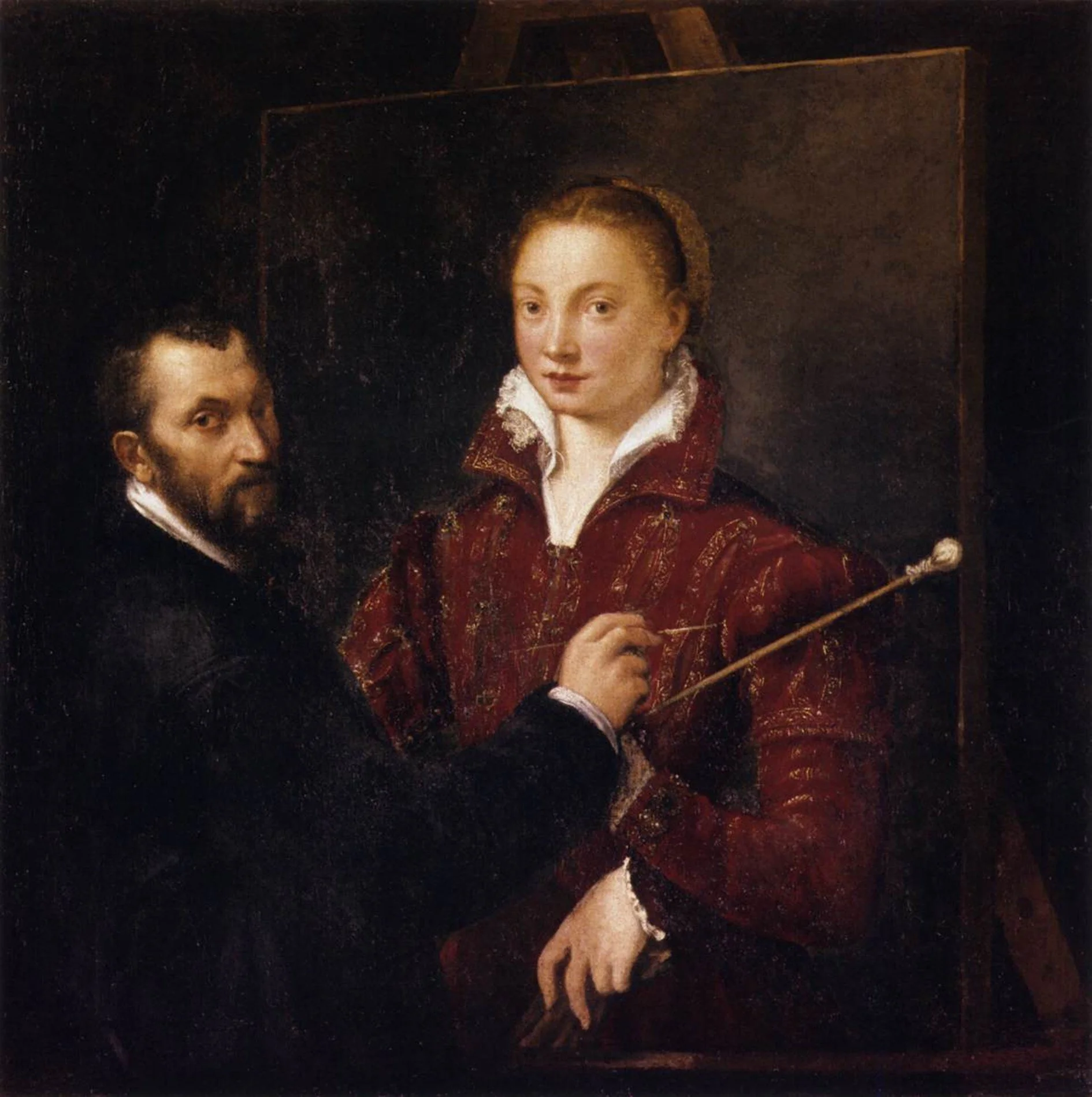
Fig. 18 Sofonisba Anguissola or Bernardino Campi?, Bernardino Campi Painting Sofonisba Anguissola, ca. 1558/9, oil on canvas, 108 x 106 cm, Siena, Pinacoteca Nazionale
At first glance, you might be inclined to think it must be Campi. After all, you see him as the artist who painted this portrait. But why would he wait until 1559 to do this, when he had already been away from Cremona for ten years, was now working in Milan, and Sofonisba had long since ceased to be his student? And why does he paint Sofonisba larger and itself smaller? Usually, it’s the other way around in artists’ self-portraits: the painter is depicted larger than his subject. Consequently, some art historians find it plausible that the work was painted by Sofonisba herself, partly because its style and brushwork resemble other works by Sofonisba. She may have painted her teacher from memory or based on a portrait of him that was in circulation (fig. 19).
The painting would then be a tribute from Sofonisba to her teacher, but by depicting herself so large, she also shows that she has surpassed him in status — which was indeed the case in reality. This manner of representation would be her commentary on the Renaissance view of her time that creation is inherently masculine, whereas here she is the creator. But there is another possibility: that the work was created by Campi and that he depicted her so large out of admiration for her work and status.
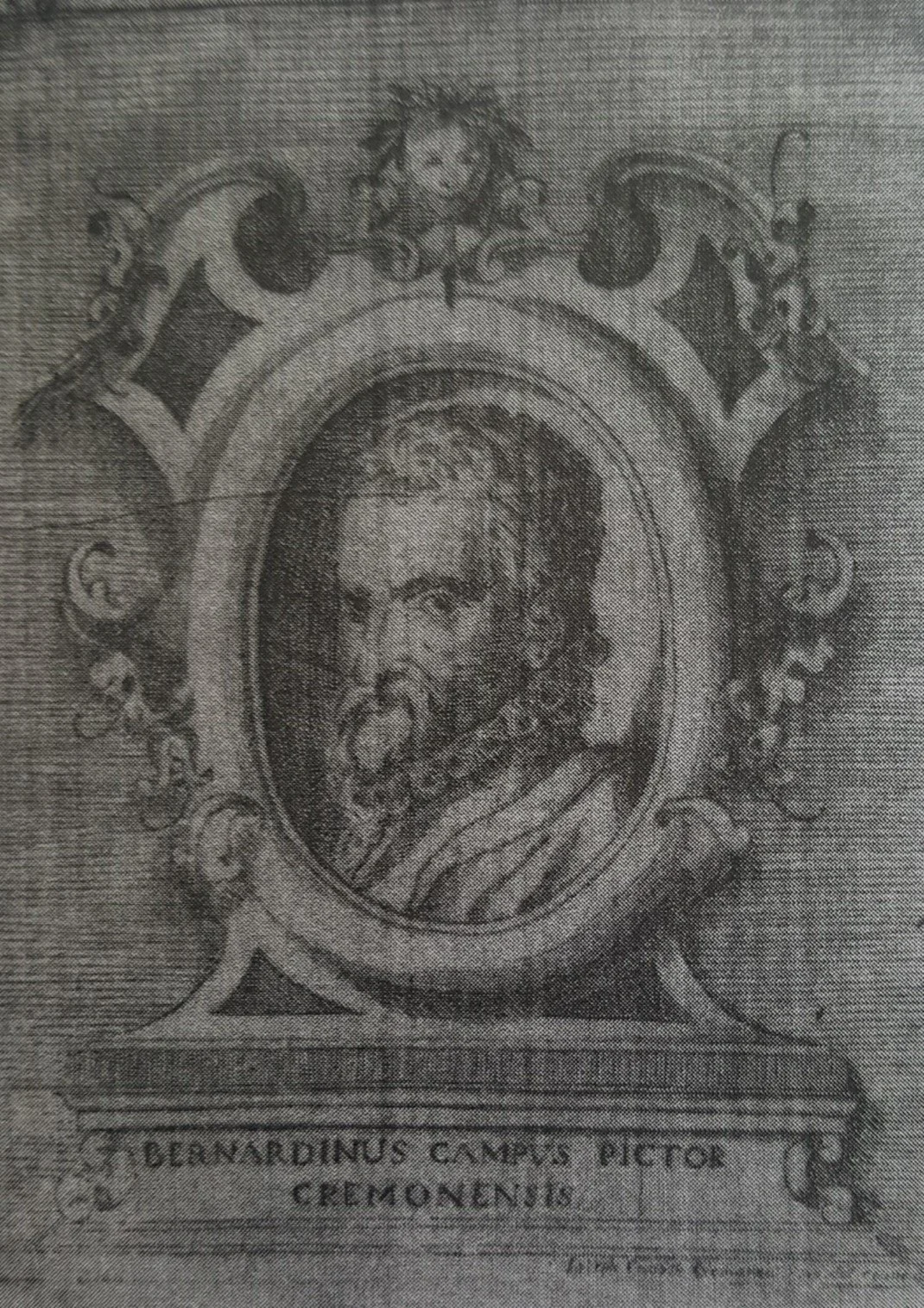
Fig. 19 Joseph Cavallini, Engraving after a sixteenth-century portrait by Bernardino Campi. From Giombattista Zaist, ‘Notizie istoriche de’ pittori, scultori, ed architetti cremonese’, 1774 (image reproduced from the book by Michael W. Cole; see References)
In my opinion, we are dealing here with an intelligent woman and a talented painter who, in her own way, came to terms with the limitations of her time. Thanks to her independent and adventurous spirit, the quality of her work, and the exceptional support of her father, she was already famous throughout Europe during her own lifetime. Her life and work became a source of inspiration for other talented women, such as Lavinia Fontana (1552–1614), Marietta Robusti (1554–1590), Irene di Spilimbergo (1538–1559), Fede Galizia (1578–1630), and certainly the seventeenth-century artist Artemisia Gentileschi (1593–1623), who owed a great deal to this independent-minded woman in a male-dominated world.
——————————————————————
This article is translated in October 2026 with DeepL and afterwards corrected.
References:
Michael W. Cole, Sofonisba’s Lessons: A Renaissance Artist and Her Work, Princeton: Princeton University Press, 2019, 307 pp.
Mary D. Garrard, “Here’s Looking at Me: Sofonisba Anguissola and the Problem of the Woman Artist,” Renaissance Quarterly, 47 (1994) 3, pp. 556–622.
Jennifer Higgie, Mirror and Palette: Resistance, Rebellion, and Resilience—500 Years of Self-Portraits by Women Artists (trans. Conny Sykora), Amsterdam: Spectrum, 2021, 352 pp.
Image credits:
Images 1, 7, 9, 10, 12, 15, 16, 19 are reproduced from the book by Michael W. Cole; see References)
Fig. 2.
https://en.wikipedia.org/wiki/Sophonisba#/media/File:Giambattista_Pittoni-Sophonisba.jpg
Fig. 3.
https://en.wikipedia.org/wiki/Sophonisba#/media/File:Preti-sophonisba-Lyon.jpg
Fig. 4.
https://www.wga.hu/support/viewer/z.html
Fig. 5.
https://www.wga.hu/support/viewer_m/z.html
Fig. 6.
https://www.wga.hu/support/viewer/z.html
Fig. 8.
https://www.wga.hu/support/viewer/z.html
Fig. 11.
https://nl.m.wikipedia.org/wiki/Bestand:MassimilianoStampa.jpg
Fig. 13.
https://www.artsalonholland.nl/portretkunst/anguissola-portret-filips-van-spanje
Fig. 14.
https://www.mfab.hu/artworks/madonna-suckling-the-infant-christ/
Fig. 17.
https://upload.wikimedia.org/wikipedia/commons/1/17/Sofonisba-Anguissola-by-Van-Dyck.jpg
Fig. 18.
https://nl.m.wikipedia.org/wiki/Bestand:Sofonisba_Anguissola_-_Bernardino_Campi_Painting_Sofonisba_Anguissola_-_WGA00696.jpg